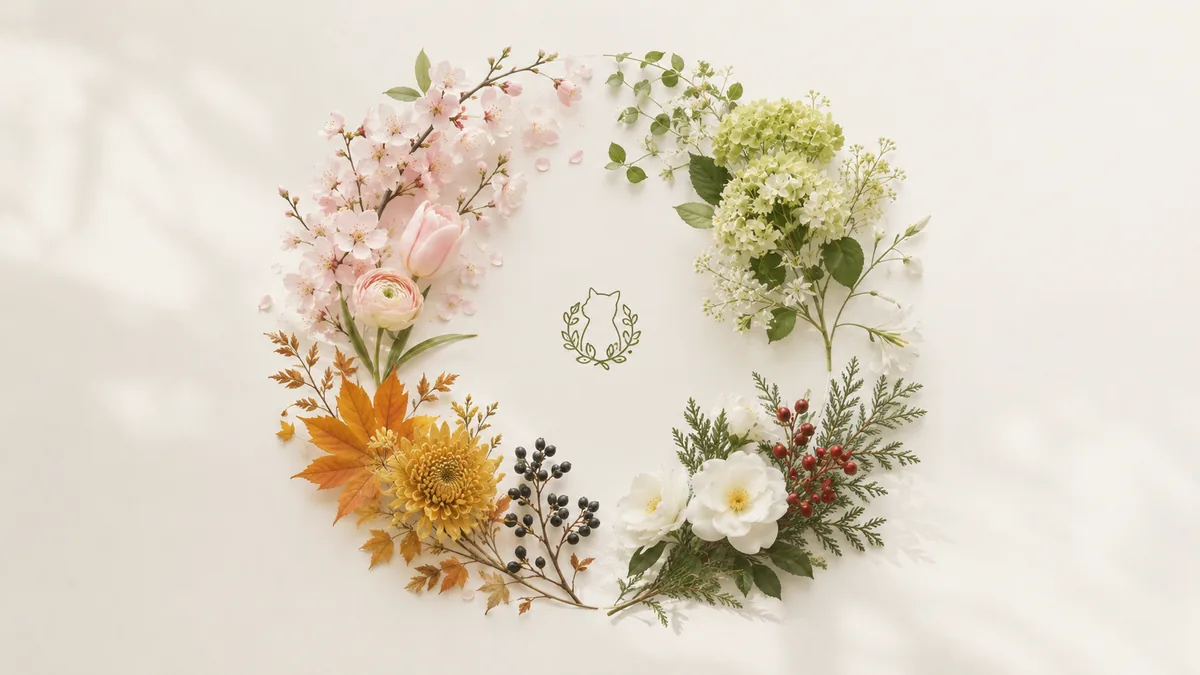
Seasonal Flowers Toxic to Cats: A Spring-to-Winter Guide
The flowers you bring home change with the seasons. From spring bulbs to winter holiday plants, here's what cat owners should watch for all year round.
The flowers we bring into our homes follow the calendar. Spring means bulb flowers, summer brings bright cut blooms, autumn is heavy with chrysanthemums, and winter fills the house with holiday and year-end plants. If you share your home with a cat, it helps to build a simple habit: each time the season turns, pause and ask yourself which new flowers are likely to come through the door. Rather than trying to memorize every dangerous plant at once, it's far more practical to focus on the ones you're most likely to encounter in the season ahead.
Quick summary
- Spring: watch for lilies and bulb flowers like tulips, daffodils, and hyacinths
- Summer: bright cut flowers are everywhere, but lilies remain just as dangerous in the heat
- Autumn: the season when chrysanthemums arrive in force
- Winter: watch for holiday and year-end plants like poinsettia and amaryllis
- In every season, lilies are the single most dangerous flower — avoid them, no matter the variety
- Before bringing any new flower home, search its name on flower cat to check whether it's toxic
Spring — The Season of Bulb Flowers
Spring is when bulb flowers arrive all at once. Tulips, daffodils, and hyacinths are the classic examples, and all three are toxic to cats, with the toxins concentrated most heavily in the bulb itself. Ingestion can cause vomiting, diarrhea, and drooling. When these come as potted plants, a cat digging in the soil can reach the bulb, so it pays to be especially careful with how you manage the pots. Spring gift bouquets also frequently include lilies. Lilies are widely recognized as the most dangerous flower for cats regardless of the season, so they should be the very first thing you check when you receive spring flowers. Some spring flowers, like freesia, are considered relatively safe — but a dangerous flower can easily be mixed into the same bunch, so it's worth looking over the entire arrangement.
Summer — Bright Blooms, but Stay Alert
Summer brings an abundance of vividly colored cut flowers. Blooms generally considered safe, like gerbera daisies, show up often in summer, but lilies stay just as dangerous as ever. The reasoning "it's a different season now, so it should be fine" simply doesn't apply. In summer we tend to leave windows open and set vases on the balcony or windowsill — but these spots often overlap with a cat's favorite routes. Take a moment to double-check where you place your flowers. Fallen petals and pollen can be licked up too, so it's safest to clear away wilting flowers right away.
Autumn — The Season of Chrysanthemums
Autumn is when chrysanthemums arrive in concentrated numbers. They're widely used for holidays, memorial services, and visits to family graves. Chrysanthemums are toxic to cats, and ingestion can bring on vomiting, diarrhea, and drooling. While they aren't considered life-threatening, it's worth thinking twice before placing a chrysanthemum bouquet or pot inside your home. During the holidays, guests often arrive bearing flowers as gifts. Rather than setting a received bouquet straight down in the living room, it's better to keep it somewhere out of your cat's reach for a moment, check which plants it contains, and only then decide where it goes.
Winter — Holiday and Year-End Plants
Winter brings a surge of plants aimed at Christmas and the year-end season. Poinsettia is the classic example: when the stem is cut, it releases a milky white sap that can irritate the mouth and stomach and cause vomiting. That said, it isn't as strongly toxic as its reputation suggests — the effect is usually limited to mild-to-moderate digestive irritation. The claim that "poinsettias are deadly to cats" is closer to an exaggerated myth. Even so, a cat that chews on one can end up uncomfortable, so it's best kept out of reach. Bulb plants like amaryllis (Amaryllis/Hippeastrum), which often arrive as year-end gift pots, need more caution than poinsettia. If a cat eats one, it can cause vomiting, drooling, and diarrhea, and in larger amounts can progress to tremors, low blood pressure, and irregular heartbeat. The bulb is the most toxic part of all. Because winter keeps us indoors for longer stretches with plants close at hand, it's reassuring to pay even more attention than usual to where you place and how you manage them.
Frequently asked questions
Does the same flower become more or less toxic when the season changes? — A plant's own toxicity does not shift with the seasons. What changes is the type of flowers you tend to bring home, so it's easiest to stay on guard by focusing on "the new flowers I'm likely to meet this season."
Are bulb flowers safe if I just keep them in a vase? — Since the toxins are concentrated in the bulb, cut flowers are somewhat less worrying than potted plants. Even so, the flowers and stems can't always be trusted, so for the exact risk level, search the flower's name on flower cat.
If I receive a chrysanthemum bouquet over the holidays, do I have to throw it out right away? — It's best to first move it somewhere your cat can't reach, check which plants it contains, and then decide how to handle it. If there's any sign your cat has already chewed or swallowed some, contact your vet immediately.
If I only choose flowers said to be relatively safe, can I relax completely? — Even flowers considered safe often arrive in a bunch that includes a dangerous one. Making a habit of checking each flower by name is the surest approach.
Wrapping up
Picturing the flowers you'll encounter each season ahead of time can greatly reduce the risk, without having to memorize every flower every time. The one thing to remember consistently, no matter the season, is that lilies are the most dangerous. The small habit of searching a flower's name every time a new one enters your home is the most dependable way to keep your cat safe. Search a flower's name on flower cat and you can check right away whether it's toxic to cats.