Poison Ivy
Toxicodendron species · Anacardiaceae
How it looks
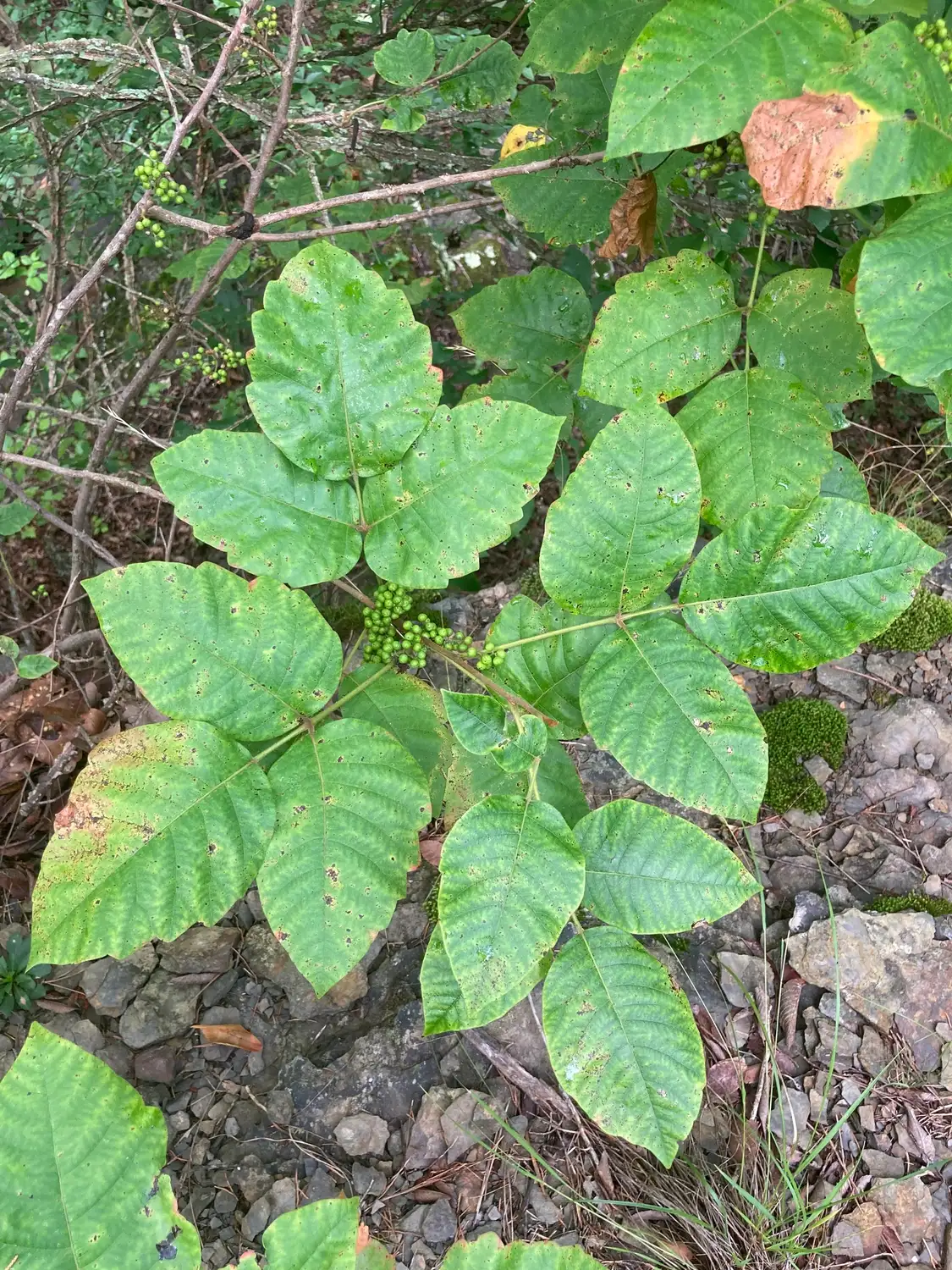
Poison ivy is a vine or shrub with glossy leaves in groups of three (the source of the saying "leaves of three, let it be") arranged alternately. The leaves turn red and orange in autumn, and small white-to-greenish fruits hang in clusters. In people it causes a severe rash.
The ASPCA lists poison ivy (Toxicodendron species) as non-toxic to cats, and no poisoning symptoms have been reported when cats chew or swallow it. The urushiol in its leaves and stems, however, causes severe rashes on human skin, and oil caught in a cat's coat can transfer to the person handling them. It is safe for the cat but not for you.
Guide for parents
Poison ivy sits on the safe side for cats. The ASPCA classifies it as non-toxic, and there are no reports of poisoning when a cat chews on it.
The one who has to be careful is the human in the house. Every part of the plant — leaves, stems, roots — carries an oil called urushiol, and even brushing against it can raise an itchy, blistering rash a day or two later. Cats are usually fine because their coat shields the skin, but the oil clings to that coat for days and transfers straight to whoever picks them up or strokes them.
If your cat has been outdoors around this plant, put on gloves before handling them and wash the coat with lukewarm water and dish soap to lift the oil off. Wash your own hands thoroughly with soap afterwards, and launder clothes and towels separately. One thing to avoid entirely: never burn it when clearing a garden — inhaling urushiol carried in the smoke injures the airways.
Details
- Scientific name
- Toxicodendron species
- Common name
- Poison Ivy
- Family
- Anacardiaceae
- Source
- ASPCA cats plant list
Related plants
Other safe flowers

Related guides

7 Cat-Safe Flowers to Give a Cat Owner
Want to give flowers to a friend or family member who has a cat? Here are 7 flowers that are both beautiful and safe for cats.
Why Cats Chew Plants, and How to Stop It
A cat chewing and tearing at plants isn't just mischief — there's an instinct behind it. Once you understand why, the ways to stop it follow naturally.