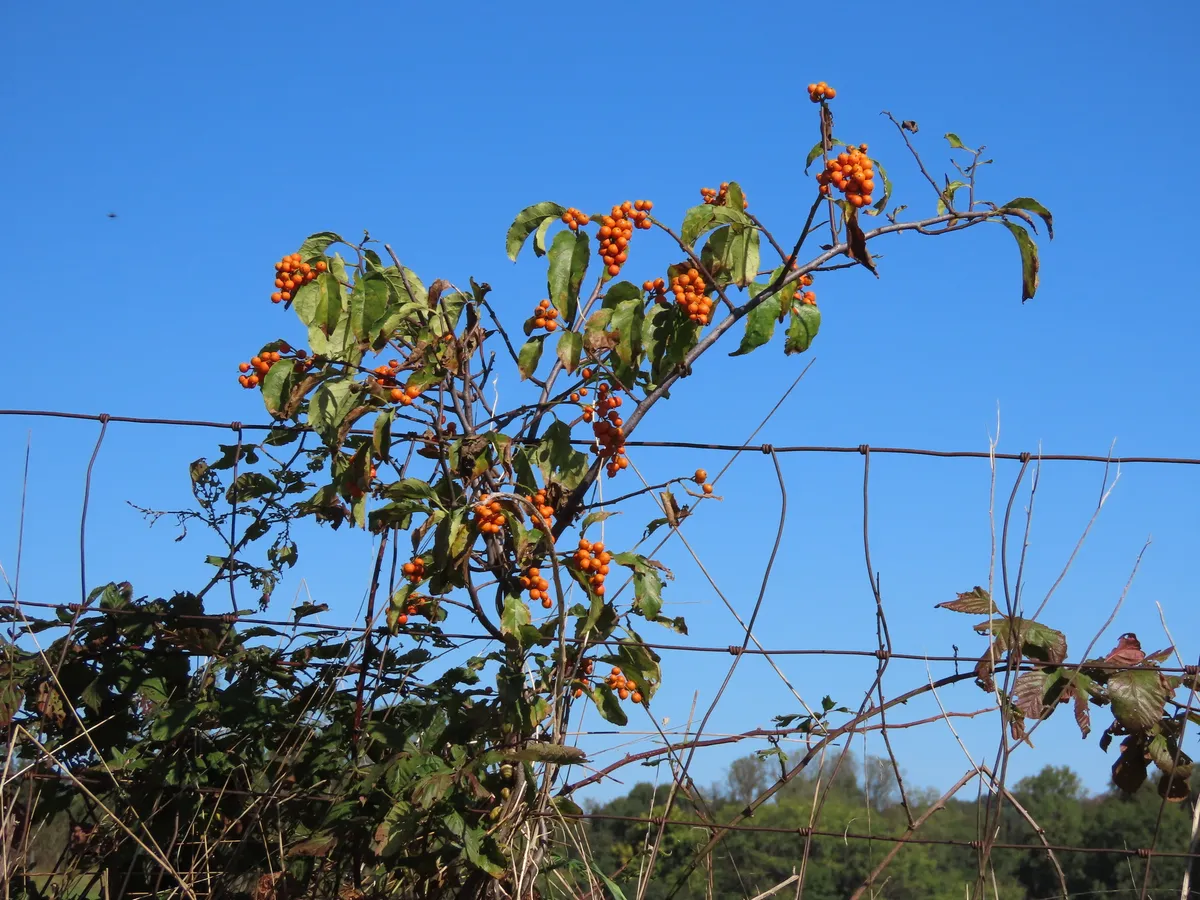
American Bittersweet
Celastrus scandens · Celastraceae
How it looks
American Bittersweet is a deciduous vine with alternate, serrated oval leaves. In fall and winter, yellow capsule-shaped fruits split open to reveal bright red-orange seeds inside. It is commonly used in Christmas decorations.
Caution — monitor for GI symptoms
All parts of American bittersweet contain irritating compounds; chewing them causes vomiting and diarrhea, and can bring weakness and convulsions, with seizures in rare cases. Contact your vet if symptoms persist.
If ingested
Contact your nearest vet immediately
- Action
- Consult a vet and monitor. Go in immediately if symptoms worsen.
- Symptoms
- Vomiting, Diarrhea, Seizures (rare), Weakness, Convulsions, Gastrointestinal upset
- Onset (typical course)
- 1–4 hours after ingestion
Guide for parents
The celastrine and evonine in American bittersweet irritate the stomach and mucous membranes, so chewing it brings vomiting and diarrhea. It usually stays a digestive problem, but weakness and convulsions can follow, and in rare cases it progresses to seizures.
Make a habit of picking up fallen leaves and broken stems the same day, and keep the pot out of your cat's reach.
If symptoms last more than 12 hours or your cat's appetite drops noticeably, consult your vet. If your cat goes weak or shows neurological signs such as convulsions or seizures, don't wait on the clock — head to the vet right away.
Details
- Scientific name
- Celastrus scandens
- Common name
- American Bittersweet
- Family
- Celastraceae
- Toxic parts
- All parts
- Compounds
- Celastrine, Evonine
- Source
- ASPCA cats plant list
Related plants
Same plant family· Celastraceae
Related guides

Top 10 Flowers Dangerous to Cats — The Ones You See at Florists
Ten flowers you'll commonly find at florists and grocery stores that are toxic to cats. Check before you receive them, and before you bring them home.

Got a Bouquet? What to Do If You Have a Cat
A bouquet is a lovely surprise — but if you live with a cat, there are a few things to take care of right away. From checking what's in the arrangement to choosing the right vase, here's what actually helps, in order.
Why Cats Chew Plants, and How to Stop It
A cat chewing and tearing at plants isn't just mischief — there's an instinct behind it. Once you understand why, the ways to stop it follow naturally.