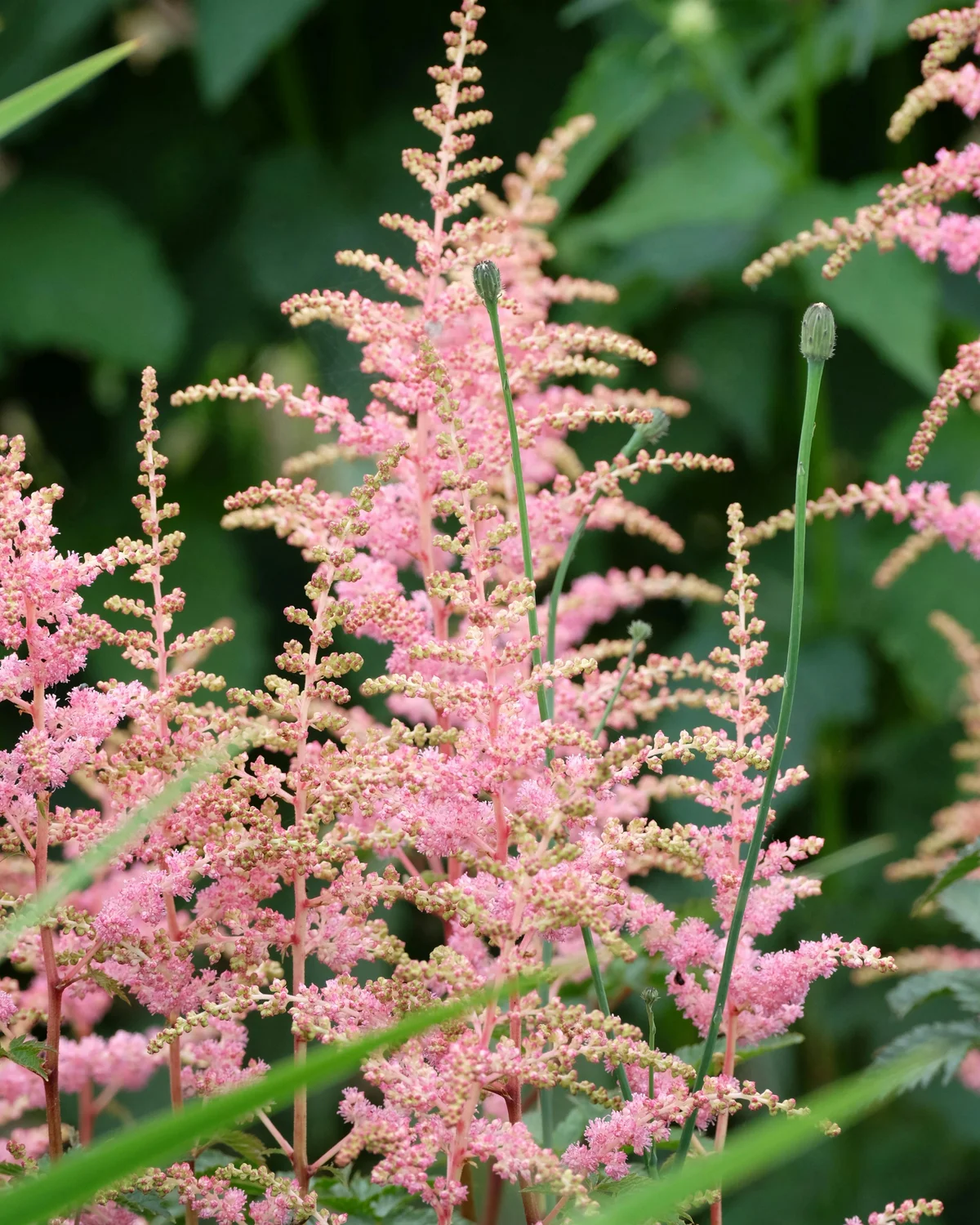
Astilbe
Astilbe spp. · Saxifragaceae
How it looks
Astilbe is characterized by clusters of small, feathery, pointed flower plumes packed densely up the stem. It is sold in a range of colors including white, pink, purple, and red. The leaves are deeply divided and toothed, and when the flowers are in full bloom they give a full, soft texture. At florists it is mostly seen from spring through summer and is popular both as a cut flower and as a potted plant.
No toxicity data available
Astilbe is not listed in the ASPCA's toxic plants list for cats, and NC State Extension has no toxicity data for it either. With no confirmed evidence either way, we cannot call it safe — exercise caution if your cat has access to it.
Guide for parents
Astilbe has no official toxicity data, so it is hard to say for certain whether it is safe.
Some cats chew the petals that drop after the flowers fade, so clear them away regularly. If it is a cut flower treated with florist preservatives, position it so your cat cannot drink the vase water. Consult your vet if ingestion is suspected or vomiting/appetite loss appears.
Details
- Scientific name
- Astilbe spp.
- Common name
- Astilbe
- Family
- Saxifragaceae
- Source
- No confirmed source for cats — not listed by ASPCA
Related plants
Same plant family· Saxifragaceae
Related guides
Top 10 Flowers Dangerous to Cats — The Ones You See at Florists
Ten flowers you'll commonly find at florists and grocery stores that are toxic to cats. Check before you receive them, and before you bring them home.
Got a Bouquet? What to Do If You Have a Cat
A bouquet is a lovely surprise — but if you live with a cat, there are a few things to take care of right away. From checking what's in the arrangement to choosing the right vase, here's what actually helps, in order.
Why Cats Chew Plants, and How to Stop It
A cat chewing and tearing at plants isn't just mischief — there's an instinct behind it. Once you understand why, the ways to stop it follow naturally.