Great as a gift 🌸
Blue Echeveria
Echeveria glauca · Crassulaceae
How it looks
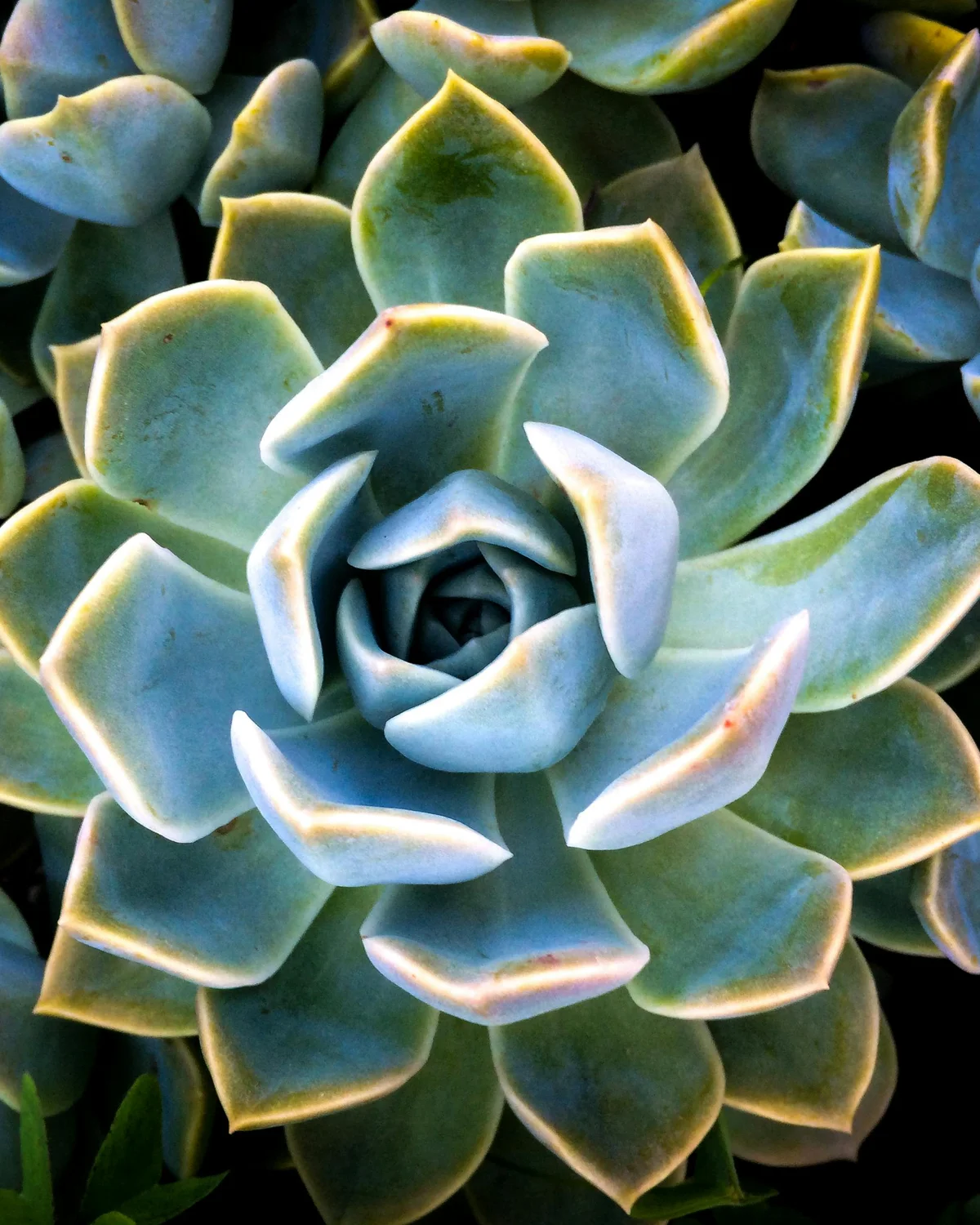
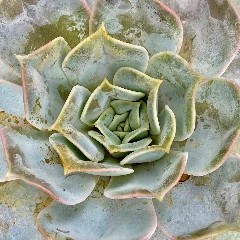
Blue Echeveria is a succulent whose thick, round, fleshy leaves gather in a radial rosette like a rose. The leaves have a strong blue-grey to silver cast and a white powdery bloom on the surface that catches the light. It is about 4-8 in (10-20 cm) across.
Blue Echeveria is a succulent listed as non-toxic to cats by the ASPCA. A nibble or two on its leaves is unlikely to cause any real trouble.
Guide for parents
A safe succulent, but its soft, plump leaves invite the occasional nibble. A small bite rarely causes a noticeable reaction, but to keep leaf-eating from becoming a habit, pick up fallen leaves the same day.
If your cat likes to eat potting soil or fertilizer, that can upset their stomach — covering the soil with pebbles to block access works well.
The basic rule for watering: only after the soil has dried out completely. Overwatering is the biggest cause of root rot, so when in doubt, water less.
Details
- Scientific name
- Echeveria glauca
- Common name
- Blue Echeveria
- Family
- Crassulaceae
- Source
- ASPCA cats plant list
Also known as
Related plants
Same plant family· Crassulaceae
Other safe flowers
Related guides
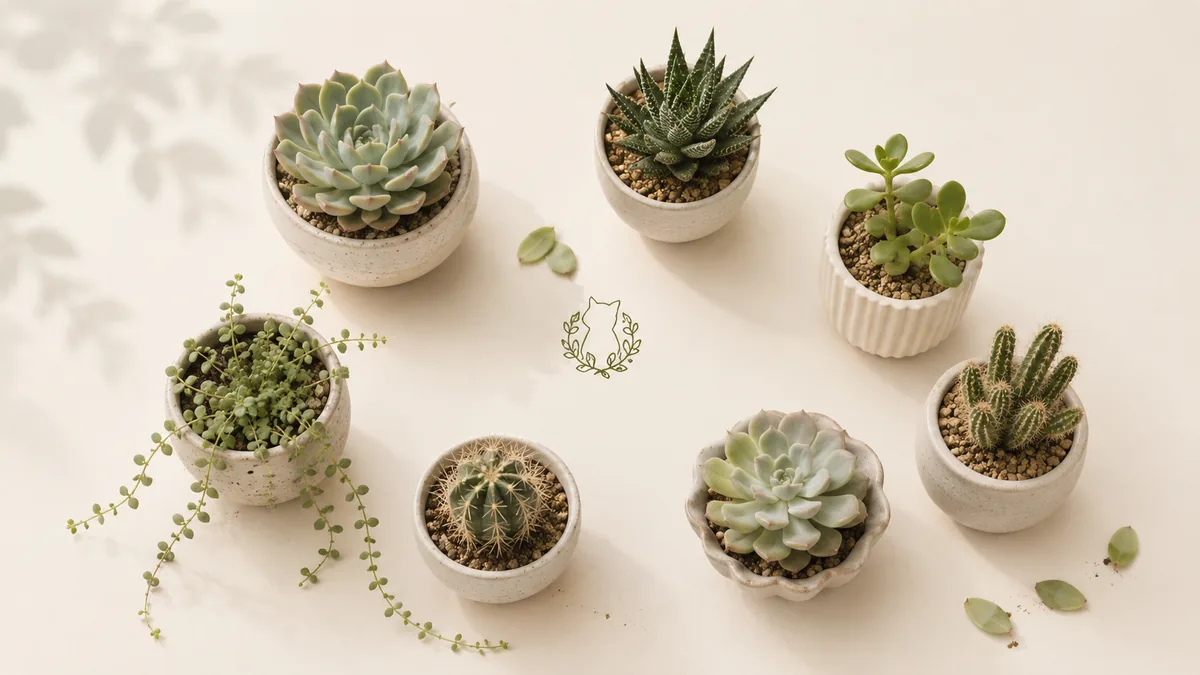
Succulents and Cactus Plants: Are They Safe for Cats?
Whether a succulent or cactus is safe for cats depends on the species — aloe and kalanchoe, for example, are toxic. Here is what to check for each type before you buy.
7 Cat-Safe Flowers to Give a Cat Owner
Want to give flowers to a friend or family member who has a cat? Here are 7 flowers that are both beautiful and safe for cats.
Why Cats Chew Plants, and How to Stop It
A cat chewing and tearing at plants isn't just mischief — there's an instinct behind it. Once you understand why, the ways to stop it follow naturally.