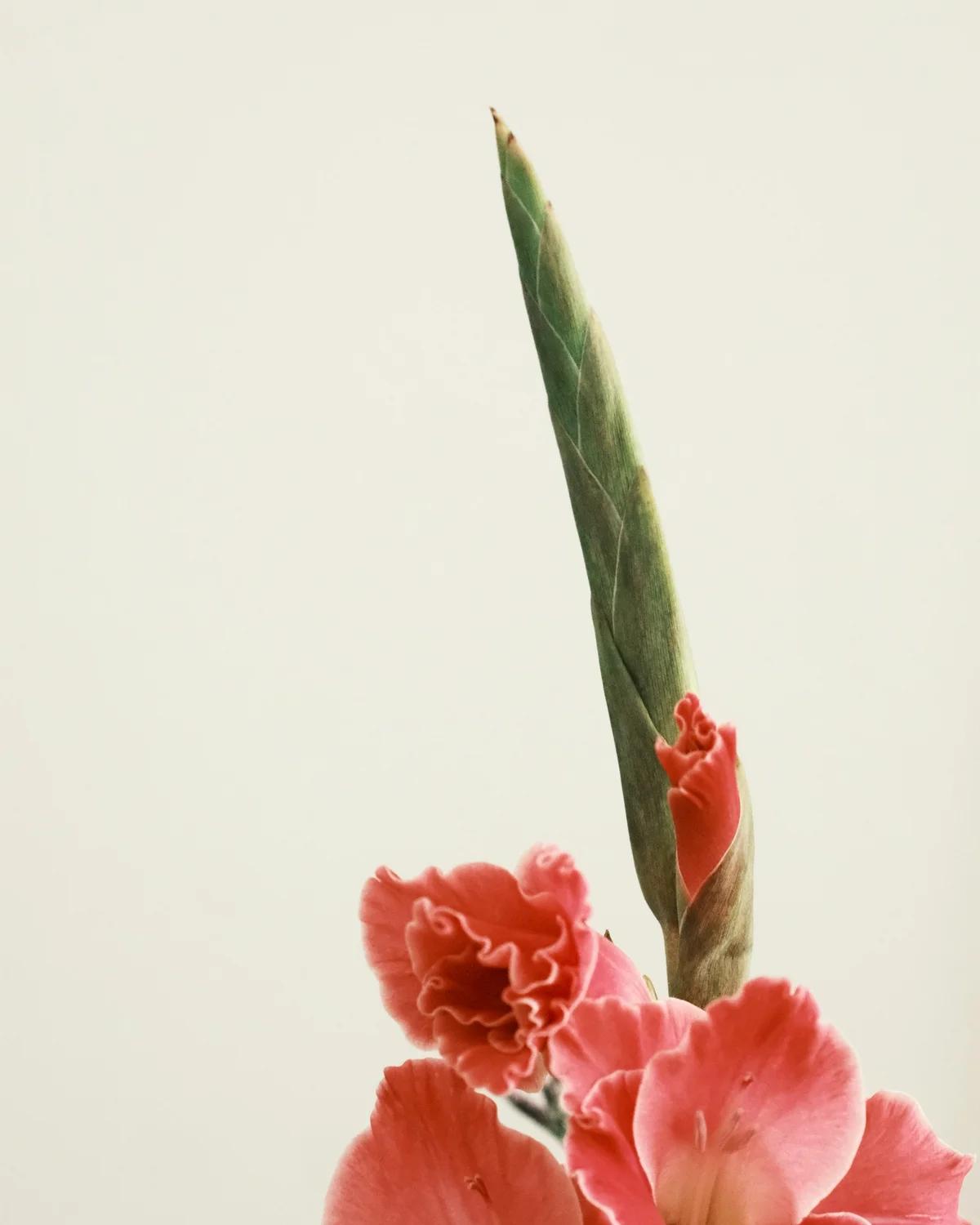
Gladiola
Gladiolus species · Iridaceae
How it looks
The Gladiola is a bulb plant whose funnel-shaped flowers hang in a row down one side of a long stalk. Colors are varied, including red, pink, yellow, white, and purple. The leaves are narrow, long, and sword-shaped, and the plant stands 24–59 in (60–150 cm) tall.
Caution — the bulbs are the most toxic part
Like other bulb plants, Gladiola concentrates its toxins in the underground bulb. Eating the bulb causes pronounced vomiting, diarrhea, and lethargy.
If ingested
Contact your nearest vet immediately
- Action
- Consult a vet and monitor. Go in immediately if symptoms worsen.
- Symptoms
- Vomiting, diarrhea, lethargy
- Onset (typical course)
- 1–4 hours after ingestion
Guide for parents
Gladiola is common as a summer garden plant or cut flower. The flowers and leaves are fairly low-risk, but the bulb in the pot is clearly dangerous.
When repotting, be careful that your cat doesn't chew a bulb exposed in the soil.
If you suspect your cat ate a bulb, you'll need to consult your vet right away. For flowers that come only as cut flowers, just keep the vase out of reach.
Details
- Scientific name
- Gladiolus species
- Common name
- Gladiola
- Family
- Iridaceae
- Toxic parts
- All parts (especially the bulbs)
- Compounds
- Iridals, Alkaloids
- Source
- ASPCA cats plant list
Related plants
Same plant family· Iridaceae
Related guides
Top 10 Flowers Dangerous to Cats — The Ones You See at Florists
Ten flowers you'll commonly find at florists and grocery stores that are toxic to cats. Check before you receive them, and before you bring them home.
Got a Bouquet? What to Do If You Have a Cat
A bouquet is a lovely surprise — but if you live with a cat, there are a few things to take care of right away. From checking what's in the arrangement to choosing the right vase, here's what actually helps, in order.
Why Cats Chew Plants, and How to Stop It
A cat chewing and tearing at plants isn't just mischief — there's an instinct behind it. Once you understand why, the ways to stop it follow naturally.