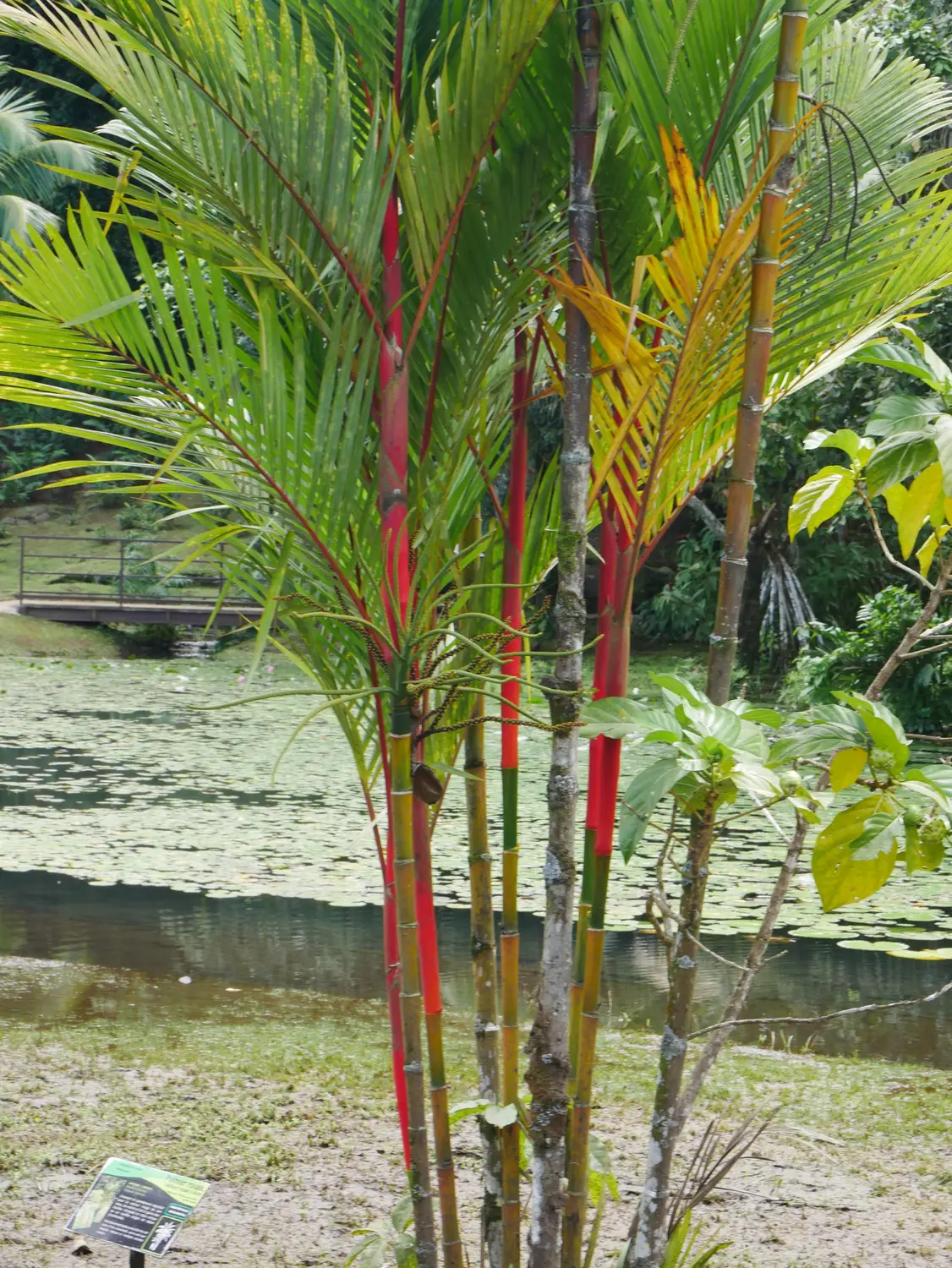
Lipstick Palm
Cyrtostachys renda · Arecaceae
How it looks
Lipstick Palm (Cyrtostachys renda) is a very striking tropical palm with slender, feather-shaped dark-green leaves and a smooth crown shaft of vivid red on the upper stem. Height 10-20 ft (3-6 m), with the stem colored red like lipstick.
No toxicity data available
Lipstick Palm is not listed in the ASPCA's toxic plants list for cats, and NC State Extension has no toxicity data for it either. With no confirmed evidence either way, we cannot call it safe — exercise caution if your cat has access to it.
Guide for parents
Lipstick Palm has no official toxicity data, so it is hard to say for certain whether it is safe.
Its pointed leaf tips can scratch the inside of a mouth, so avoid placing it where your cat often walks through. It is a popular indoor foliage plant, but pick up fallen fronds the same day, and consult your vet if ingestion is suspected.
A word of caution: cycads (sago palm and Zamia) are not true palms even though "palm" is in their names — and they are deadly. Checking the scientific name matters.
Details
- Scientific name
- Cyrtostachys renda
- Common name
- Lipstick Palm
- Family
- Arecaceae
- Source
- No confirmed source for cats — not listed by ASPCA
Related plants
Same plant family· Arecaceae
Related guides
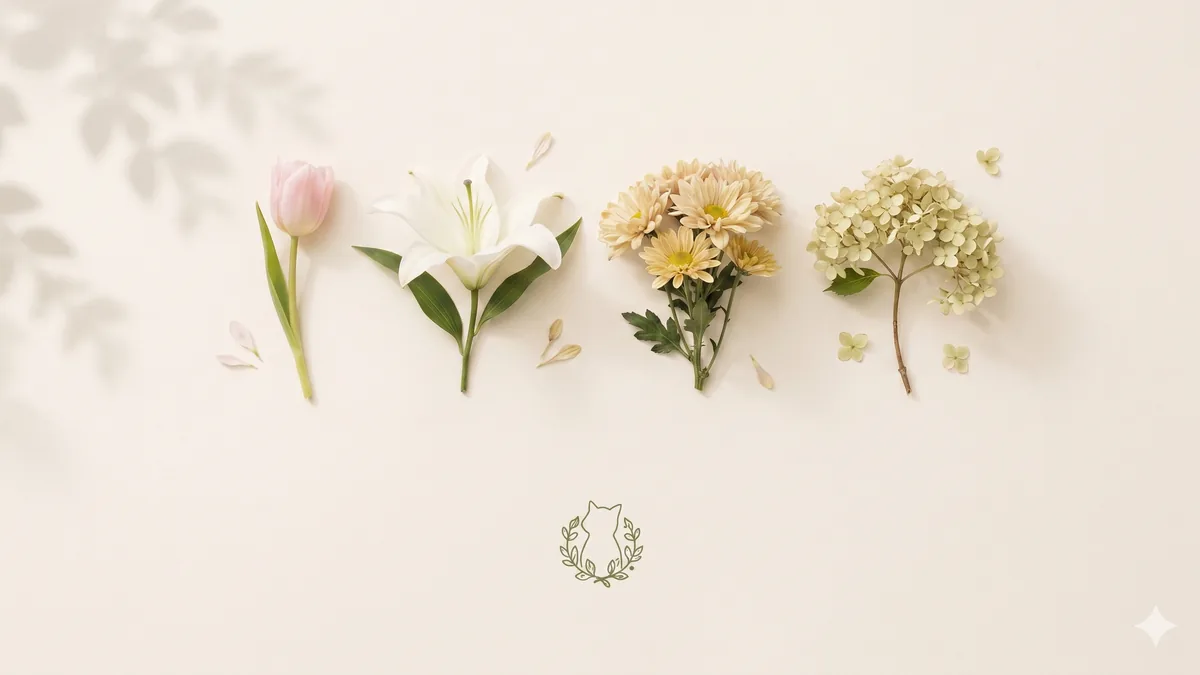
Top 10 Flowers Dangerous to Cats — The Ones You See at Florists
Ten flowers you'll commonly find at florists and grocery stores that are toxic to cats. Check before you receive them, and before you bring them home.
Got a Bouquet? What to Do If You Have a Cat
A bouquet is a lovely surprise — but if you live with a cat, there are a few things to take care of right away. From checking what's in the arrangement to choosing the right vase, here's what actually helps, in order.
Why Cats Chew Plants, and How to Stop It
A cat chewing and tearing at plants isn't just mischief — there's an instinct behind it. Once you understand why, the ways to stop it follow naturally.