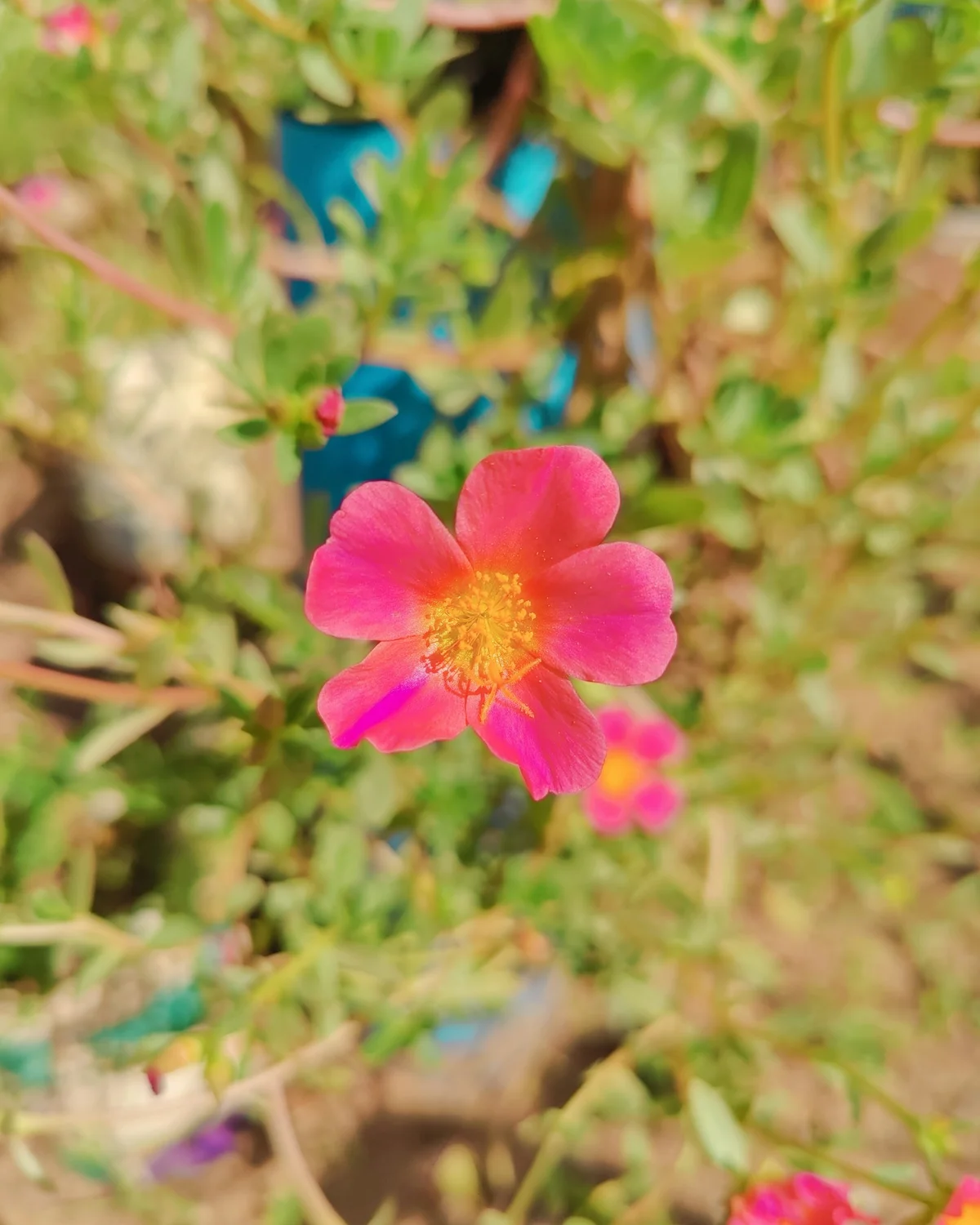
Moss Rose
Portulaca grandiflora · Portulacaceae
How it looks
Moss Rose has slender, cylindrical succulent leaves that grow in clusters along the stems. The stems creep sideways, and small cup-shaped flowers bloom in a range of colors including red, pink, yellow, and white. It reaches 4-8 in (10-20 cm) tall and is common in flower beds and between rocks.
No toxicity data available
Moss Rose (Portulaca grandiflora) is not listed in the ASPCA's toxic plants list for cats, and NC State Extension has no toxicity data for it either. With no confirmed evidence either way, we cannot call it safe — exercise caution if your cat has access to it.
If ingested
Contact your nearest vet immediately
- Action
- Rinse the mouth with water and monitor. Consult a vet if symptoms last more than 12 hours.
Guide for parents
Moss Rose has no official toxicity data, so it is hard to say for certain whether it is safe.
This page used to cite the ASPCA as its source. But the ASPCA's "Moss Rose" entry is Portulaca oleracea — common purslane — not Portulaca grandiflora, so it cannot stand as a verdict on this plant, and the attribution has been corrected. NC State Extension has a page for the species, but its poison field is empty.
The name overlap is the reason for the mix-up. Moss Rose, Portulaca, Purslane, and Rock Moss are shared by both species, and seed packets and plant labels swap them freely. Common purslane is listed by the ASPCA as toxic to cats, so check which one you actually have: Portulaca grandiflora is an ornamental with showy red, pink, and yellow blooms, often double, while common purslane is a weed with tiny yellow flowers that comes up on its own in fields and cracks in pavement.
Moss Rose loves sun, so it usually lives in a balcony bed, a windowsill pot, or between rocks. The stems creep low and sideways and snap easily because they are succulent, which makes them easy for a passing cat to bite. Clear away fallen leaves and broken stems the same day, and for indoor pots, cover the soil with pebbles so your cat can't dig.
No evidence does not mean it is fine — it means nobody has checked. If you suspect your cat has chewed it, or you see vomiting, diarrhea, or low energy, contact your vet.
Details
- Scientific name
- Portulaca grandiflora
- Common name
- Moss Rose
- Family
- Portulacaceae
- Source
- No confirmed source for cats — not listed by ASPCA
Related plants
Same plant family· Portulacaceae
Related guides

Top 10 Flowers Dangerous to Cats — The Ones You See at Florists
Ten flowers you'll commonly find at florists and grocery stores that are toxic to cats. Check before you receive them, and before you bring them home.

Got a Bouquet? What to Do If You Have a Cat
A bouquet is a lovely surprise — but if you live with a cat, there are a few things to take care of right away. From checking what's in the arrangement to choosing the right vase, here's what actually helps, in order.
Why Cats Chew Plants, and How to Stop It
A cat chewing and tearing at plants isn't just mischief — there's an instinct behind it. Once you understand why, the ways to stop it follow naturally.