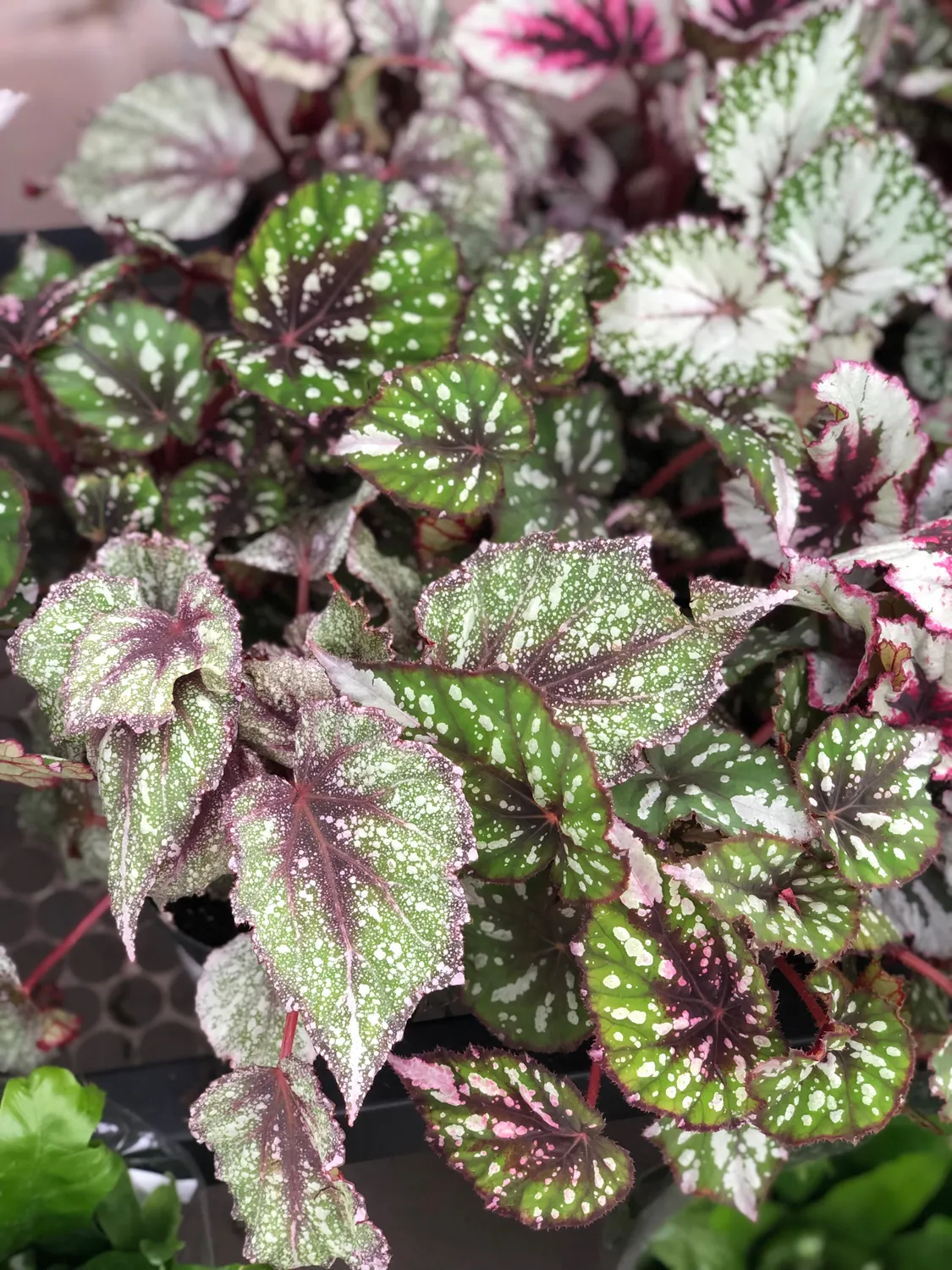
Peace Begonia
Begonia rex 'peace' · Begoniaceae
How it looks
Peace begonia is a type of rex begonia with large, oblique leaves swirled in silver and purple. The leaf surface is rough-textured and the undersides are purple. The foliage, more than the flowers, is the main attraction; grows 8–16 in tall.
Mild caution — stomach upset
The roots and leaves of peace begonia contain irritating compounds that can cause vomiting if chewed. If your cat has eaten it, watch for symptoms and contact your vet if any appear.
If ingested
Contact your nearest vet immediately
- Action
- Rinse the mouth with water and monitor. Consult a vet if symptoms last more than 12 hours.
- Symptoms
- Oral irritation, vomiting
- Onset (typical course)
- Right away to within 2 hours of ingestion
Guide for parents
The calcium oxalates and oxalates in peace begonia irritate the stomach and mucous membranes, causing digestive upset.
Make it a habit to clear fallen leaves and broken stems the same day, and keep the pot somewhere your cat can't reach.
If symptoms last more than 12 hours or your cat's appetite drops noticeably, consult your vet.
Details
- Scientific name
- Begonia rex 'peace'
- Common name
- Peace Begonia
- Family
- Begoniaceae
- Toxic parts
- Roots, Leaves
- Compounds
- Calcium oxalates, Oxalates
Related plants
Same plant family· Begoniaceae
Related guides
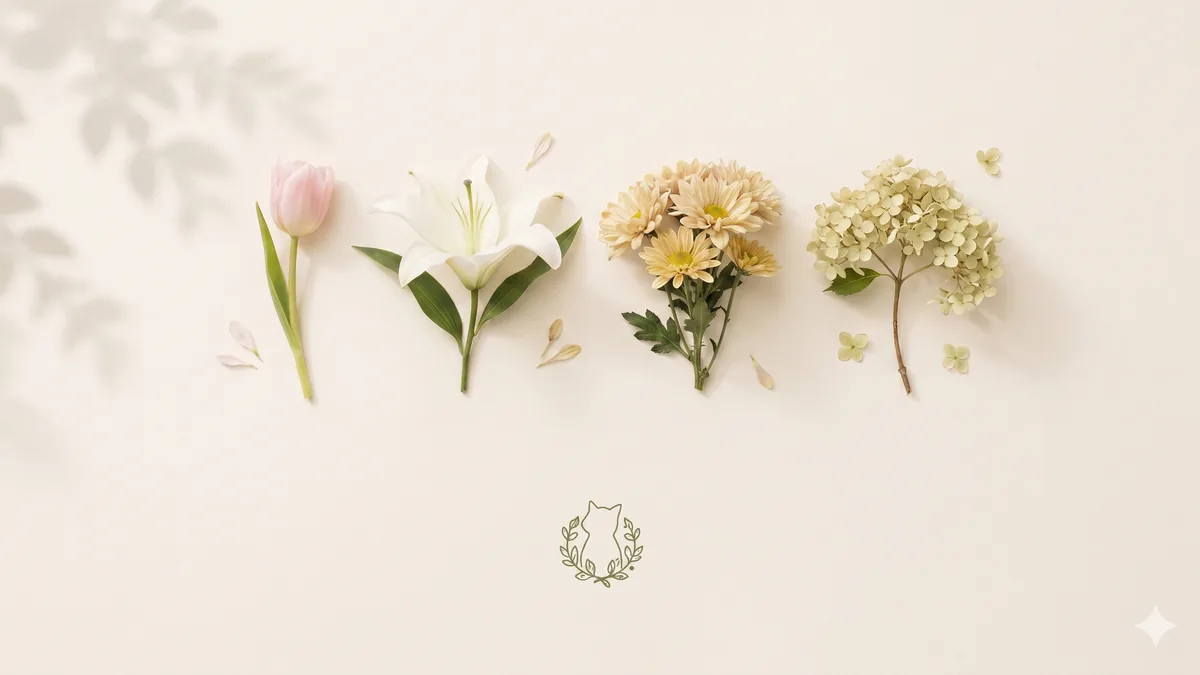
Top 10 Flowers Dangerous to Cats — The Ones You See at Florists
Ten flowers you'll commonly find at florists and grocery stores that are toxic to cats. Check before you receive them, and before you bring them home.
Got a Bouquet? What to Do If You Have a Cat
A bouquet is a lovely surprise — but if you live with a cat, there are a few things to take care of right away. From checking what's in the arrangement to choosing the right vase, here's what actually helps, in order.
Why Cats Chew Plants, and How to Stop It
A cat chewing and tearing at plants isn't just mischief — there's an instinct behind it. Once you understand why, the ways to stop it follow naturally.