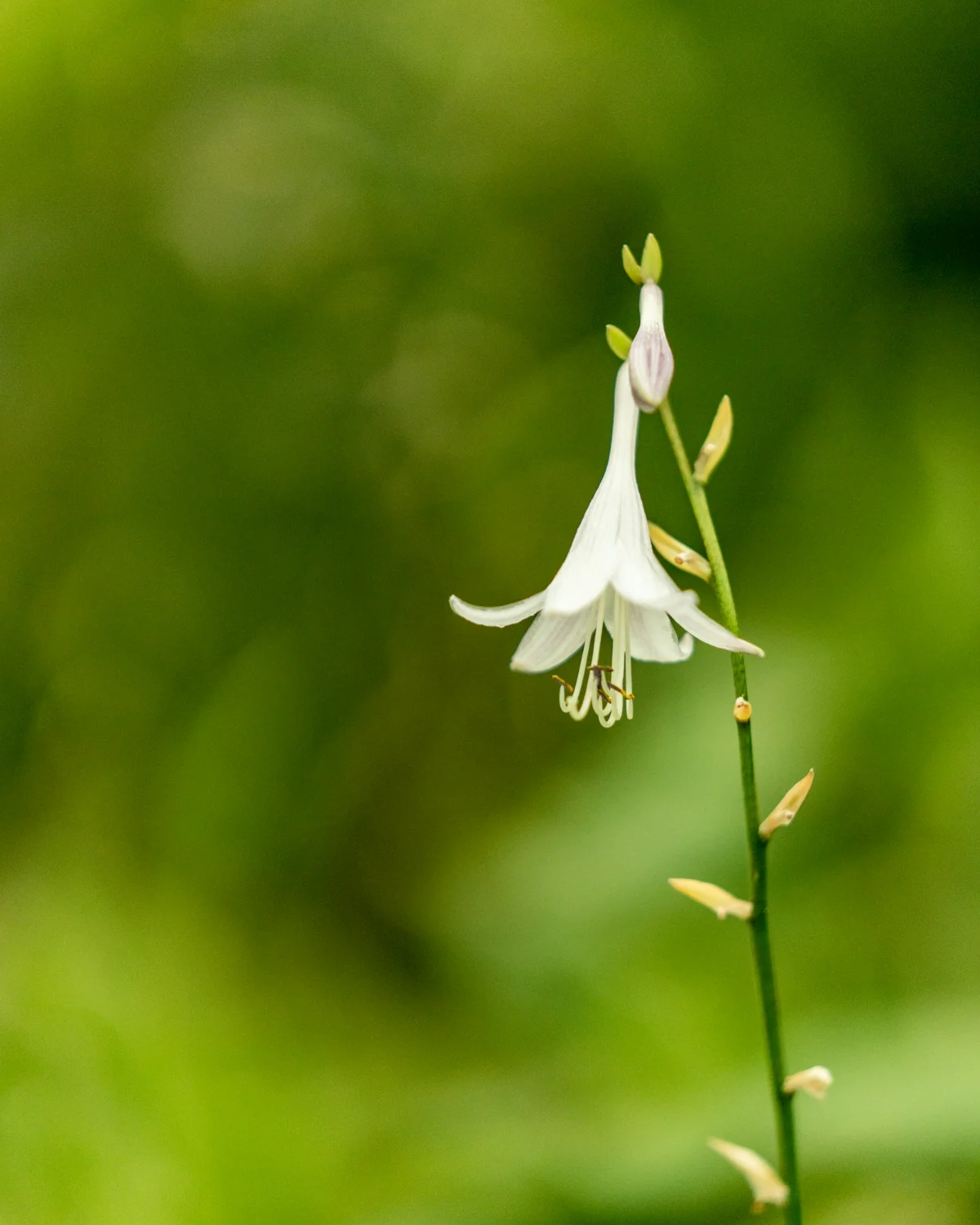
Great as a gift 🌸
Saint Bernards Lily
Anthericum liliago · Asparagaceae
How it looks
Saint Bernard's Lily (Anthericum) is a herb whose narrow, long, sword-shaped leaves grow in clumps from the root, with white six-petaled star-shaped flowers blooming in clusters along slender flower stalks. Height 12-31 in (30-80 cm).
Saint Bernards Lily is listed as non-toxic to cats by the ASPCA. An occasional nibble is unlikely to cause any real trouble.
Guide for parents
If leaves or stems sit at a height your cat can reach, they may get chewed or snapped. If the same spot keeps turning up damaged, that may be a route your cat takes.
If the pot can be moved, shift it off that route; if the plant is in the ground, just pick up dropped or broken pieces whenever you notice them.
Details
- Scientific name
- Anthericum liliago
- Common name
- Saint Bernards Lily
- Family
- Asparagaceae
- Source
- ASPCA cats plant list
Related plants
Same plant family· Asparagaceae

Other safe flowers
Related guides
What to Do If Your Cat Ate a Lily
Lilies are deadly to cats. Eating a single leaf can lead to kidney failure. If you suspect your cat has ingested any part of a lily, here's what to do right now.

7 Cat-Safe Flowers to Give a Cat Owner
Want to give flowers to a friend or family member who has a cat? Here are 7 flowers that are both beautiful and safe for cats.
Why Cats Chew Plants, and How to Stop It
A cat chewing and tearing at plants isn't just mischief — there's an instinct behind it. Once you understand why, the ways to stop it follow naturally.