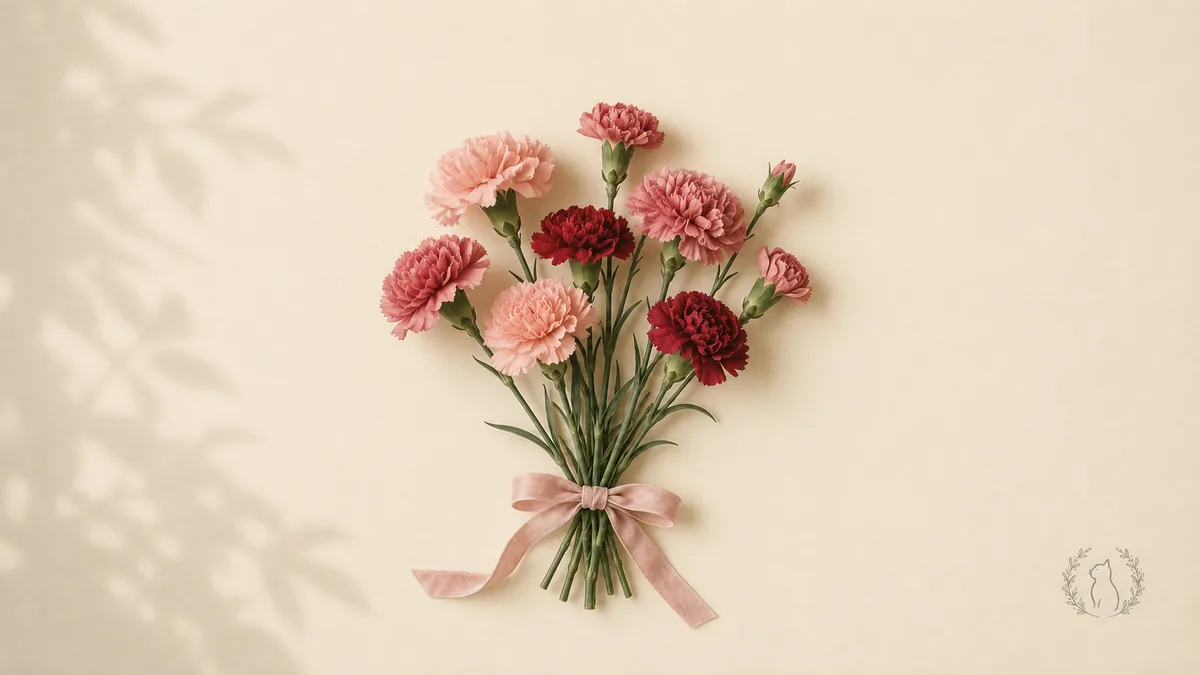
Mother's Day Carnations and Cats: Are They Safe at Home?
Carnations are a caution-grade flower for cats, not deadly. Here's what to watch for by form, from cut bouquets and vase water to potted plants, corsages, and soap flowers.
When Mother's Day, Father's Day, or Valentine's rolls around, carnations start showing up in homes everywhere. But if you live with a cat, you probably pause before setting that bouquet down on the living room table. "Are carnations dangerous to cats?" The short answer: carnations themselves aren't a life-threatening flower, but they aren't completely harmless either. They call for a reasonable amount of caution. And Mother's Day carnations come in many forms — cut bouquets, potted plants, corsages pinned to a jacket, and the soap flowers and artificial arrangements that are so common now. Even when it's the same carnation, the thing you need to watch out for is different for each form. Let's start with how risky the carnation itself really is, then go form by form.
How Risky Carnations Really Are
Carnations sit at the caution grade on flower cat's scale. The whole plant contains an irritant thought to be triterpenoid saponins, so if a cat chews on it, you may see mild gastrointestinal upset, and contact with the mouth or skin can cause a mild dermatitis. Symptoms usually appear anywhere from right after ingestion up to about two hours later. The key point is this: carnations have no known life-threatening toxicity. They aren't in the same category as lilies, which can cause kidney failure or death. If your cat nibbles a bit of carnation leaf, there's no need to panic. In most cases, rinsing the mouth with water and keeping an eye on things is enough for a natural recovery. That said, if symptoms last more than 12 hours, check in with your vet.
The Difference Between Overblown Fear and Real Caution
The internet is full of absolute statements like "never keep carnations in a home with cats." But putting carnations on the same level as lilies isn't accurate. A carnation is a flower that's "better kept out of reach, but not an emergency if your cat brushes against it." Here's the realistic approach. If you receive carnations, place them somewhere high your cat can't reach, or in a room your cat doesn't go into. There's no need to throw the flowers out, but leaving them on a low living room table is best avoided. The related dianthus, which belongs to the same family, also contains saponins and warrants the same level of caution.
What to Watch For, Form by Form
Cut bouquets — This is the most common form, and honestly the bigger problem is the other flowers tucked in alongside the carnations. Lilies are often mixed in for volume, and a single grain of lily pollen can trigger acute kidney failure in a cat. When you get a bouquet, don't just look at the carnations — check each flower one by one. If there's even a single lily, that bouquet has to come out of any space your cat can access. There's a full walkthrough for inspecting a gifted bouquet in What to Do If You're Given Flowers and You Have a Cat, and what to do if a cat ingests lily is covered in Lily Poisoning: Emergency Steps.
Vase water — This is a surprisingly easy thing to overlook with cut flowers. The floral preservative added to keep flowers fresh longer can be harmful to cats, and cats are drawn to running or standing water. Keep the vase somewhere your cat can't drink from it or knock it over.
Potted carnations — Unlike cut flowers, these stay in the home for weeks. That means a much longer exposure window, so placement matters even more, and if you have a cat that digs, you'll also need to think about the potting soil. That's covered in Cats That Dig and Eat Potting Soil.
Corsages and floral accessories — A corsage pinned to a jacket is easy to take off and set down anywhere. Left on a sofa or dining table, it's the perfect toy from a cat's point of view. On top of that, corsages come with wire, pins, and hot-glue bits, which are more concerning than the flower itself. Once you've worn it, tuck it away in a drawer or somewhere that closes.
Soap flowers and artificial flowers — These have no plant toxicity. But if swallowed, they're an indigestible foreign object, which is a separate hazard, and soap flowers in particular can catch a cat's interest because of their scent and texture. Don't let your guard down just because "it's artificial, so it's safe." If you see signs of chewing or notice a piece has gone missing, call your vet.
So, Is It OK to Accept Carnations?
Yes, it's fine. Carnations themselves are caution grade — not fatal. The things that actually deserve your attention aren't the carnations, but what comes with them: lilies mixed into the bouquet, preservative in the vase water, wire and pins on a corsage, artificial flower fragments. To keep your mind at ease, unwrap the flowers you've received, and move just the carnations to a vase up high. That's enough. And if you'd like to give flowers with total peace of mind from the start, see Safe Flowers to Gift a Home With Cats.