Cats Digging in Potting Soil: Repotting Risks and How to Stop It
Some cats ignore the leaves but dig up and eat potting soil. Learn the hidden risks of soil, fertilizer, and pesticides, exposed bulbs during repotting, and how to cover soil.
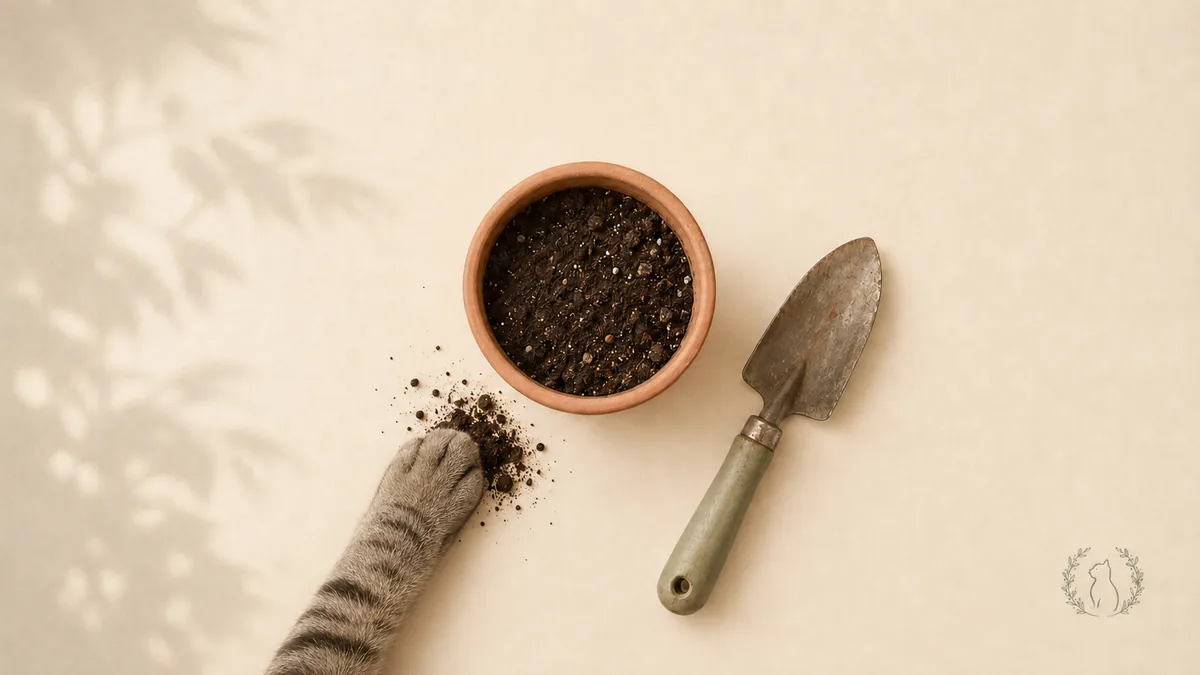
When you keep plants, cats that dig up potting soil are just as common as the ones that chew on leaves. Some never touch a single leaf but go straight for the dirt, scattering soil across the living room floor and, in worse cases, taking mouthfuls and swallowing it. The real danger often hides in the soil, fertilizer, and pesticides rather than the plant itself, so this calls for a slightly different approach than simply guarding the leaves. Digging can be plain mischief, but sometimes a cat mistakes the pot for a litter box or is drawn in by the smell of something buried in the soil. Let's start with why cats dig, then look at what to watch for in pot care and repotting.
Why cats dig in soil
The most common reason is that a cat mistakes potting soil for litter. Soft, easy-to-dig soil looks like a pretty appealing spot for a cat to relieve itself. When the litter box is dirty or in a location the cat dislikes, it may relocate to a plant pot instead. Some cats are drawn by the smell of mulch on the soil surface or of the fertilizer itself. The scent of organic fertilizer or compost sparks a cat's curiosity. More rarely, some cats have a tendency toward pica, an appetite disorder in which they repeatedly try to eat non-food items like soil or sand. If your cat eats soil often and in large amounts, it can be a sign of stress or a health issue, so it's best to talk with your vet.
The hidden dangers in soil, fertilizer, and pesticides
Even when the plant is safe, the additives in potting soil are a separate problem. Commercial potting mixes often contain chemical fertilizers, perlite, and nutrient supplements, and swallowing these can cause stomach irritation or vomiting. Pesticides and fungicides deserve special caution. Sprays applied to pots to control spider mites or aphids, as well as granular pesticides pushed into the soil, can be harmful to cats. Right after treating a plant, keep your cat away from the soil and leaves, and if possible, avoid using granular products in any space your cat can reach. When adding chemical fertilizer, mix it into the soil rather than leaving it on the surface to reduce exposure.
Watch for exposed bulbs during repotting
Repotting is a time spent handling soil, so the risk runs higher than usual. While you're turning the soil over, your cat may come close to dig and eat it, or pick up loose soil and roots that have fallen outside the pot. The safest option is to keep your cat in another room while you work. Bulb plants call for extra care. Plants that grow from bulbs, such as tulips, daffodils, hyacinths, and amaryllis, concentrate their irritant compounds in the bulb, so the risk climbs when repotting leaves a bulb exposed above the soil. For these plants, the bulb needs more attention than the leaves or flowers, so after repotting, cover the bulb well so it isn't exposed and clear away every fallen fragment. We cover the dangers of bulb plants in more detail in Spring Bulb Flowers: The Dangers of Tulips, Daffodils, and Hyacinths. Related plants include tulip, daffodil, hyacinth, and amaryllis. All are rated caution, so stay mindful of exposed bulbs and ingestion.
How to cover the soil and block access
The easiest method is to cover the soil surface. Laying coarse gravel, pine cones, or large pebbles on top of the soil makes it awkward to dig with the paws and cuts down on access. Gravel has a texture clearly different from litter, which also helps break the habit of mistaking a pot for a bathroom spot. You can also hide the top of the soil with pot netting or a breathable cover. Use heavy pots so they won't tip over when your cat bumps them, and when possible, place them on high shelves your cat has trouble climbing to. Setting citrus peels around the edge of the soil can discourage access with its smell, but essential oils can be harmful to cats, so never use them in a form your cat could have sprayed on or inhale.
Start by checking the litter box setup
If your cat keeps using pots as a bathroom, blocking access alone won't be enough, because the root cause may lie with the litter box. Check whether you have enough litter boxes (the basic rule is one per cat plus one extra), whether you clean them often enough, and whether they sit in quiet, easy-to-reach spots. When the litter box is pleasant, there's less reason for your cat to seek out a pot. Just like leaf chewing, digging responds better to "redirecting" than to "blocking." Growing cat grass separately channels the urge to chew and dig toward something safe, which reduces interest in your pots. For details on growing it, see How to Grow Cat Grass.