Cat Grass Growing Guide: A Safe Plant Your Cat Can Chew
Instead of blocking your cat from your houseplants, give them cat grass they can chew freely. Learn how to grow it, why cats love it, where to place it, and how to avoid overeating.
If your cat keeps nibbling the leaves of your houseplants, the most effective fix is to change your approach. The chewing behavior itself is hard to stop, but if you set aside a safe plant they're allowed to chew, you can naturally redirect their interest away from dangerous foliage plants. That's exactly what cat grass is for. Cat grass isn't one specific plant — it's a general term for the young sprouts of grains like oats, wheat, and barley. It's easy to grow, safe for cats, and, above all, cats love it. This guide covers what cat grass is, why cats are drawn to it, and how to grow it, where to place it, and what to watch out for.
What Is Cat Grass?
Cat grass usually refers to the sprouts of oats, wheat, barley, or rye. All you need is seed, and green blades push up from soil or water within a few days — so even a first-time plant grower can hardly fail. Garden centers and online shops sell "cat grass kits" that bundle the seed and soil together, making them easy to find. It's a different plant from catnip, which people often confuse it with. Catnip is an herb that excites cats with its scent, while cat grass is a plant that gives them the texture of chewing and tearing. Catnip is rated caution on flower cat's scale: small amounts are no big problem, but eating a lot can cause symptoms like drooling, so the amount needs managing. Keeping both on hand lets you meet a wider range of your cat's needs.
Why Do Cats Chew Grass?
There's no single explanation for why cats chew grass. The commonly cited ideas are that it helps them throw up the fur they swallow while grooming, that it aids digestion or supplements missing trace nutrients, and that they simply enjoy the texture and the act of chewing. Whatever the reason, the urge to chew grass is a natural behavior in itself. The problem arises when the only thing indoors to satisfy that urge is a dangerous foliage plant. We cover the reasons cats chew plants in more detail in Why Cats Chew Plants and How to Stop It.
How to Grow Cat Grass
You can grow cat grass easily by following these steps.
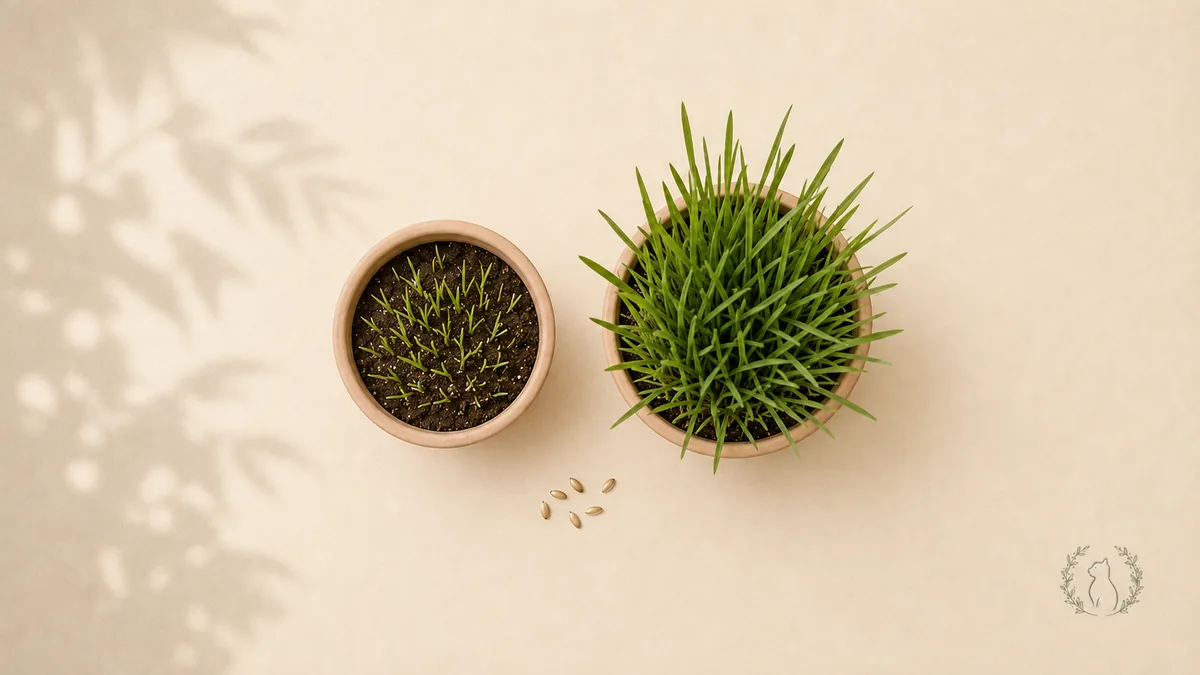
- Fill a wide, shallow pot with soil, scatter the seed evenly, then cover it with a thin layer of soil.
- Mist the soil with a spray bottle until it's moist, and place it somewhere bright but out of harsh direct sunlight.
- Sprouts usually appear in three or four days, and within a week to ten days the grass grows to a good length for your cat to chew.
- Mist it lightly every day so the soil doesn't dry out. If the blades yellow and wilt or you see mold, don't hesitate to toss it and start fresh. Seed is cheap, so the cost is low, and if you grow two or three pots on a staggered schedule you'll always have fresh cat grass on hand.
Where to Put It — Placement Tips
Place cat grass where your cat usually spends time — a sunny windowsill or near the cat tower — and they'll seek it out naturally. Conversely, if you put it near a dangerous foliage plant, it's hard to tell which one your cat is chewing, so keep the cat grass somewhere low and visible while moving dangerous plants up high and out of reach. If your cat has a habit of digging in soil, they may dig up the pot. We cover how to handle digging behavior in When Your Cat Digs in Potting Soil.
Watch Out for Overeating
Cat grass is safe, but eating too much at once can sometimes cause vomiting. In fact, throwing up after chewing grass is a somewhat natural behavior, but if the vomiting is frequent or your cat seems listless afterward, cut back the amount and monitor their condition. If your cat keeps chewing other pots even after you've provided cat grass, it's worth checking for other factors in the environment.
Conclusion
Your cat's urge to chew isn't a problem to block — it's an instinct to redirect. Simply removing dangerous plants and providing cat grass they can safely chew instead can prevent many houseplant accidents. It's easy to grow and inexpensive, so if your cat is very interested in plants, we recommend keeping a pot of it around.