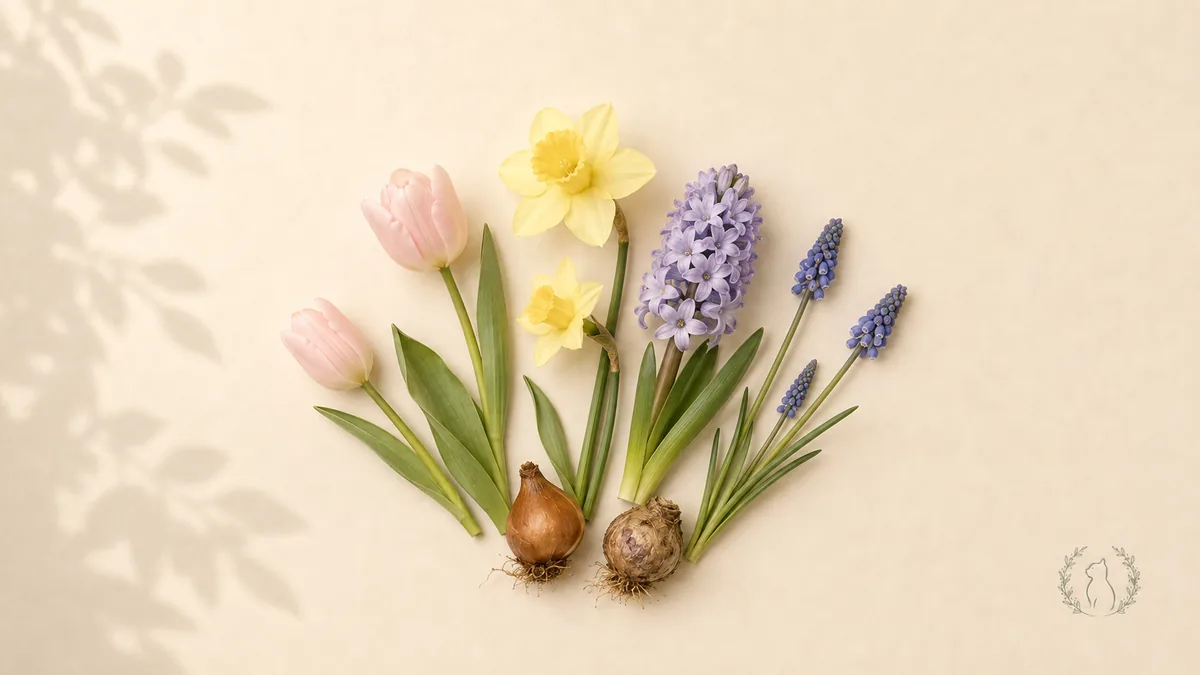
Spring Bulb Flowers and Cats: Tulips, Daffodils, Hyacinths, and Muscari
Spring bulb pots are easy to bring home, but tulips, daffodils, and hyacinths are risky for cats. Learn the dangers, why lookalike muscari is safe, and how to keep curious cats away from the soil.
When spring arrives, florists and grocery stores fill up with colorful bulb pots all at once. Tulips, daffodils, and hyacinths smell wonderful and are easy to grow, which makes them a natural choice for welcoming the season indoors. But if you share your home with a cat, the story changes. All three contain compounds that irritate cats, and the toxins are most concentrated in the bulb itself. Bulb flowers are tricky for two reasons. First, the most dangerous part, the bulb, is hidden underground in the soil. Second, they are easily confused with safe flowers that look almost identical. This guide walks through the dangers of spring bulb flowers and explains how the lookalike muscari fits into the picture. All toxicity grades and symptoms are based on flower cat data.
Tulips: the toxins are packed into the bulb
Tulips are one of the most common spring flowers to come home, both as potted plants and cut stems. The bulb holds far higher levels of an irritant called tulipalin than the flowers or leaves do. If a cat chews on a bulb, severe drooling, vomiting, diarrhea, and lethargy can appear within 2 to 4 hours of ingestion. A light nibble on the flower or a leaf usually just means keeping an eye on things, but if you see signs that a cat has been chewing the bulb, it is safest to call your vet right away. Potted forms carry the greater risk, since the bulb sits in reach beneath the soil.
Daffodils and jonquils: lycorine alkaloids
Daffodils also concentrate lycorine alkaloids throughout the plant, and especially in the bulb. Chewing a bulb can bring on violent vomiting, drooling, and diarrhea within 1 to 4 hours of ingestion, and eating a large amount can even lead to seizures. The closely related jonquil is no different: irritant compounds run through the whole plant, and a cat may show vomiting, diarrhea, and lethargy. Both often arrive as spring gift plants, so do not assume a different name means a different risk.
Hyacinths: a scent that draws cats in
Hyacinths are prized as a spring houseplant for their strong fragrance, but that very scent can pull a curious cat closer. Like daffodils, they concentrate alkaloids and oxalic acid in the bulb, so chewing one can trigger violent vomiting, diarrhea, lethargy, and tremors within 1 to 4 hours of ingestion. If you have a cat, the safest choice is not to bring hyacinths in at all. Amaryllis, which shows up around the same late-winter-to-spring window, carries lycorine alkaloids in its bulb, leaves, and flowers alike and can cause vomiting, lethargy, diarrhea, abdominal pain, and tremors. As a rule of thumb, bulb plants of every kind call for the same caution.
What about muscari: similar name, different plant
While browsing spring bulb pots, you will run into a small purple flower that looks like a miniature hyacinth. That is muscari, known in English as grape hyacinth. Because its name and shape resemble hyacinth, it is easy to assume it carries the same danger, but according to flower cat data, muscari has no known toxicity to cats. Since the name is so easy to mix up, it is worth getting into the habit of confirming the botanical name (Muscari) when you buy. Check the name one more time so you do not throw out a perfectly safe plant by mistaking muscari for a dangerous hyacinth, or let your guard down by mistaking a real hyacinth for muscari.
Why potted forms are more dangerous: digging in the soil
The biggest reason bulb flowers are trickier than cut stems is that they come potted. The most toxic part, the bulb, sits buried in the soil, and a cat with a habit of digging can uncover it while pawing through the pot. To a cat, the soil surface can look like just another litter box. If you do bring a bulb pot home, keep it up high or in a separate space out of reach, and consider covering the soil surface with coarse gravel or a topper. If your cat digs at soil often, it is worth looking into that behavior on its own.
When you suspect symptoms
If you see signs that a cat has chewed or swallowed a bulb and symptoms like vomiting, heavy drooling, diarrhea, or tremors appear, do not wait. Contact your vet immediately. Jotting down which flower, which part, and roughly how much your cat may have eaten will help with treatment. Do not try to induce vomiting or attempt other home remedies on your own; follow your veterinarian's guidance for the safest response.