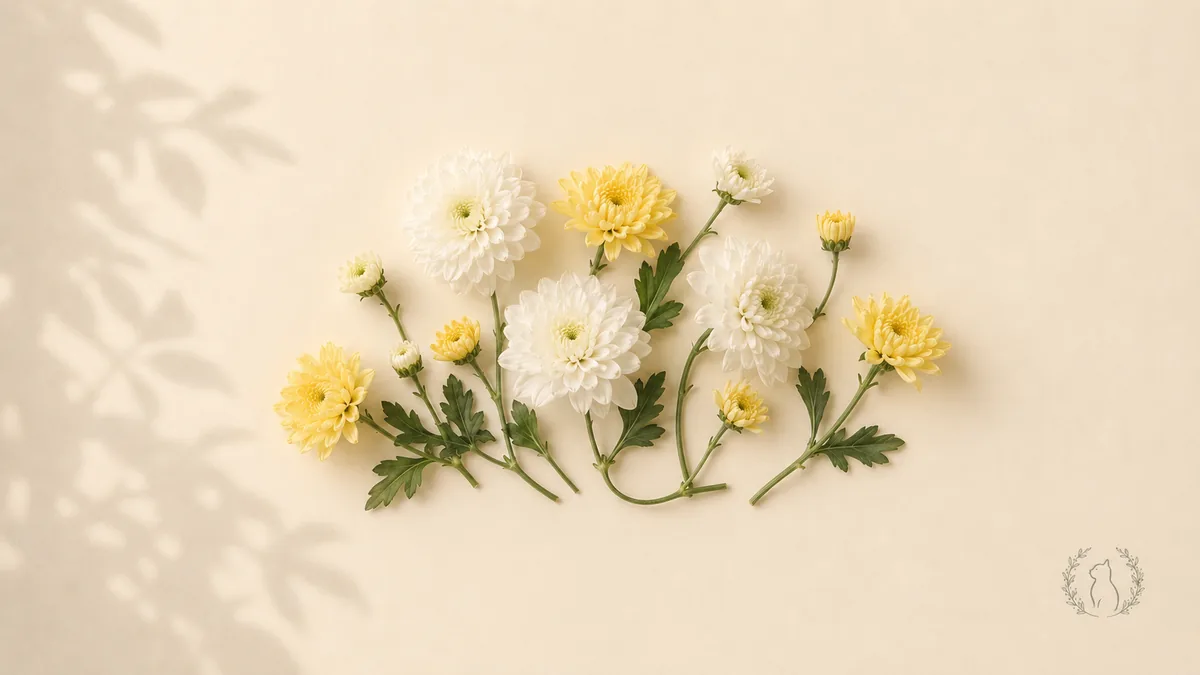
Chrysanthemums (Mums) and Cats: A Fall & Sympathy Flower Safety Guide
Mums fill homes every fall and in funeral and sympathy arrangements. Learn how chrysanthemums affect cats, and why lilies hidden in those bouquets are far more dangerous.
Certain times of year quietly fill a home with flowers. Autumn arrangements, seasonal centerpieces, bouquets brought by visiting guests, and especially the sympathy and funeral flowers that arrive after a loss all lean heavily on one bloom: the chrysanthemum. White and yellow mums are a familiar sight in fall displays and condolence wreaths alike, but in a home with cats it is worth paying extra attention to where these flowers end up. Beyond the risk of the chrysanthemum itself, the tricky part is that these arrangements are usually a mix of species. Sympathy and funeral bouquets in particular often include lilies, the single most dangerous flower for cats. This guide lays out the risks of chrysanthemums using flower cat data, and walks through how to manage flowers that arrive in the home unexpectedly.
What risk do chrysanthemums pose to cats?
The whole chrysanthemum plant contains pyrethrins and sesquiterpene lactones. Pyrethrin is a compound also used in some insecticides, and when a cat chews on a mum it causes irritation. Symptoms tend to appear relatively quickly, usually within about two hours of ingestion. The hallmark signs are heavy drooling, vomiting, diarrhea, and ataxia (loss of coordination, an unsteady wobble). Because these signs come on faster than with many other cut flowers, it is important to catch the situation early if you notice your cat has been chewing on a mum. Rinse the mouth with water and monitor closely, but if symptoms persist for more than 12 hours, consult a veterinarian.
How mums make their way into the home
Chrysanthemums are risky partly because they enter the home through so many channels. Fall centerpieces and seasonal displays, potted or cut mums used as decor, bouquets a guest hands you at the door, and flowers brought back from a funeral or memorial service all mean mums can end up scattered throughout the house. Arrangements set out on a mantel, table, or altar-style display are often placed exactly where a cat can climb up and reach them. A cat may also lick fallen petals or pollen, so it is safest to clear away wilting flowers right away.
Why the lilies in an arrangement deserve even more caution
In a sympathy or funeral arrangement, the real danger may not be the chrysanthemum at all but the lilies mixed in alongside it. The lily is one of the most dangerous plants for cats: ingesting even a single petal or a trace of pollen can trigger acute kidney failure within 24 hours. Every part is hazardous, including the leaves, flowers, pollen, and even the vase water. Chrysanthemums are a caution grade, but lilies are a danger grade, an entirely different level of risk. If a sympathy wreath or seasonal bouquet contains lilies, don't just move it to a cat-free room, get it out of the house entirely. If you suspect a cat has ingested any part of a lily, time directly affects survival, so contact a 24-hour emergency vet immediately.
Managing flowers that arrive without warning
Flowers often show up unannounced, especially bouquets carried in by guests or sent as condolences. Rather than setting that bouquet straight down in the living room, place it briefly somewhere your cat can't reach and check what plants it actually contains first. It is not unusual to assume an arrangement is all mums, only to find lilies tucked inside. Mentioning ahead of time that you have a cat and asking to have lilies left out can let a florist adjust a wreath or bouquet at the time of order. Whenever possible, keep flowers in a room your cat cannot enter, and clear away every wilting bloom and fallen petal.
When you suspect symptoms
If your cat chews a chrysanthemum and shows drooling, vomiting, diarrhea, or wobbling, or if you suspect any lily ingestion, contact a veterinarian right away. Lilies in particular can look mild at first and then worsen sharply over the following hours, so even if your cat seems fine, seek care immediately whenever there is any sign of ingestion. Making a quick note of which flower was involved and roughly how much was eaten will help your vet.