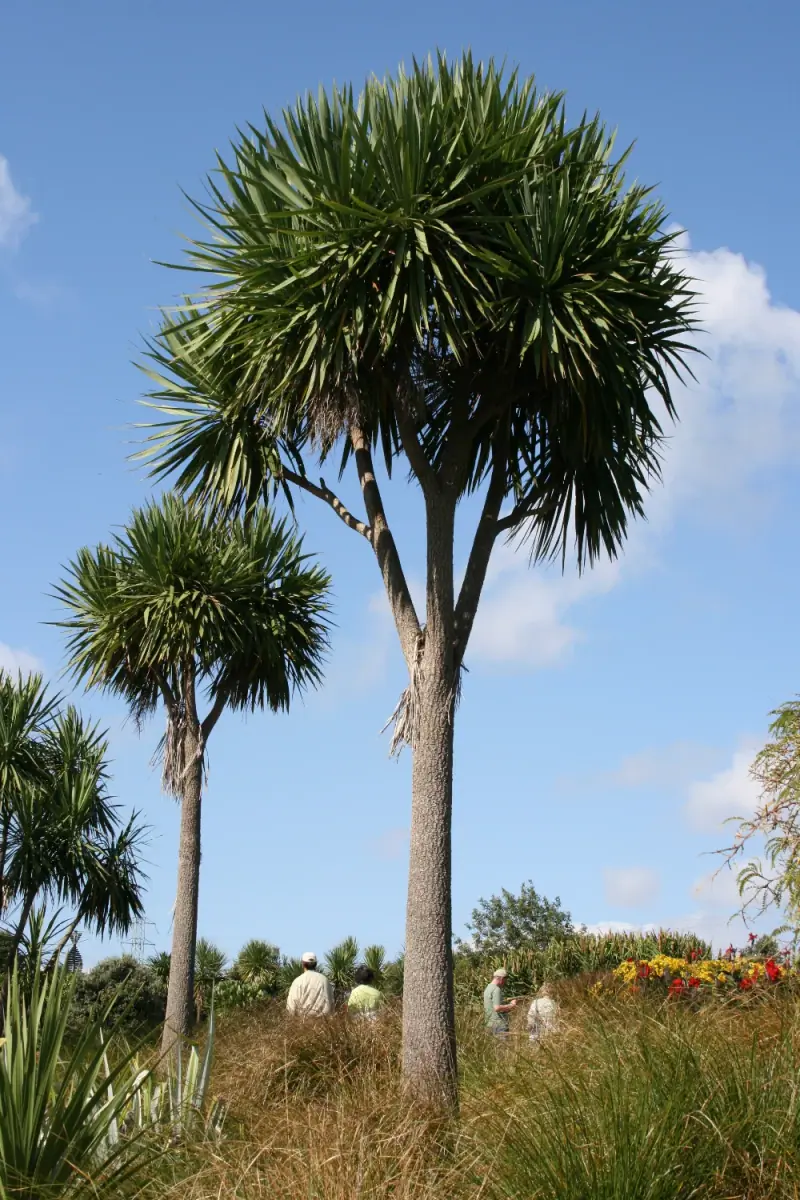
Giant Dracaena
Cordyline australis · Asparagaceae
How it looks
Cordyline australis (Giant Dracaena) is a plant whose narrow, long sword-shaped leaves spray out fountain-like from the top of the stem. Varieties have dark green, purple, or red leaves. It grows 3–20 ft (1–6 m) tall and resembles a palm tree.
Mild caution — stomach irritation
All parts of this plant contain irritating compounds that can cause vomiting, diarrhea, and depression if chewed. If your cat has eaten it, watch for symptoms and contact your vet if any appear.
If ingested
Contact your nearest vet immediately
- Action
- Rinse the mouth with water and monitor. Consult a vet if symptoms last more than 12 hours.
- Symptoms
- Vomiting, diarrhea, depression
- Onset (typical course)
- Right away to within 2 hours of ingestion
Guide for parents
The saponins in giant dracaena irritate the stomach and mucous membranes, causing digestive upset.
Make a habit of picking up fallen leaves and broken stems the same day, and keep the pot out of your cat's reach.
If symptoms last more than 12 hours or your cat's appetite drops noticeably, consult your vet.
Details
- Scientific name
- Cordyline australis
- Common name
- Giant Dracaena
- Family
- Asparagaceae
- Toxic parts
- All parts
- Compounds
- Saponins
Also known as
Related plants
Same plant family· Asparagaceae


Related guides

What to Do If Your Cat Ate a Lily
Lilies are deadly to cats. Eating a single leaf can lead to kidney failure. If you suspect your cat has ingested any part of a lily, here's what to do right now.

Top 10 Flowers Dangerous to Cats — The Ones You See at Florists
Ten flowers you'll commonly find at florists and grocery stores that are toxic to cats. Check before you receive them, and before you bring them home.

Got a Bouquet? What to Do If You Have a Cat
A bouquet is a lovely surprise — but if you live with a cat, there are a few things to take care of right away. From checking what's in the arrangement to choosing the right vase, here's what actually helps, in order.