Hawaiian Ti
Cordyline fruticosa · Asparagaceae
How it looks
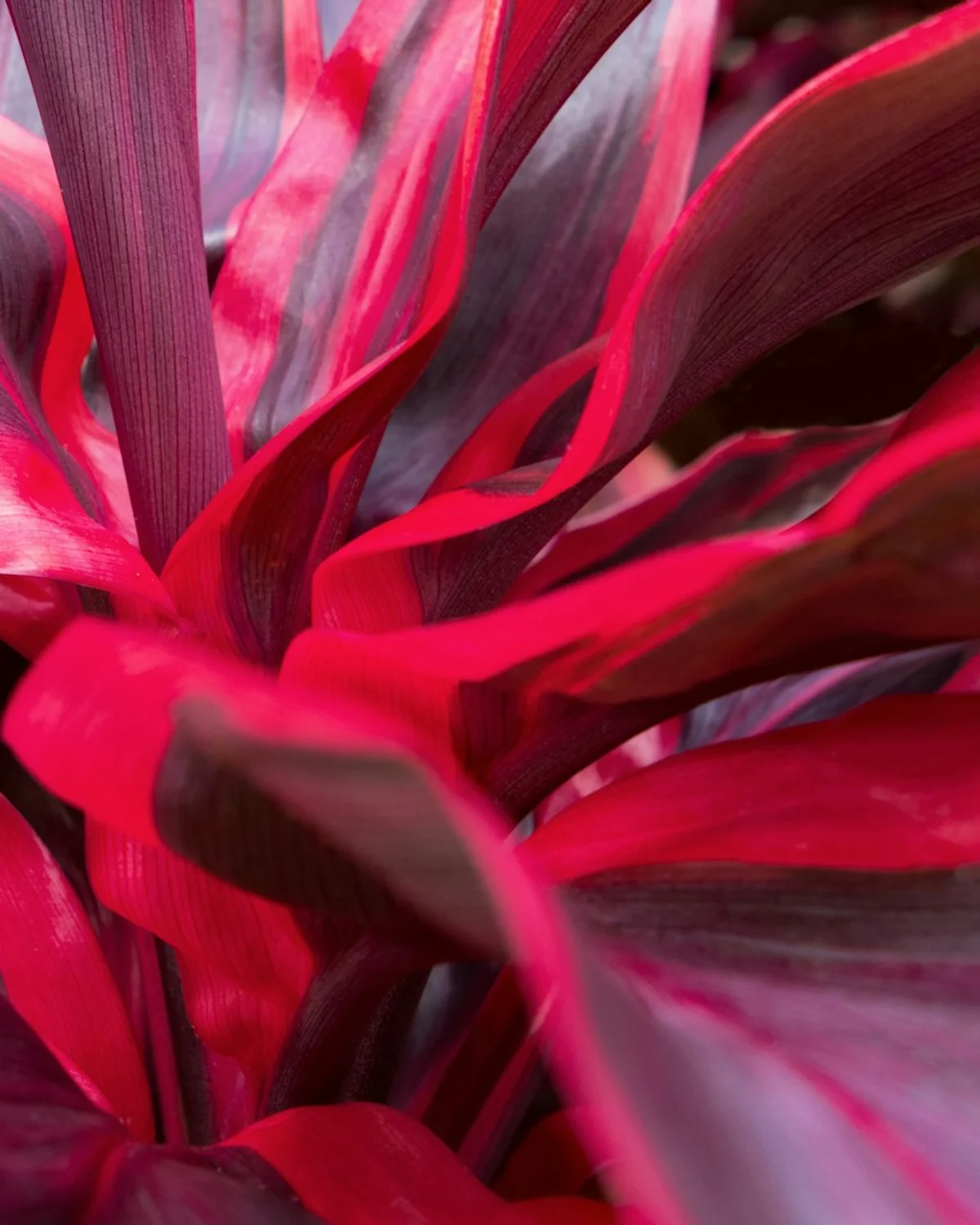
Hawaiian Ti is a Cordyline whose long, broad sword-shaped leaves gather in a tuft at the top of the stem. The leaves are showy in purple, pink, and red tones and have a glossy sheen. It stands 20 in–7 ft (50 cm–2 m) tall and is popular as a tropical ornamental.
Mild caution — stomach irritation
All parts of Hawaiian Ti contain irritating compounds that can cause vomiting, diarrhea, and depression if chewed. Most cats recover on their own, but as a caution-level plant it still calls for monitoring.
If ingested
Contact your nearest vet immediately
- Action
- Rinse the mouth with water and monitor. Consult a vet if symptoms last more than 12 hours.
- Symptoms
- Vomiting, diarrhea, depression
- Onset (typical course)
- Right away to within 2 hours of ingestion
Guide for parents
An occasional nibble of Hawaiian Ti usually doesn't lead to anything serious, but the saponins in it can irritate the stomach and mucous membranes and cause mild gastrointestinal symptoms.
Make a habit of clearing away fallen leaves or broken stems the same day, and keep the pot somewhere your cat can't reach.
If symptoms last more than 12 hours or your cat's appetite clearly drops, consult your vet.
Details
- Scientific name
- Cordyline fruticosa
- Common name
- Hawaiian Ti
- Family
- Asparagaceae
- Toxic parts
- All parts
- Compounds
- Saponins
- Source
- ASPCA cats plant list
Related plants
Same plant family· Asparagaceae
Related guides
Top 10 Flowers Dangerous to Cats — The Ones You See at Florists
Ten flowers you'll commonly find at florists and grocery stores that are toxic to cats. Check before you receive them, and before you bring them home.
Got a Bouquet? What to Do If You Have a Cat
A bouquet is a lovely surprise — but if you live with a cat, there are a few things to take care of right away. From checking what's in the arrangement to choosing the right vase, here's what actually helps, in order.
Why Cats Chew Plants, and How to Stop It
A cat chewing and tearing at plants isn't just mischief — there's an instinct behind it. Once you understand why, the ways to stop it follow naturally.