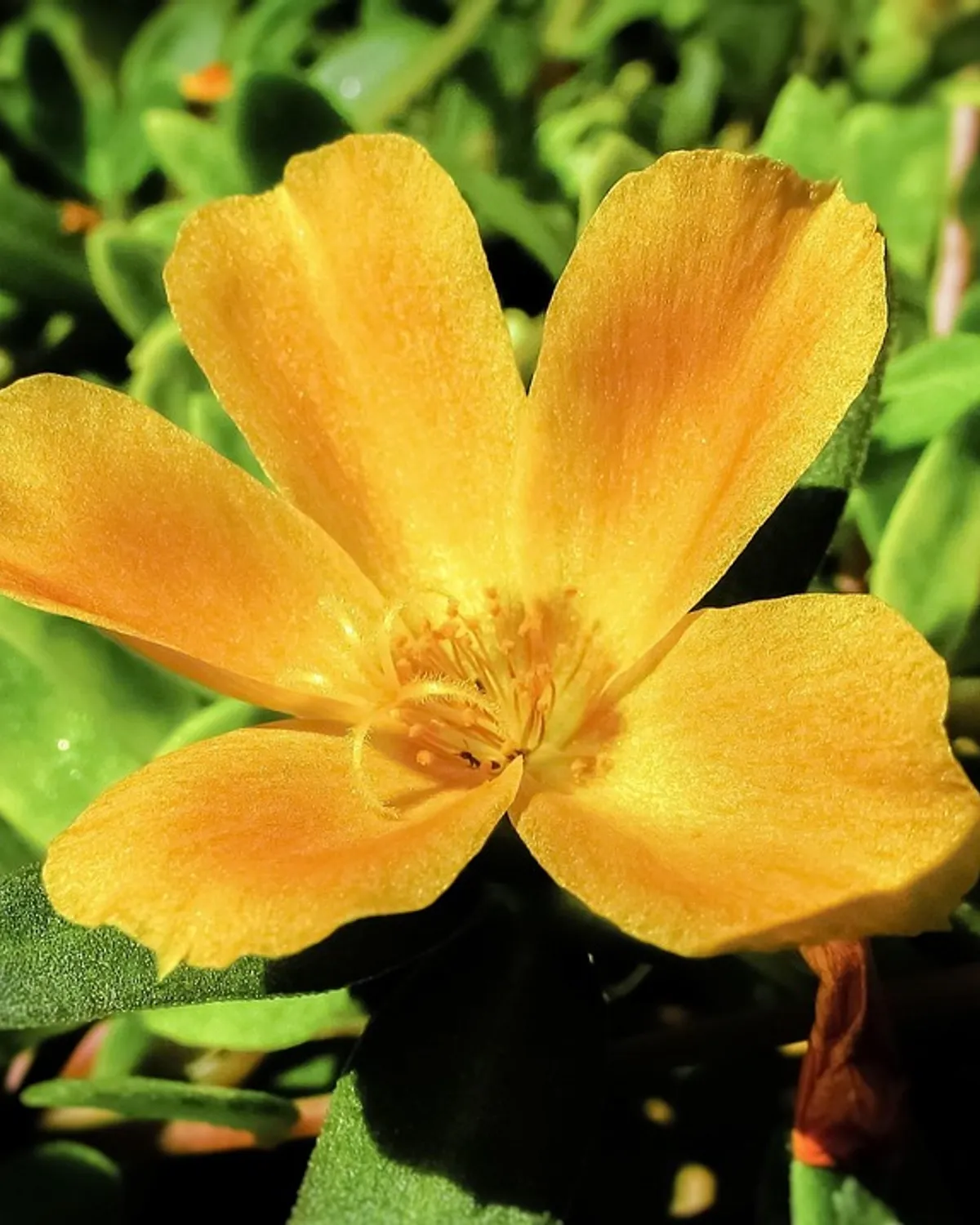
Purslane
Portulaca oleracea · Portulacaceae
How it looks
Common purslane is an annual with thick reddish stems that spread flat along the ground and fleshy, spoon-shaped leaves set alternately or in near-opposite pairs. In summer, small yellow flowers about 0.2 in (5 mm) across open at the stem tips and leaf axils, usually only for a few hours around midday. It stays low, 4-12 in (10-30 cm), and turns up on bare sunny ground — fields, roadsides, and cracks in pavement.
Caution — drooling and tremors; kidney failure is rare
All parts of purslane contain soluble calcium oxalates that can cause drooling, tremors, and weakness if chewed. In rare cases this can progress to kidney failure, so as a caution-level plant it calls for monitoring.
If ingested
Contact your nearest vet immediately
- Onset
- 1–4 hours after ingestion
- Symptoms
- Kidney failure (rare), Tremors, Drooling, Weakness, Depression, Diarrhea
- Action
- Consult a vet if you suspect chewing, then monitor. Go in immediately if tremors or weakness appear.
Guide for parents
The soluble calcium oxalates in purslane irritate the mouth and mucous membranes, so chewing it can bring on drooling and tremors. Muscle weakness, low energy, and diarrhea can follow. Kidney failure is rare, but it has been reported, so don't just shrug off a nibble — keep an eye on your cat.
Purslane is a common weed that comes up on its own in fields, along roadsides, and in cracks in pavement, and in Korea it is also blanched and eaten as a side dish. That can make the warning feel odd — but people eating a plant is not evidence that it is fine for a cat, and the ASPCA lists purslane as toxic to cats. If your cat goes outdoors, pull up any plants growing where it walks, and keep purslane bought for cooking in the fridge rather than on the counter.
Its English names overlap with those of Portulaca grandiflora. Moss Rose, Portulaca, Purslane, and Rock Moss are shared by both species, so a seed packet or plant label may not tell you which you have. A potted ornamental with showy red, pink, or yellow blooms is Portulaca grandiflora; a volunteer plant with tiny yellow flowers is common purslane. The ASPCA verdict belongs to purslane, so when in doubt, treat it as purslane and move it out of reach.
If you suspect your cat has chewed it, rinse the mouth with water and consult your vet. Go in right away if drooling or tremors continue, or if your cat is noticeably weak.
Details
- Scientific name
- Portulaca oleracea
- Common name
- Purslane
- Family
- Portulacaceae
- Toxic parts
- All parts
- Compounds
- Soluble calcium oxalates
- Source
- ASPCA cats plant list
Also known as
Related plants
Same plant family· Portulacaceae
Related guides

Top 10 Flowers Dangerous to Cats — The Ones You See at Florists
Ten flowers you'll commonly find at florists and grocery stores that are toxic to cats. Check before you receive them, and before you bring them home.
Got a Bouquet? What to Do If You Have a Cat
A bouquet is a lovely surprise — but if you live with a cat, there are a few things to take care of right away. From checking what's in the arrangement to choosing the right vase, here's what actually helps, in order.
Why Cats Chew Plants, and How to Stop It
A cat chewing and tearing at plants isn't just mischief — there's an instinct behind it. Once you understand why, the ways to stop it follow naturally.