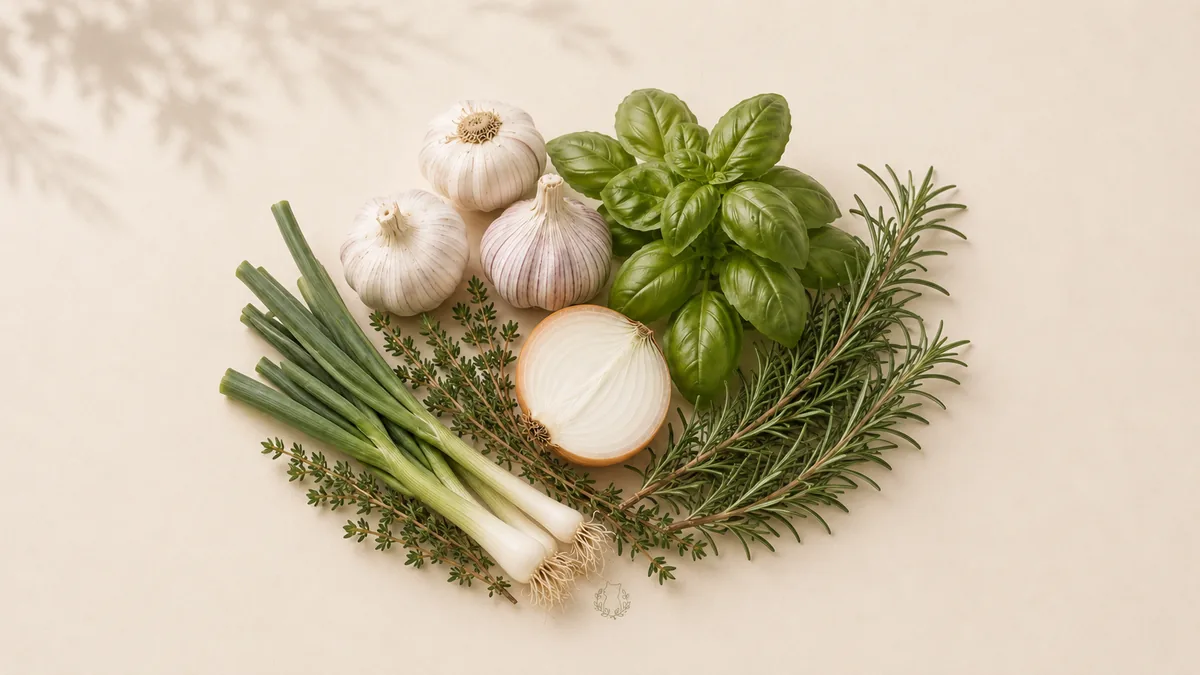
Garlic, Onions & Chives Are Dangerous — What About Herbs? A Cat-Safe Guide to Kitchen Plants
Why alliums like garlic, onions, and chives harm cats, and how common kitchen herbs rate for safety. A guide to the plants cats meet in the kitchen and on the windowsill.
The kitchen and the balcony are surprisingly common places for cats and plants to cross paths. The garlic and onions you cook with, and the herb pots on the windowsill, all tend to end up within a cat's reach. But even among "edible plants," the level of danger varies enormously for a cat. In this guide, we'll start with the alliums that are clearly dangerous to cats — garlic, onions, and chives — and then look at how the herbs people commonly grow at home rate according to flower cat's data. Knowing which plants are risky and which are relatively fine side by side makes it much easier to decide where to keep your kitchen plants.
Why Alliums Are Dangerous — They Destroy Red Blood Cells
Garlic, onions, and chives all belong to the Allium family. Their shared danger is that they destroy red blood cells and cause anemia. An amount that's harmless to people can build up and become dangerous for a cat. Onion contains N-propyl disulfide and thiosulphate throughout the whole plant, which destroy a cat's red blood cells. Vomiting can appear within 2 to 6 hours of ingestion, followed by anemia from the red blood cell destruction. What makes it especially tricky is that the toxicity stays intact even when the onion is cooked or powdered — which is exactly why a broth or soup made with onion isn't safe either. Garlic is even more dangerous than onion. Allicin and thiosulphate destroy red blood cells and cause anemia, and even small amounts eaten repeatedly can accumulate to dangerous levels. The symptoms are similar to onion: vomiting, red blood cell destruction, and anemia.
Chives Belong to the Same Family
Chives are also part of the Allium family, and contain N-propyl disulfide throughout the whole plant. Eating them can cause oxidative damage to red blood cells that leads to anemia, and it can escalate to blood in the urine or a hemolytic crisis, so an immediate vet visit is needed. Symptoms can appear within 1 to 4 hours of ingestion. The rule for the whole allium family is simple: never give garlic, onions, scallions, or chives to a cat in any form — raw, cooked, or powdered — and handle them somewhere the cat can't reach, even while you're cooking.
What About Herbs? — Rosemary
Unlike alliums, some of the herbs people commonly grow at home are relatively safe. A good example is rosemary. According to flower cat's data (based on ASPCA), rosemary has no known toxicity to cats. The occasional nibble won't lead to anything serious. That said, "not toxic" doesn't mean "fine to let them eat all they want." Any plant can upset the digestive system if eaten in large quantities, so even with a safe herb, don't let your cat strip the whole pot.
Mint and Lavender — Caution Grade
Some herbs do call for caution. Mint contains irritant compounds like menthol and pulegone throughout the plant, and chewing it can cause vomiting and diarrhea. Symptoms can appear anywhere from right after ingestion to within 2 hours, so if your cat has chewed a mint plant, rinse its mouth with water and watch how it does. Lavender contains essential-oil compounds such as linalool that put a strain on a cat's liver metabolism, and can cause nausea, vomiting, and loss of appetite. The lavender essential oil is more dangerous than the plant itself, so take extra care when using it in a diffuser or in oil form.
Arranging Kitchen and Balcony Plants
To sum up, the garlic, onions, and chives in your kitchen are danger grade and must be stored where a cat can never reach them. Among the windowsill herbs, rosemary is relatively safe, but mint and lavender are caution grade, so it's best to keep them where your cat can't chew them. Store cooking ingredients in a drawer or a closed cabinet, and keep herb pots on a high shelf that's off your cat's usual routes. If you're unsure about a plant, search its name on flower cat to check its danger level first.