Garlic Chives
Allium tuberosum · Amaryllidaceae
How it looks
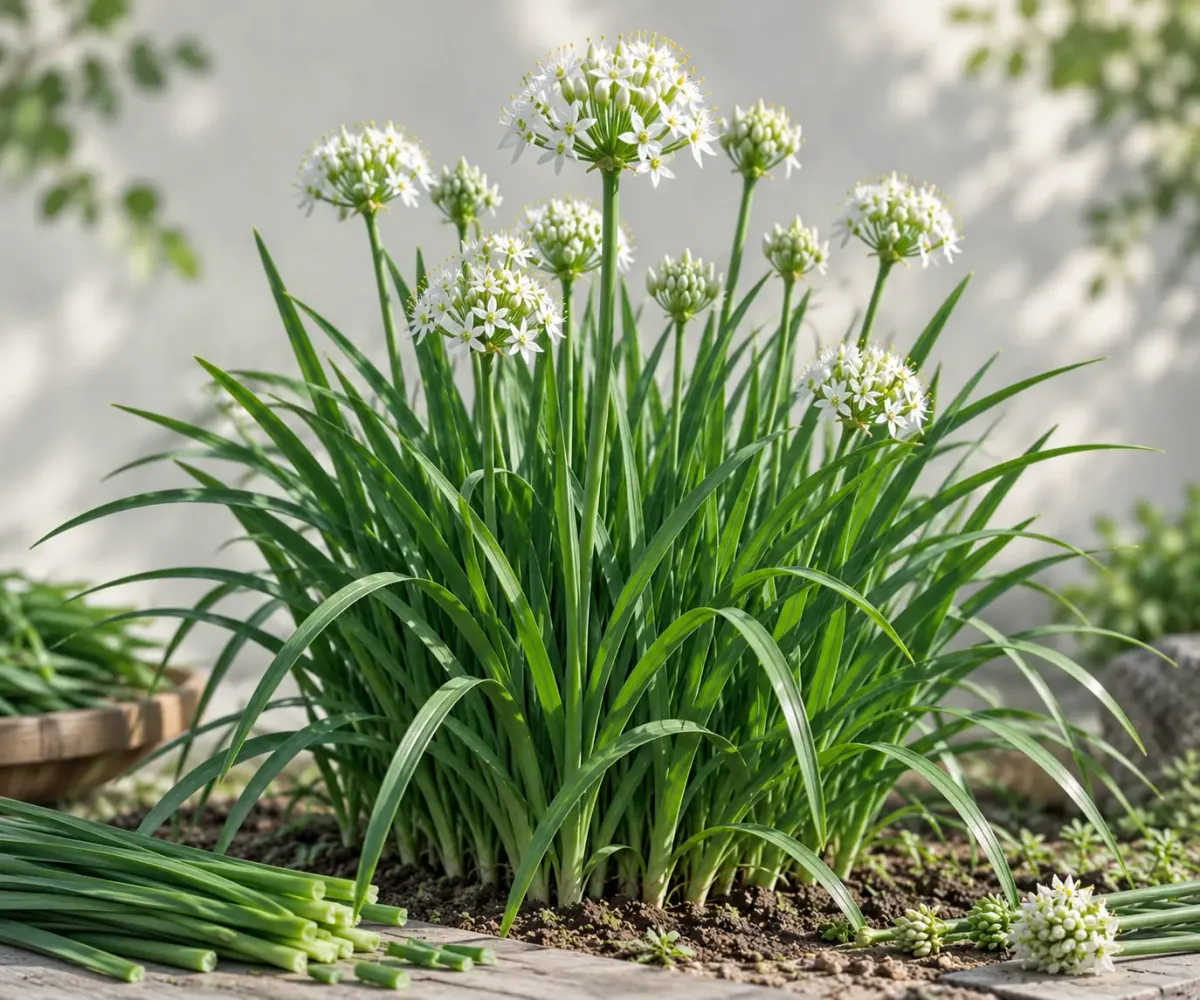
Garlic chives grow in clumps of flat, solid, slender leaves rising from the base. Cut a leaf and the scent is closer to garlic than to onion. From summer into early autumn, small white flowers open in a flat, umbrella-shaped cluster at the top of the stalk. Those two traits separate them from true chives (Allium schoenoprasum), which have hollow, round leaves and pink-to-purple blooms.
Dangerous — red blood cell destruction
Garlic chives (Allium tuberosum) belong to the same genus as garlic, onion, leek, and chives — all four of which the ASPCA lists as toxic to cats, citing the same toxic principle (N-propyl disulfide) and the same clinical signs. That compound oxidatively damages a cat's red blood cells, leading to hemolytic anemia and blood in the urine. Garlic chives have never been assessed as a species in their own right, but they share the same mechanism, so we treat them as dangerous.
If ingested
Contact your nearest vet immediately
- Action
- Go to an animal hospital immediately. Don't wait, even if symptoms seem mild.
- Symptoms
- Vomiting, Hemolytic anemia, Blood in urine, Weakness, Increased heart rate, Difficulty breathing
- Onset (typical course)
- 1–4 hours after ingestion
Guide for parents
Garlic chives (Allium tuberosum) are a familiar kitchen and balcony-garden vegetable, but they act as a potent toxin for cats. They sit in the Allium genus alongside garlic, onion, and leek, and the sulfur compounds this group shares — N-propyl disulfide among them — oxidatively damage a cat's red blood cells and cause anemia. This is not a vegetable to shrug off as "a little nibble is fine."
Why the source line says "not listed" while the risk is high
The source line on this page reads "No confirmed source for cats — not listed by ASPCA." The ASPCA's list of plants toxic to cats covers four alliums — chives (Allium schoenoprasum), garlic (A. sativum), leek (A. ampeloprasum), and onion (A. cepa) — and garlic chives are not among them as a species. All four of those, however, are listed as toxic without exception, and the toxic principle and clinical signs recorded for them are word-for-word identical. The toxicity reads as a trait of the whole genus rather than of any one species, so garlic chives deserve the same weight. Worth noting: in English, "chives" usually means A. schoenoprasum, while A. tuberosum is distinguished as garlic chives or Chinese chives.
How cats get exposed
Raw, cooked, folded into a savory pancake or a side dish, mixed into batter — every form counts. The most common exposure is sharing human food, so never offer anything made with garlic chives. If you grow them on a balcony, fully separate the pot from your cat's paths, and don't leave trimmings or root pieces on the counter.
How symptoms progress
The signs listed here match what the ASPCA records for those four alliums, with the wording aligned to our garlic, onion, and leek pages. Vomiting usually comes first, within hours, while the dangerous part — red blood cell destruction, or hemolytic anemia — emerges gradually over a day or two. Weakness, panting, a racing heart, or reddish urine are signs that red blood cells are breaking down.
What to do right now
If you suspect ingestion, don't wait even if your cat looks fine — go to the vet. Anemia shows up late, so telling the vet what was eaten and how much is itself a key clue.
Details
- Scientific name
- Allium tuberosum
- Common name
- Garlic Chives
- Family
- Amaryllidaceae
- Toxic parts
- All parts
- Compounds
- N-propyl disulfide, Thiosulfates
- Source
- No confirmed source for cats — not listed by ASPCA
Related plants
Same plant family· Amaryllidaceae
Related guides
Top 10 Flowers Dangerous to Cats — The Ones You See at Florists
Ten flowers you'll commonly find at florists and grocery stores that are toxic to cats. Check before you receive them, and before you bring them home.
Got a Bouquet? What to Do If You Have a Cat
A bouquet is a lovely surprise — but if you live with a cat, there are a few things to take care of right away. From checking what's in the arrangement to choosing the right vase, here's what actually helps, in order.
Why Cats Chew Plants, and How to Stop It
A cat chewing and tearing at plants isn't just mischief — there's an instinct behind it. Once you understand why, the ways to stop it follow naturally.