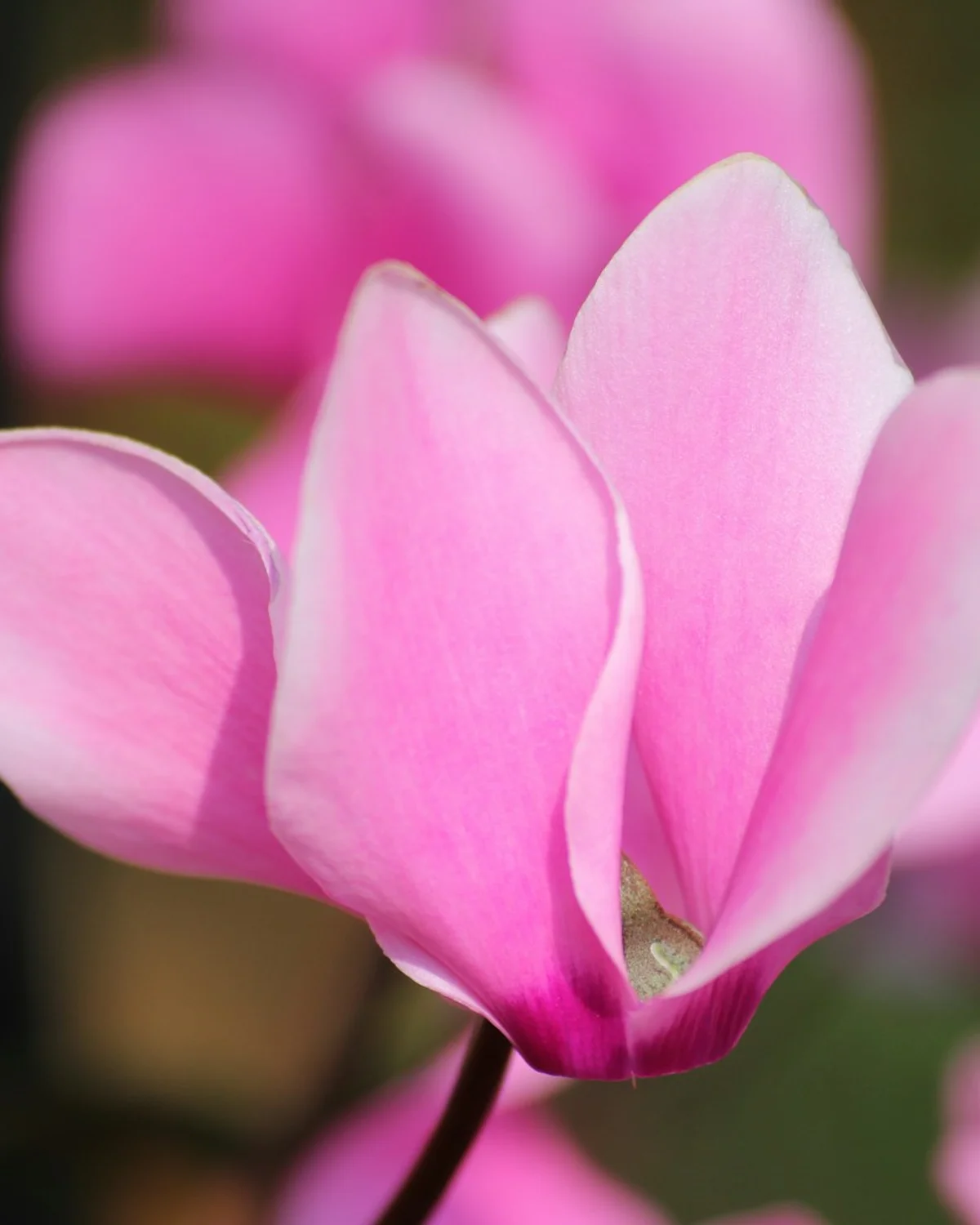
Cyclamen
Cyclamen spp · Primulaceae
How it looks
Cyclamen has heart-shaped leaves with silvery markings and produces a distinctive flower whose petals appear to flip upward above the flower stalk. Colors are white, pink, magenta, and red, with a light fragrance. Height 6-12 in (15-30 cm); commonly seen indoors in pot form during winter.
Dangerous — the bulbs are the most toxic part
The leaves and flowers of Cyclamen are risky, but the underground tuber concentrates cyclamine; chewing it can cause severe vomiting, heart arrhythmias, and even seizures.
If ingested
Contact your nearest vet immediately
- Action
- Go to an animal hospital immediately. Don't wait, even if symptoms seem mild.
- Symptoms
- Drooling, Vomiting, Diarrhea, Cardiac arrhythmia, Seizures, Death
- Onset (typical course)
- 2–6 hours after ingestion
Guide for parents
Cyclamen is a common potted gift in winter, so it easily ends up on a living-room table or windowsill without a second thought. In a home shared with a cat, the safest choice is not to keep it at all. The leaves and flowers are dangerous, but the underground tuber holds the highest concentration of cyclamins and saponins — chewing it can cause not just severe vomiting but irregular heartbeat and even seizures.
How cats get exposed
Normally the tuber stays buried, so the leaves and flowers are the main source of contact. The real danger comes during repotting or rearranging, when the tuber is exposed above the soil — take special care that your cat doesn't chew or dig at it. When you're done, clear away every bit of loose soil and any cut root pieces.
How symptoms progress
Signs usually begin within 2–6 hours with drooling, vomiting, and diarrhea. A small amount often stops at stomach upset, but swallowing a large piece of the potent tuber can lead to an irregular heartbeat, trembling, or seizures. Even mild-looking symptoms can worsen over time as the effect on the heart and nervous system builds.
What to do right now
If you suspect ingestion, don't wait even if symptoms look mild — go to the vet right away. If there's any sign the tuber was chewed, estimate how much was eaten and tell the vet, and do not try to induce vomiting at home.
Safer alternatives
If you want greenery in winter, a confirmed-safe rosemary pot is an easier choice. If you want flowers, roses and gerbera daisies are safe picks.
Details
- Scientific name
- Cyclamen spp
- Common name
- Cyclamen
- Family
- Primulaceae
- Toxic parts
- Tubers/bulbs (most toxic part), Leaves, Flowers
- Compounds
- Cyclamin, Terpenoid saponins
- Source
- ASPCA cats plant list
Related plants
Same plant family· Primulaceae

Related guides

Top 10 Flowers Dangerous to Cats — The Ones You See at Florists
Ten flowers you'll commonly find at florists and grocery stores that are toxic to cats. Check before you receive them, and before you bring them home.

Got a Bouquet? What to Do If You Have a Cat
A bouquet is a lovely surprise — but if you live with a cat, there are a few things to take care of right away. From checking what's in the arrangement to choosing the right vase, here's what actually helps, in order.
Why Cats Chew Plants, and How to Stop It
A cat chewing and tearing at plants isn't just mischief — there's an instinct behind it. Once you understand why, the ways to stop it follow naturally.