Dieffenbachia, Aglaonema & Caladium: The Variegated Houseplant Trap
Popular variegated Araceae houseplants share one hidden danger: calcium oxalate crystals. Learn the symptoms, timing, and safe placement for dieffenbachia, aglaonema, caladium, and alocasia.
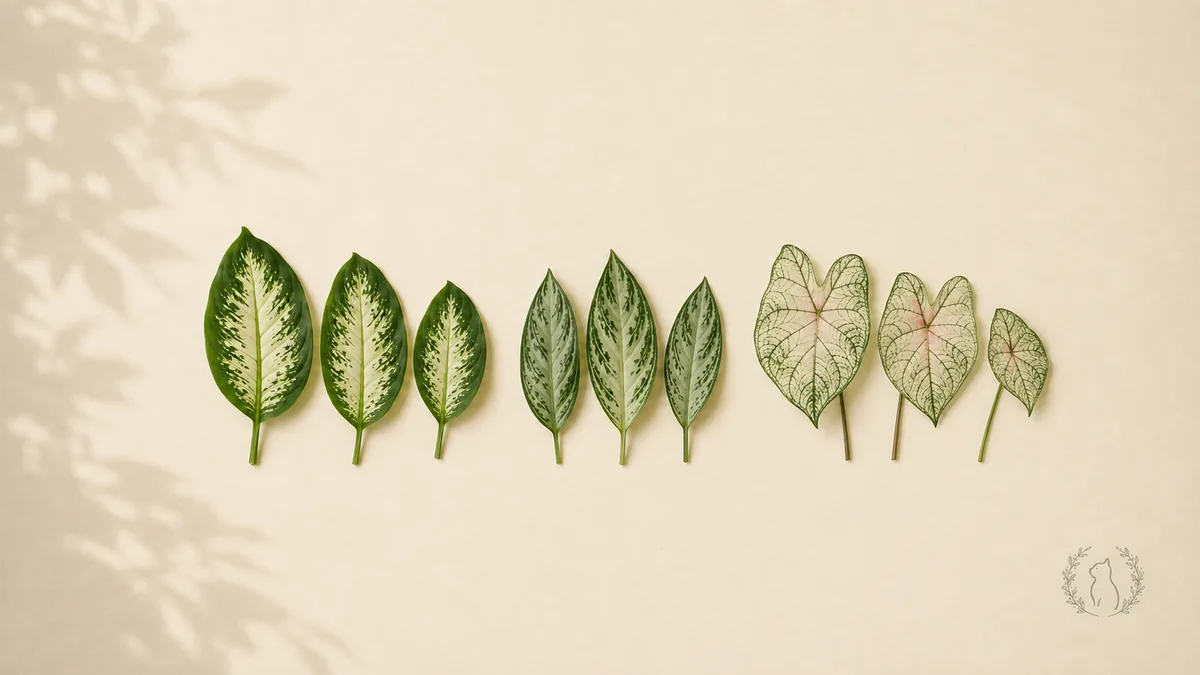
If you asked which houseplants are trending hardest in interior design right now, variegated foliage would be near the top of every list. Dieffenbachia splashed with cream, aglaonema streaked in silver, caladium blazing with pink and red veins. A single pot can transform the mood of a living room. But these plants share one more thing in common: they all belong to the arum family (Araceae), and they all carry the same irritant, calcium oxalate crystals. The names and patterns differ, but the mechanism of the danger is identical. That means once you understand how to handle one of them, the same rules apply to the rest. Let's walk through how calcium oxalate works, what symptoms show up with each plant, and how to arrange them safely.
The Shared Trap: Calcium Oxalate
The leaves and stems of Araceae plants are studded with needle-like calcium oxalate crystals. When a cat chews a leaf, these microscopic crystals pierce the mucous membranes of the mouth, tongue, and throat, causing immediate irritation. That's why the symptoms across these plants look so similar: oral irritation, drooling, vomiting, and difficulty swallowing. The good news is that, unlike lilies, these plants don't cause kidney failure, so on flower cat they're all rated caution. Most cats recover on their own once you rinse the mouth and monitor them. That said, the pain of crystals pricking the membranes can be considerable, so a cat may drool heavily or feel too uncomfortable to eat. If symptoms worsen, see a vet.
The Dieffenbachia Group
Dieffenbachia carries proteolytic enzymes in addition to calcium oxalate crystals, so chewing it can bring on oral irritation, vomiting, and difficulty swallowing. Symptoms usually begin one to four hours after ingestion. Its broad leaves grow low, making it easy for a cat to reach, which is another reason for caution. The same group includes dumb cane (Dieffenbachia amoena) and golden dieffenbachia. Golden dieffenbachia tends to trigger especially pronounced drooling, with symptoms often appearing within two hours of ingestion. The patterns and names vary a little, but the danger and the response are the same.
Aglaonema and Caladium
Aglaonema is a popular foliage plant prized for its silvery markings, but it too holds calcium oxalate crystals, so chewing it causes oral irritation and vomiting. Because it's easy to care for and often recommended to beginners, it's easy to bring one home without a second thought, so stay alert. Caladium is among the more irritating of this bunch. Along with oral irritation, it can cause a severe burning sensation and vomiting, with symptoms starting one to four hours after ingestion. Its showy pink and red leaves also make it likely to catch a cat's eye, which adds to the risk.
Alocasia Belongs to the Same Family
Alocasia, popular for its large leaves and bold veining, is also an Araceae plant and shares the same calcium oxalate danger. The main symptoms are oral irritation, a severe burning sensation in the mouth, and drooling, appearing one to four hours after ingestion. It's easy to assume "the name is different, so it must be fine," but remembering that it belongs to the arum family makes it clear the same caution applies. For a broader look at other foliage plants that work the same way, see our complete guide to calcium oxalate houseplants.
How to Place Them Safely
Because these plants are rated caution, a single contact won't lead to an emergency, but the pain is significant enough to put your cat through needless suffering. The surest approach is to keep them on a high shelf or in a separate room where your cat can't reach them. Many of these plants have broad leaves that spread out low, so a halfway height won't do the job. If you're already growing one, use a heavy pot for stability and clean up any fallen leaves right away. If your cat is especially fixated on plants, offering cat grass on the side can redirect that curiosity somewhere safe. And if you see signs that your cat has been chewing one of these plants, use our emergency triage guide for when a cat eats a plant to assess the situation.