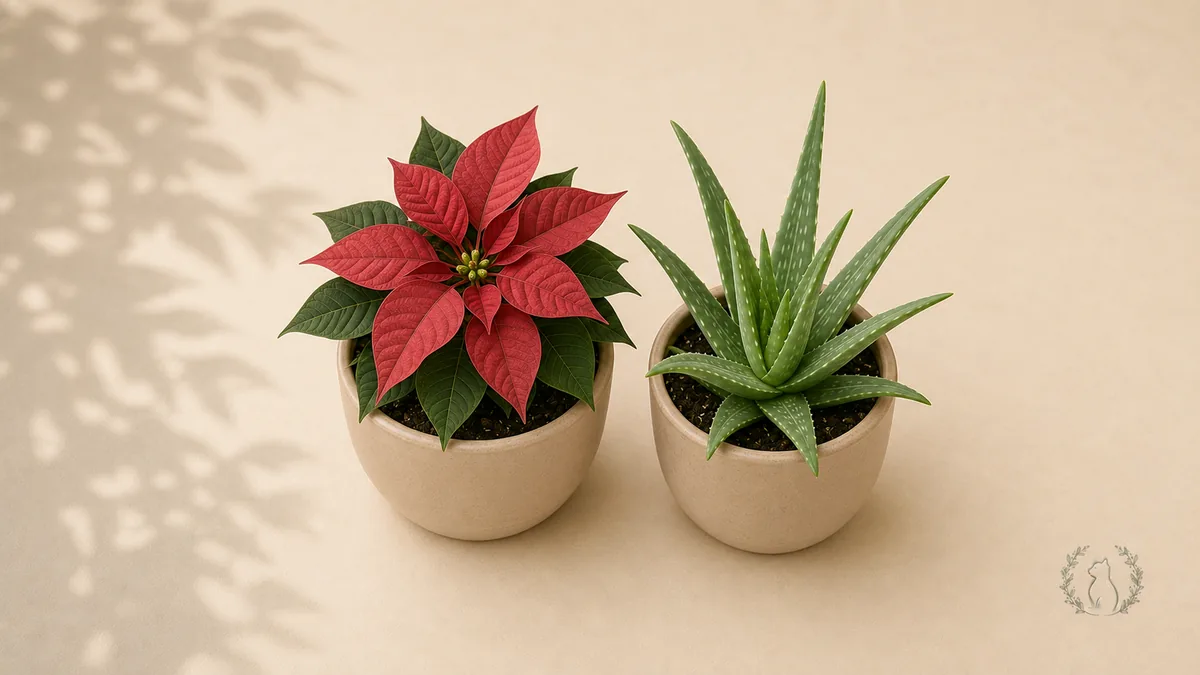
Poinsettia & Aloe: Are They Really as Dangerous as the Rumors Say?
Poinsettia and aloe latex myths, corrected with data. We separate exaggerated fear from real danger by comparing them to the truly lethal lily for cats.
When you go looking for information about cats and plants, you often run into exaggerated fear. One of the classic examples is the claim that "poinsettias are deadly to cats." This rumor resurfaces every Christmas season, and quite a few cat owners end up throwing out an entire plant because of it. But when you look at the data, the actual risk is quite different from the rumor. This article is a calm, data-based look at the misconceptions surrounding poinsettia and aloe, using flower cat's grading system. At the same time, by comparing them to the genuinely lethal lily, we want to draw a clear line between where overblown fear ends and real danger begins. The point isn't "ignore the risk" — it's "know the size of the risk accurately."
Poinsettia — Rumor vs. Reality
On flower cat's scale, the poinsettia is rated caution, not danger. When you cut the stem, it releases a milky white sap containing irritant diterpenoid esters, so if a cat chews on it, the mouth and stomach can be irritated and mild vomiting may occur. The key is the severity of the symptoms. According to the data, poinsettia symptoms usually end at oral and gastrointestinal irritation with some mild vomiting. That's a long way from "deadly." It's still an unpleasant experience for a cat, so it's best to keep the plant out of reach — but there's no need to panic just because you spotted one. Rinsing the mouth with water, watching how things progress, and consulting a vet if symptoms last more than 12 hours is a reasonable response.
Aloe — Gel and Latex Are Not the Same
Aloe vera is also rated caution. What's interesting about aloe is that the risk varies depending on the part of the plant. The clear gel from the inner leaf — the kind we commonly encounter in cosmetics and drinks — is relatively safe. The real problem is the yellow latex layer just beneath the leaf's outer skin. This latex contains saponins and anthraquinones (aloin), so if a cat chews and swallows the whole leaf, it can cause vomiting, diarrhea, lethargy, and changes in urine color. Symptoms usually appear between 6 and 12 hours after ingestion, and eating a large amount raises the concern of dehydration from diarrhea. Because it's touted as good for the skin, aloe is often placed on a low windowsill or in the kitchen — spots that are easy for cats to reach, which is exactly why extra caution is needed.
The Truly Lethal One — Comparing to the Lily
To properly understand the risk level of poinsettia and aloe, it helps to compare them to a genuinely lethal plant. On flower cat's scale, the lily is rated danger, and it's a threat on a completely different level. Ingesting even a single petal or a speck of pollen can trigger acute kidney failure within 24 hours, and if treatment is delayed, it can be fatal. This is a plant you must take to the vet immediately, even if there are no symptoms. If poinsettia is at the level of "chewing it stings the mouth and may cause vomiting," the lily is at the level of "even contact can be life-threatening." The gap is too large to lump them together under the single label of "plants harmful to cats." We've put together how to handle lily exposure in What to Do If Your Cat Eats a Lily: Emergency Response.
Overblown Fear vs. Real Danger
The lesson from this comparison is clear. If you fear every plant equally, you may actually overlook the real danger. While you're panicking over a single poinsettia pot, you might absent-mindedly set a lily from a gift bouquet on the dining table. The right approach is to check each plant's risk grade and respond accordingly. Danger grade means go to the vet immediately even without symptoms; caution grade means judge based on the amount eaten and the symptoms; safe grade means basic monitoring. You can see the risk levels of plants commonly found at flower shops at a glance in Top 10 Flowers Dangerous to Cats.
Wrapping Up
Poinsettias aren't as deadly as the rumors suggest, and aloe's risk depends on which part is involved. Both are caution-grade plants that are fine with proper management. The lily, on the other hand, is not an exaggeration — it really is lethal. Matching the size of your fear to the size of the actual risk is the best way to protect your cat.