Love-lies-bleeding
Amaranthus caudatus · Amaranthaceae
How it looks
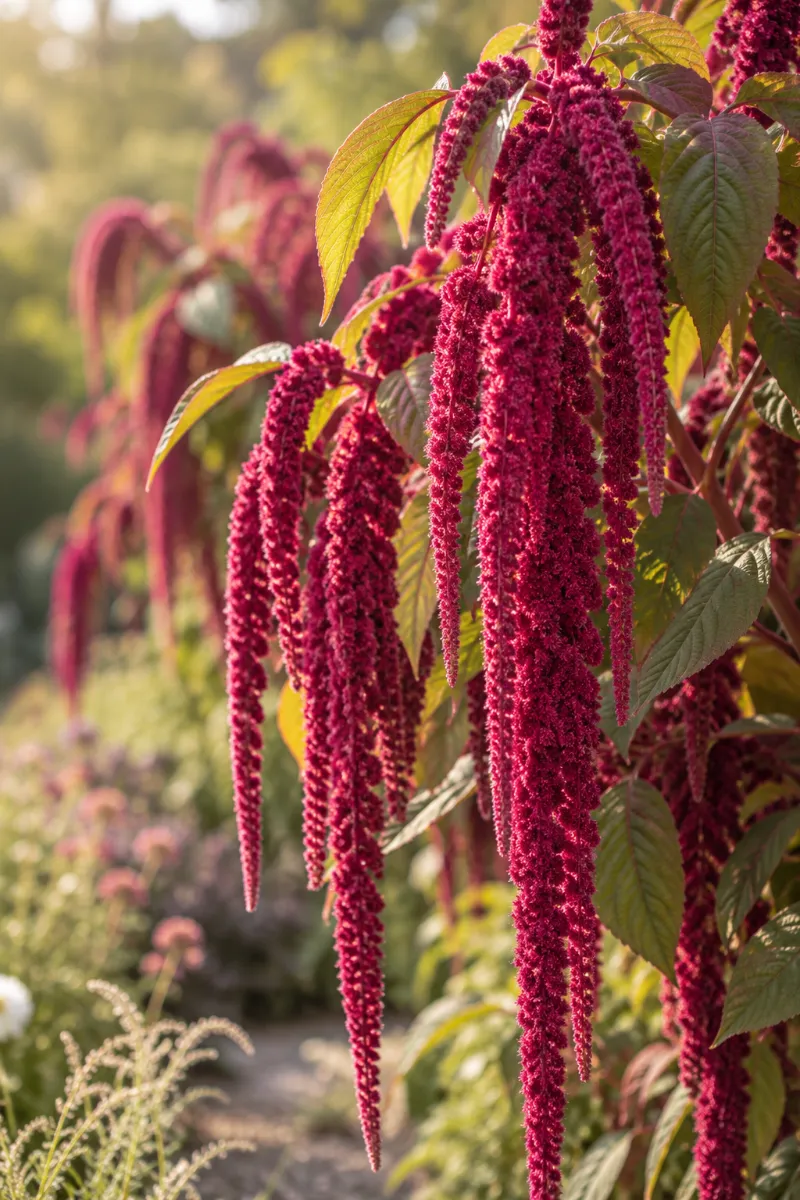
Love-lies-bleeding is an annual with tiny flowers packed densely into long, rope-like clusters that drape downward, commonly deep crimson-red and hanging about 12 in (30 cm). The leaves are broad and oval, and the stems grow upright to 2-4 ft (60 cm-1.2 m).
No toxicity data available
Love-lies-bleeding is not listed in the ASPCA's toxic plants list for cats, and NC State Extension has no toxicity data for it either. With no confirmed evidence either way, we cannot call it safe — exercise caution if your cat has access to it.
Guide for parents
Love-lies-bleeding has no official toxicity data, so it is hard to say for certain whether it is safe. Its crimson tassels hang like rope, and it is grown both as a cut flower and as a garden plant.
The Amaranthus the ASPCA has assessed for cats is Amaranthus hypochondriacus, which has its own page in this app. Love-lies-bleeding is not listed there separately, and its NC State Extension page has no poison entry. Celosia spicata, which is easy to confuse with it by name, belongs to a different genus and has its own page here as well.
NC State actually records the seeds and leaves of this species as edible — it has long been grown as a grain and a leaf vegetable. But that people eat it is not evidence about cats. The only grounds this app treats as safety are pet-specific toxicity assessments, and this species does not appear in one.
At home, start with where the vase goes. Florist stems are often treated with preservatives, so keep your cat from drinking the water, and mind the height — the drooping tassels tend to hang right at cat level. Sweep up the florets and seeds that shed, the same day.
Check what else came in the bundle, too. If even one lily is mixed in, that is a far greater risk. If you find the tassels have been chewed, note roughly how much and when, and contact your vet if vomiting repeats or your cat seems listless.
Details
- Scientific name
- Amaranthus caudatus
- Common name
- Love-lies-bleeding
- Family
- Amaranthaceae
- Source
- No confirmed source for cats — not listed by ASPCA
Also known as
Related plants
Same plant family· Amaranthaceae
Related guides
Top 10 Flowers Dangerous to Cats — The Ones You See at Florists
Ten flowers you'll commonly find at florists and grocery stores that are toxic to cats. Check before you receive them, and before you bring them home.
Got a Bouquet? What to Do If You Have a Cat
A bouquet is a lovely surprise — but if you live with a cat, there are a few things to take care of right away. From checking what's in the arrangement to choosing the right vase, here's what actually helps, in order.
Why Cats Chew Plants, and How to Stop It
A cat chewing and tearing at plants isn't just mischief — there's an instinct behind it. Once you understand why, the ways to stop it follow naturally.