It isn't on the ASPCA list, so we can't call it safe. What is known so far is explained below.
Valerian
Valeriana officinalis · Caprifoliaceae
How it looks
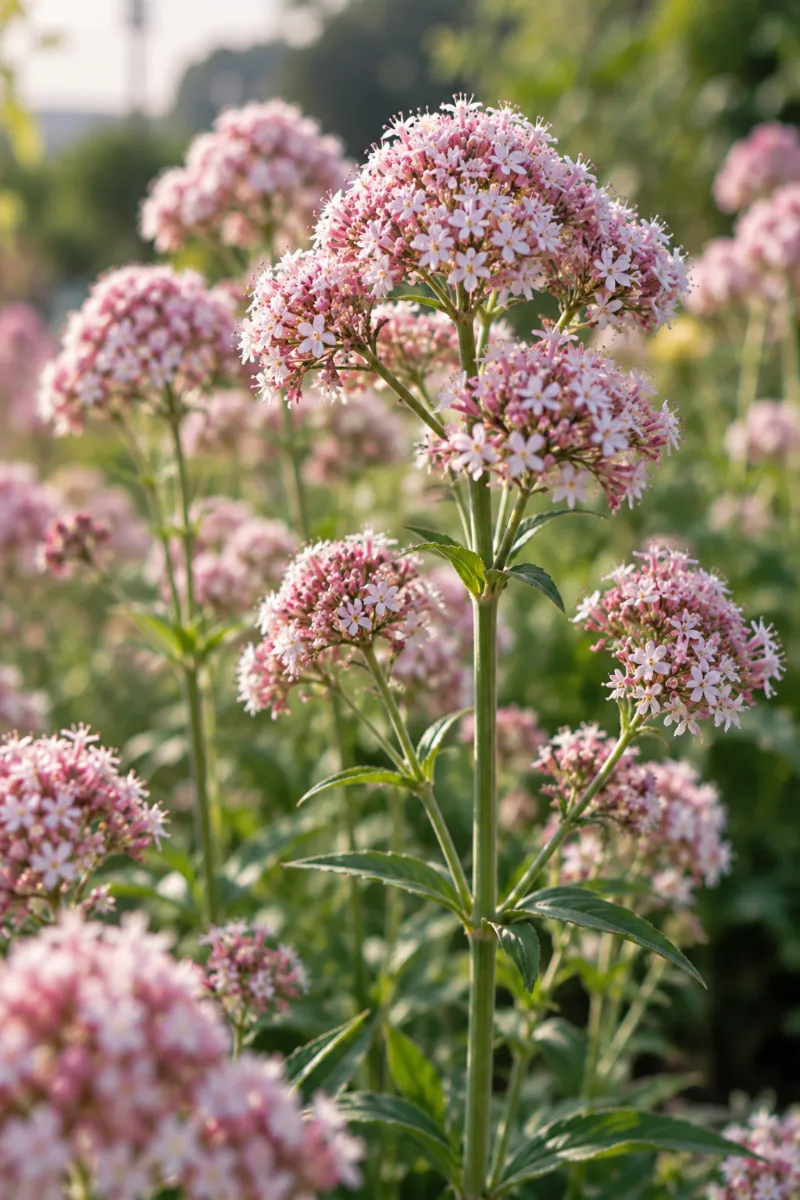
An upright herbaceous perennial growing 90–150 cm tall. Small white to pale pink flowers gather in fragrant, flat clusters 5–12 cm across from June to August. Native to Europe and Asia; its root yields the sedative herbal preparation of the same name.
No toxicity data available
Valerian is not listed in the ASPCA's toxic plants list for cats, and NC State Extension has no toxicity data for it either. With no confirmed evidence either way, we cannot call it safe — exercise caution if your cat has access to it.
Guide for parents
Valerian has no official toxicity data, so it is hard to say for certain whether it is safe.
The "valerian" used to stuff cat toys is the root of this plant. In the same 100-cat study, 47% responded to valerian root (Bol et al., 2017) — lower than catnip (68%) or silver vine (79%).
Check the name. In Korea the standard name refers to the native species Valeriana fauriei; this page covers V. officinalis. Sellers sometimes mix the two, so the botanical name is the reliable check.
The strong root odor can keep a cat chewing a toy for a long time. Stuffing that escapes a torn toy can be swallowed, so discard split toys promptly, and contact your vet if ingestion is suspected or you see vomiting or lethargy.
Details
- Scientific name
- Valeriana officinalis
- Common name
- Valerian
- Family
- Caprifoliaceae
- Source
- No confirmed source for cats — not listed by ASPCA
Also known as
Related plants
Other plants with no confirmed rating
Moss Rose
Portulaca grandiflora
PLANT 131
Annual Sweet Pea
Lathyrus odoratus
PLANT 053
Common Oat
Avena sativa
PLANT 593
Silver Vine
Actinidia polygama
PLANT 596
Barley
Hordeum vulgare
PLANT 595
Faassen's Catmint
Nepeta x faassenii
PLANT 598Related guides
Top 10 Flowers Dangerous to Cats — The Ones You See at Florists
Ten flowers you'll commonly find at florists and grocery stores that are toxic to cats. Check before you receive them, and before you bring them home.
Got a Bouquet? What to Do If You Have a Cat
A bouquet is a lovely surprise — but if you live with a cat, there are a few things to take care of right away. From checking what's in the arrangement to choosing the right vase, here's what actually helps, in order.
Why Cats Chew Plants, and How to Stop It
A cat chewing and tearing at plants isn't just mischief — there's an instinct behind it. Once you understand why, the ways to stop it follow naturally.