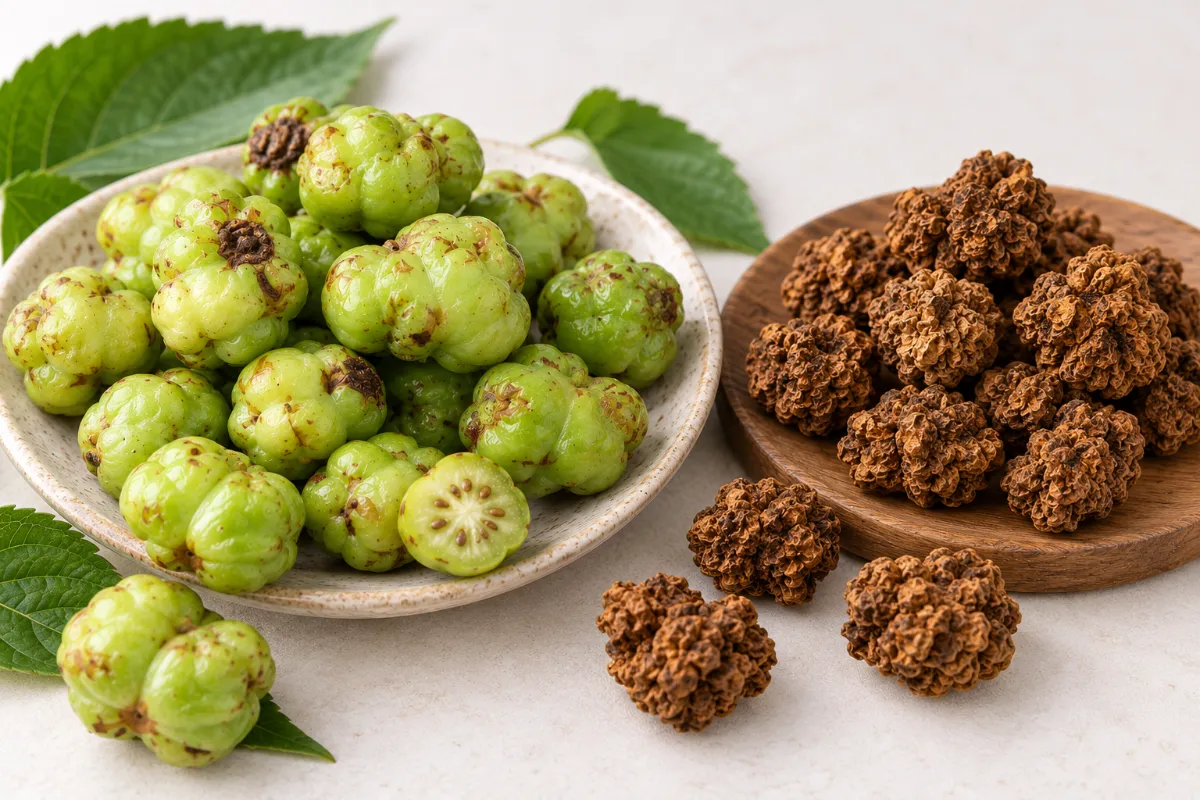
It isn't on the ASPCA list, so we can't call it safe. What is known so far is explained below.
Silver Vine
Actinidia polygama · Actinidiaceae
How it looks
A deciduous climbing shrub, distinctive for leaves that turn from green to white — sometimes only across the upper half. The ovate leaves are 7–14 cm long; white flowers about 2–2.5 cm across open in June–July, followed by yellow to orange fruit in September–October. Native to mountain woodland in Korea, Japan, China, and Russia.
No ingestion verdict — caution advised
Silver vine (Actinidia polygama) is not on the ASPCA’s toxic plant list for cats, so there is no confirmed verdict for what happens if a cat eats it. That does not mean there is no data: a 2023 peer-reviewed study repeatedly exposed cats for up to three years and measured liver and kidney markers, finding no increase. But that study covered sniffing and rubbing, not ingestion. With no ingestion evidence, we cannot call it safe — exercise caution.
Guide for parents
Silver vine has no confirmed verdict for what happens if a cat eats it. That does not mean there is no data.
A 2023 peer-reviewed study (iScience) looked at safety. Blood from 13 cats — 21 samples — was measured for liver (ALT) and kidney (creatinine, SDMA) markers, and nothing rose despite repeated exposure over as long as 1,176 days (median 569). Stress markers and addictive behaviour were checked separately in other groups, also with no effect. Note that those 13 cats had responded to a mix of stimuli — silver vine, but also catnip, extracts of both, and synthesised iridoids.
Two things that study did not look at. First, the exposure route: it covered sniffing and rubbing, and the paper itself notes that no cat depleted the extract-soaked paper by licking and chewing. Second, the gut. The study measured no gastrointestinal endpoints — no vomiting, diarrhoea or salivation. Yet the closest comparison, catnip, is on the ASPCA list for exactly those signs (vomiting and diarrhoea), and we mark catnip as caution here too. "Liver and kidneys were fine" is a different claim from "it is fine to eat", so we have not moved this plant to safe.
In the pet market it is better known by its Japanese name, matatabi, and usually sold as powder made from dried fruit galls or as chew sticks. Cats that ignore catnip often respond to this instead — in a study of 100 domestic cats, 79% responded to silver vine versus 68% to catnip (Bol et al., BMC Veterinary Research, 2017). That one is behavioural research; the 2023 study above is the safety one.
Watch the name overlap. Silver vine shares its genus with hardy kiwi (Actinidia arguta), kiwifruit (A. deliciosa), and A. kolomikta. The cat response is reported for A. polygama specifically, so check the botanical name.
Use only small amounts of powder or sticks at a time, and stop and consult your vet if you see excessive excitement, drooling, or vomiting.
Details
- Scientific name
- Actinidia polygama
- Common name
- Silver Vine
- Family
- Actinidiaceae
- Source
- No confirmed source for cats — not listed by ASPCA
Also known as
Related plants
Other plants with no confirmed rating
Moss Rose
Portulaca grandiflora
PLANT 131
Annual Sweet Pea
Lathyrus odoratus
PLANT 053
Common Oat
Avena sativa
PLANT 593
Valerian
Valeriana officinalis
PLANT 597
Barley
Hordeum vulgare
PLANT 595
Faassen's Catmint
Nepeta x faassenii
PLANT 598Related guides

Top 10 Flowers Dangerous to Cats — The Ones You See at Florists
Ten flowers you'll commonly find at florists and grocery stores that are toxic to cats. Check before you receive them, and before you bring them home.

Got a Bouquet? What to Do If You Have a Cat
A bouquet is a lovely surprise — but if you live with a cat, there are a few things to take care of right away. From checking what's in the arrangement to choosing the right vase, here's what actually helps, in order.
Why Cats Chew Plants, and How to Stop It
A cat chewing and tearing at plants isn't just mischief — there's an instinct behind it. Once you understand why, the ways to stop it follow naturally.