Bead Tree
Melia azedarach · Meliaceae
How it looks
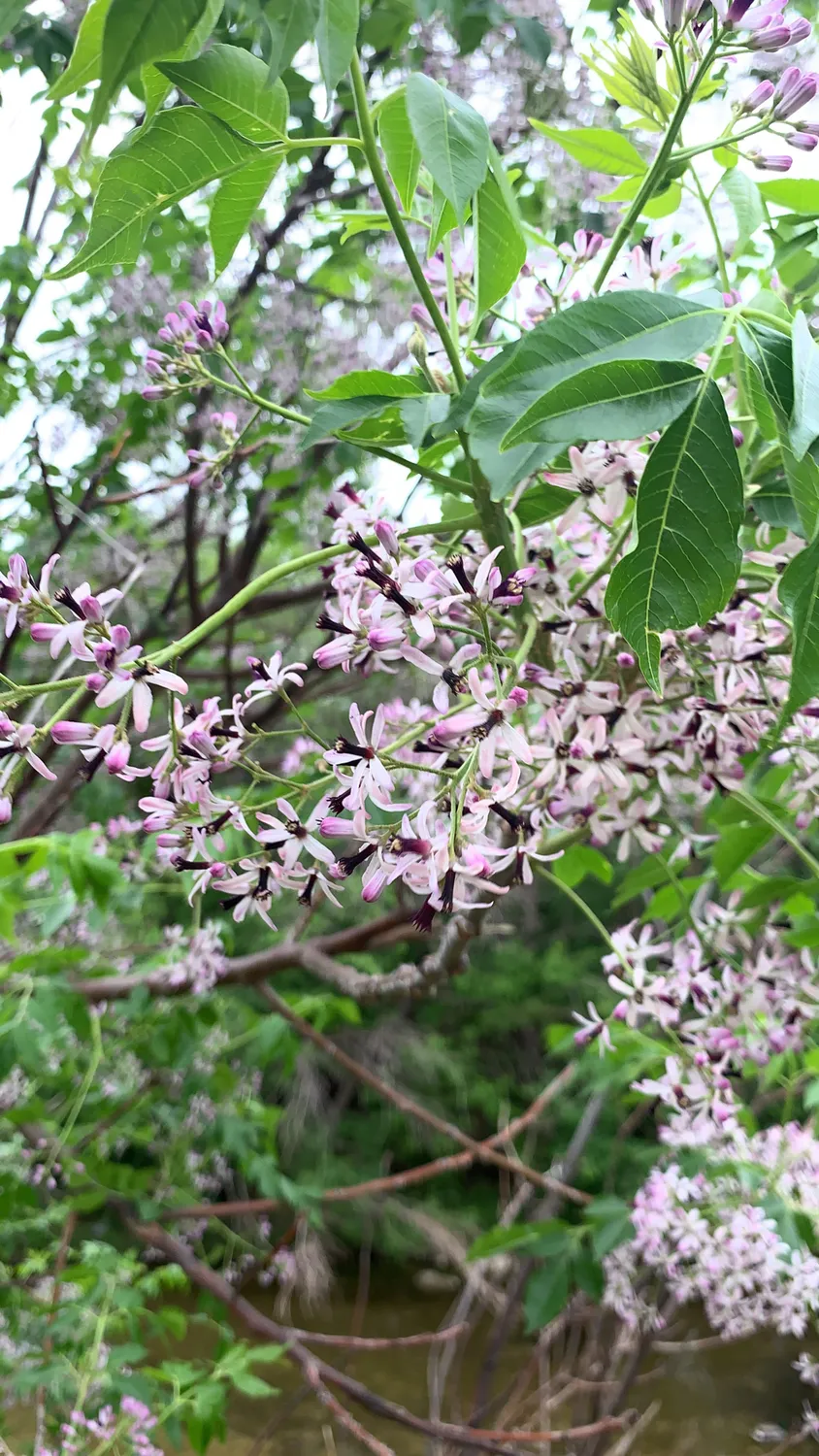
The bead tree (Melia azedarach) is a deciduous tree with large feather-divided leaves (twice-pinnate compound). In spring, small pale-purple flowers bloom in large, strongly scented clusters. From autumn into winter, yellow bead-shaped fruits hang in clusters and persist long on the branches. Height 23–50 ft (7–15 m).
Dangerous — nervous system toxicity
All parts of bead tree, especially the fruit, contain tetranortriterpenoid toxins; ingestion can cause vomiting, diarrhea, drooling, dullness, and weakness, and may progress to seizures.
If ingested
Contact your nearest vet immediately
- Action
- Go to an animal hospital immediately. Don't wait, even if symptoms seem mild.
- Symptoms
- Diarrhea, Vomiting, Drooling, Depression, Weakness, Seizures
- Onset (typical course)
- 2–6 hours after ingestion
Guide for parents
The bead tree (chinaberry) is a large tree planted along streets and in gardens in warmer regions, and its yellow autumn fruit is especially dangerous. The leaves, bark, and flowers are toxic too, but the tetranortriterpenoid toxins are most concentrated in the fruit, and ingestion can cause vomiting, diarrhea, and drooling, followed by seizures.
The fruit is the most dangerous part
The toxins are present throughout the plant but are most concentrated in the ripe yellow berries. The round, hard fruits are easy for a cat to roll and play with, and biting or swallowing one during play causes poisoning. Fallen fruit under the tree is the real hazard, so start your control there.
How cats get exposed
It isn't a houseplant, but the main route is a cat playing with or swallowing fruit that has dropped in gardens, on walking paths, or around parking areas. If your cat roams the yard, take extra care during fruiting season and clear fallen berries often.
How symptoms progress
Signs start with vomiting, diarrhea, and drooling, then dullness and weakness. As the toxins act on the nervous system, this can progress to seizures. Neurological signs can follow gastrointestinal ones, so don't just watch even if early symptoms are mild.
What to do right now
If there's any sign your cat chewed the fruit or leaves, go to an animal hospital immediately even if symptoms look mild. Don't induce vomiting at home; bringing a suspect berry or piece of the plant helps the exam. Neurological signs can progress quickly, so early treatment matters.
Details
- Scientific name
- Melia azedarach
- Common name
- Bead Tree
- Family
- Meliaceae
- Toxic parts
- All parts (especially the fruit)
- Compounds
- Tetranortriterpenoids
- Source
- ASPCA cats plant list
Related plants




Related guides

Top 10 Flowers Dangerous to Cats — The Ones You See at Florists
Ten flowers you'll commonly find at florists and grocery stores that are toxic to cats. Check before you receive them, and before you bring them home.

Got a Bouquet? What to Do If You Have a Cat
A bouquet is a lovely surprise — but if you live with a cat, there are a few things to take care of right away. From checking what's in the arrangement to choosing the right vase, here's what actually helps, in order.

Why Cats Chew Plants, and How to Stop It
A cat chewing and tearing at plants isn't just mischief — there's an instinct behind it. Once you understand why, the ways to stop it follow naturally.