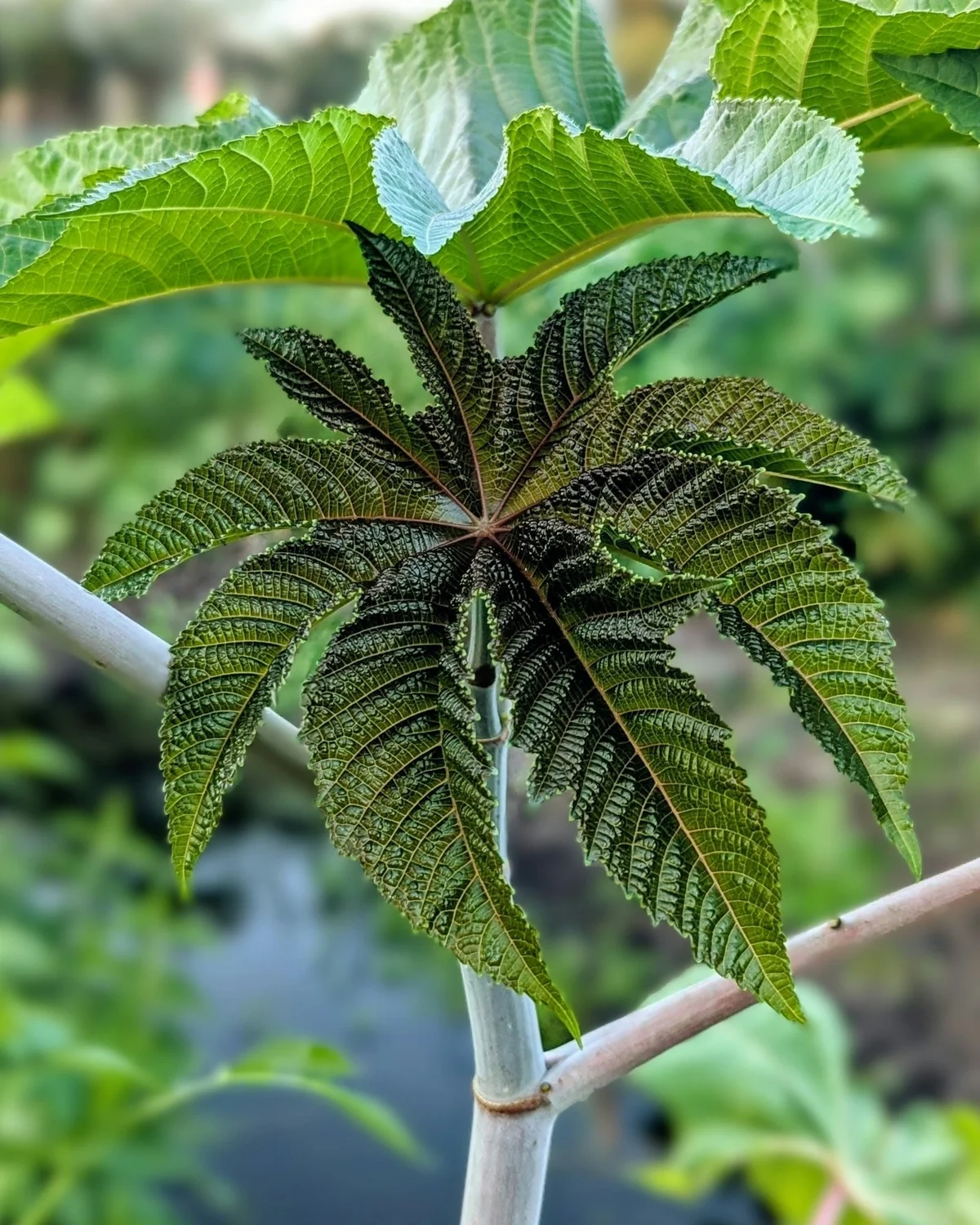
Castor Bean
Ricinus communis · Euphorbiaceae
How it looks
Castor Bean is a plant notable for its large leaves deeply divided into 7-11 palmate lobes. Cultivars in which the leaves and stems take on a purple or reddish hue are common. Round fruits with thorn-like bumps hold brown, speckled seeds (castor beans) inside. Height 3-10 ft (1-3 m).
Deadly — ricin
The seeds and leaves of castor bean contain ricin, an extremely potent toxin. The first signs are loss of appetite, intense thirst, and weakness; vomiting, abdominal pain, and bloody diarrhea follow, and it can progress through seizures, kidney failure, and coma to death.
If ingested
Contact your nearest vet immediately
- Action
- Go to a 24-hour animal hospital immediately. Don't wait, even if there are no symptoms.
- Symptoms
- Loss of appetite, Excessive thirst, Weakness, Abdominal pain, Tremors, Sweating, Incoordination, Difficulty breathing, Depression, Bloody diarrhea, Seizures, Death, Oral irritation, Oral burning, Vomiting, Kidney failure, Convulsions, Fever, Coma
- Onset (typical course)
- 6–24 hours after ingestion (symptoms may be delayed)
Guide for parents
The castor bean plant is grown ornamentally and for its oil, valued for its reddish stems and large leaves — but its seeds contain ricin, one of the most powerful plant poisons known. Chewing just a few seeds can cause violent gastrointestinal signs followed by seizures and death, so keep it away from anywhere your cat goes.
The seeds are by far the most dangerous
Ricin is most concentrated in the seeds, and the leaves and stems also carry toxins such as ricinine. Ricin is released when a cat bites and breaks the seed coat, so a chewed seed is far more dangerous than one swallowed whole. The seeds are smooth and mottled and easy to bat around like a toy, so check first that none have dropped.
How cats get exposed
It grows in gardens, fields, and along waterways, and dried seed pods sometimes come indoors as dried-flower decor. The main routes are chewing the leaves or playing with and swallowing loose seeds. If it's growing in your garden, remove it before the seeds ripen and drop.
How symptoms progress
With ricin, signs typically develop 12 to 48 hours after ingestion. It helps to know the order. It begins quietly — loss of appetite, intense thirst, dullness, and weakness — which is easy to miss. Then come oral irritation and burning, vomiting, abdominal pain, tremors, an unsteady walk, and labored breathing; as it progresses, bloody diarrhea, seizures, kidney failure, and coma can lead to death. A cat that looks fine early is not necessarily safe.
What to do right now
If there's any sign your cat chewed a seed or leaf, go to a 24-hour emergency vet immediately even without symptoms. Don't induce vomiting at home; if you can, bring a remaining seed or piece of the plant to help assess ricin exposure. The sooner it's caught and treated, the better the outcome.
Details
- Scientific name
- Ricinus communis
- Common name
- Castor Bean
- Family
- Euphorbiaceae
- Toxic parts
- Seeds, Leaves
- Compounds
- Ricin, Ricinine
- Source
- ASPCA cats plant list
Related plants
Same plant family· Euphorbiaceae


Related guides

Top 10 Flowers Dangerous to Cats — The Ones You See at Florists
Ten flowers you'll commonly find at florists and grocery stores that are toxic to cats. Check before you receive them, and before you bring them home.

Got a Bouquet? What to Do If You Have a Cat
A bouquet is a lovely surprise — but if you live with a cat, there are a few things to take care of right away. From checking what's in the arrangement to choosing the right vase, here's what actually helps, in order.
Why Cats Chew Plants, and How to Stop It
A cat chewing and tearing at plants isn't just mischief — there's an instinct behind it. Once you understand why, the ways to stop it follow naturally.