Japanese Yew
Taxus sp. · Taxaceae
How it looks
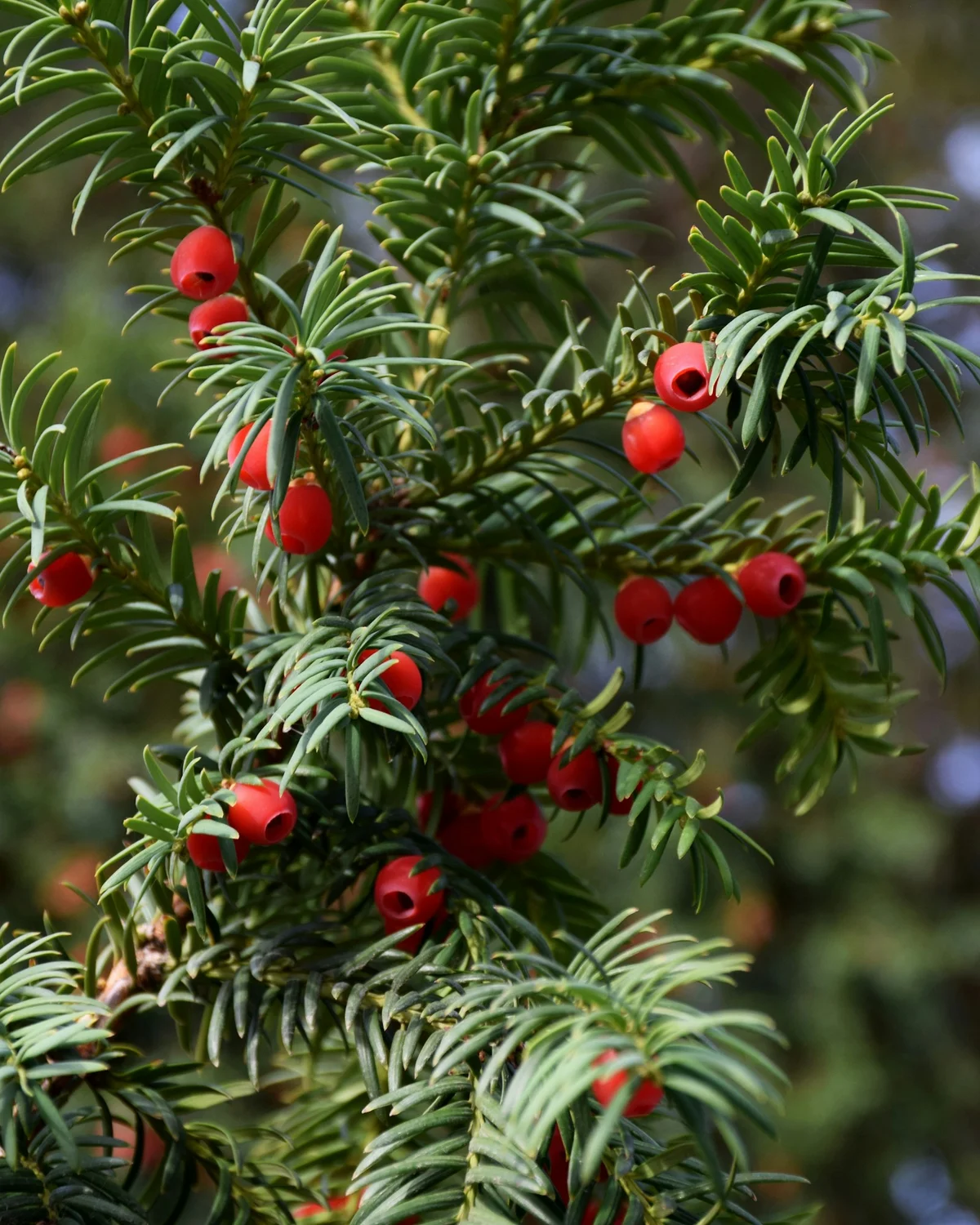
The Japanese Yew is a coniferous evergreen with short needle leaves arranged comb-like along the branches. The leaves are dark green with paler undersides. It grows 16–33 ft (5–10 m) tall, and in autumn red, cup-shaped arils appear among the leaves. It is common for gardens and hedges.
Deadly — cardiac arrest
The leaves, stems, and seeds (except the red aril) of Japanese Yew contain taxine alkaloids; ingestion can lead to tremors, difficulty breathing, and cardiac arrest.
If ingested
Contact your nearest vet immediately
- Action
- Go to a 24-hour animal hospital immediately. Don't wait, even if there are no symptoms.
- Symptoms
- Tremors, Difficulty breathing, Vomiting, Death, Cardiac failure
- Onset (typical course)
- 6–24 hours after ingestion (symptoms may be delayed)
Guide for parents
Japanese yew is a conifer widely planted as a hedge and landscaping shrub, and it is deadly to cats. The needles, stems, and seeds — everything but the red aril — contain taxine alkaloids, and even a small amount can stop the heart.
If it's called a yew, it's the same poison
Japanese yew is the same genus (Taxus) as American yew, English yew, the general yew, and Pacific yew, and it carries the identical taxine toxin. You don't need to identify the species — treat every yew as dangerous.
How cats get exposed
You'll find it as trimmed hedges and even bonsai, indoors and out. Only the soft red aril is non-toxic, so a cat is drawn to the berry — and biting the seed inside releases the poison. Pruning clippings and dropped needles keep their toxicity even when dried, so don't leave them lying around.
How symptoms progress
Early on you may see vomiting, tremors, and weakness, but taxine acts above all on the heart. The heartbeat becomes irregular, arrhythmias develop, and sudden death has been reported with no clear warning. Onset can be delayed up to 6–24 hours, so looking fine early does not mean safe.
What to do right now
If there's any sign your cat chewed it, don't wait for symptoms — get to a 24-hour emergency vet right away. Don't try to induce vomiting at home; note the part and amount eaten and bring a piece of the plant. Cardiac toxicity is a race against the clock, and arriving sooner raises the odds of saving your cat.
Details
- Scientific name
- Taxus sp.
- Common name
- Japanese Yew
- Family
- Taxaceae
- Toxic parts
- All parts (except the red aril)
- Compounds
- Taxine alkaloids
- Source
- ASPCA cats plant list
Related plants
Same plant family· Taxaceae

Related guides

Top 10 Flowers Dangerous to Cats — The Ones You See at Florists
Ten flowers you'll commonly find at florists and grocery stores that are toxic to cats. Check before you receive them, and before you bring them home.

Got a Bouquet? What to Do If You Have a Cat
A bouquet is a lovely surprise — but if you live with a cat, there are a few things to take care of right away. From checking what's in the arrangement to choosing the right vase, here's what actually helps, in order.
Why Cats Chew Plants, and How to Stop It
A cat chewing and tearing at plants isn't just mischief — there's an instinct behind it. Once you understand why, the ways to stop it follow naturally.