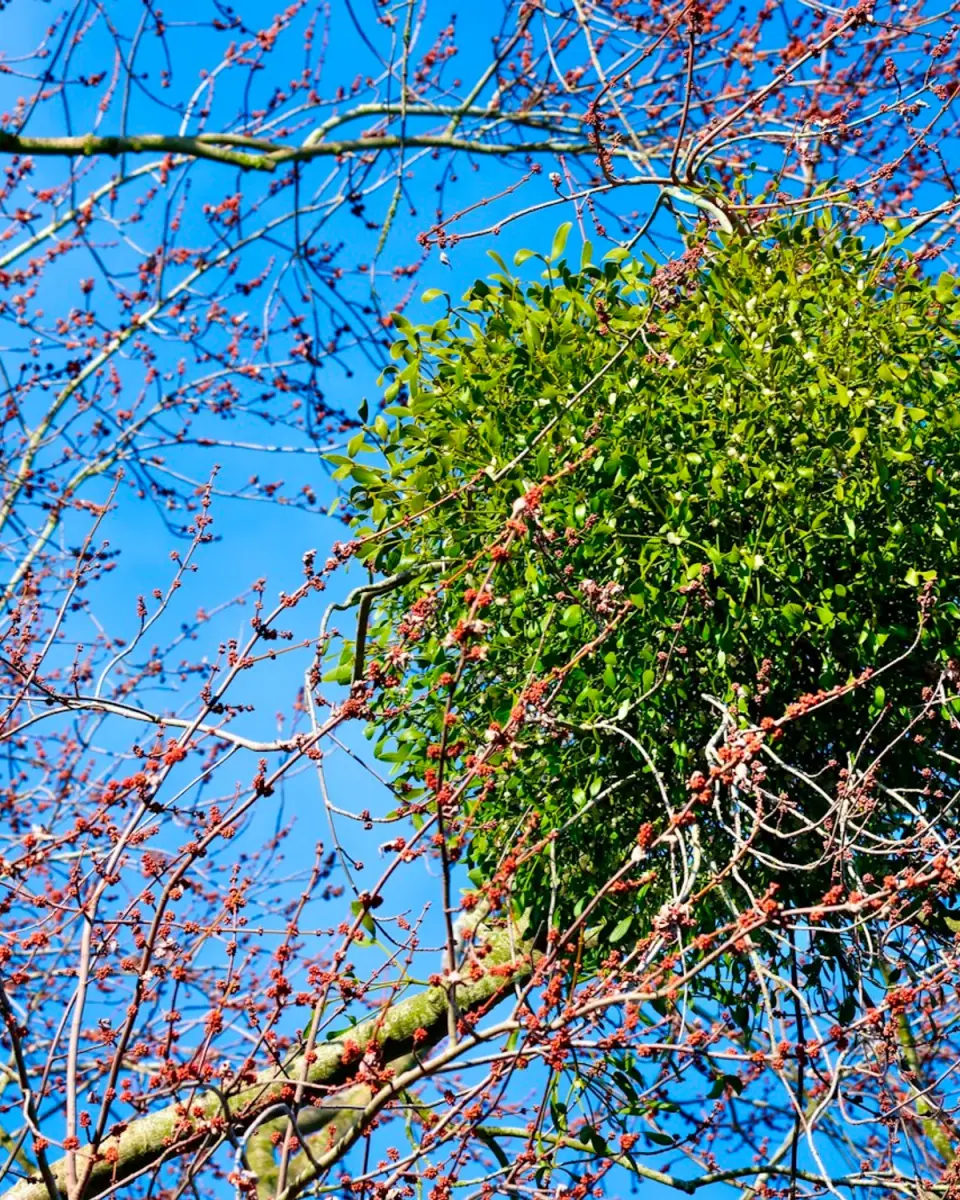
Mistletoe "American"
Phoradendron flavescens · Santalaceae
How it looks
American Mistletoe is an evergreen plant that grows parasitically on the branches of other trees, forming rounded clumps. Its leaves are thick and leathery in a yellowish green, and small white berries hang in clusters. It is commonly sold as Christmas decoration.
Dangerous — phoratoxin
All parts of Mistletoe "American", especially the berries, contain phoratoxin and lectins; ingestion can cause vomiting, diarrhea, and low blood pressure. The biggest risk comes when it enters the home as a Christmas decoration.
If ingested
Contact your nearest vet immediately
- Action
- Go to an animal hospital immediately. Don't wait, even if symptoms seem mild.
- Symptoms
- Vomiting, diarrhea, low blood pressure
- Onset (typical course)
- 2–6 hours after ingestion
Guide for parents
American mistletoe most often enters the home as Christmas decoration, and that is its most common accident route. The whole plant, especially the white berries, contains phoratoxin and lectins, which can cause stomach upset and a drop in blood pressure if eaten.
How cats get exposed
The most dangerous part is the berries. Cats readily pick dried, fallen berries or leaf fragments off the floor. If cut sprigs are used in a vase or wreath, berries drop every time it is jostled, and the compounds can also leach into the standing water.
How symptoms progress
Signs usually begin within a few hours with vomiting and diarrhea. Larger amounts can progress to low blood pressure, a slowed heartbeat, and wobbliness. Small amounts often stay limited to stomach signs, but be more cautious if several berries were eaten.
What to do right now
If there is any chance your cat chewed or swallowed it, contact your vet even if the signs look mild — it helps to estimate how much was eaten. When decorating, keep it completely away from your cat's routes and clear fallen berries and leaves as they drop. Switching to artificial mistletoe removes this risk entirely.
Details
- Scientific name
- Phoradendron flavescens
- Common name
- Mistletoe "American"
- Family
- Santalaceae
- Toxic parts
- All parts (especially the fruit)
- Compounds
- Phoratoxin, Lectins
- Source
- ASPCA cats plant list
Related plants
Related guides

Top 10 Flowers Dangerous to Cats — The Ones You See at Florists
Ten flowers you'll commonly find at florists and grocery stores that are toxic to cats. Check before you receive them, and before you bring them home.

Got a Bouquet? What to Do If You Have a Cat
A bouquet is a lovely surprise — but if you live with a cat, there are a few things to take care of right away. From checking what's in the arrangement to choosing the right vase, here's what actually helps, in order.
Why Cats Chew Plants, and How to Stop It
A cat chewing and tearing at plants isn't just mischief — there's an instinct behind it. Once you understand why, the ways to stop it follow naturally.