Rhubarb
Rheum rhabarbarium · Polygonaceae
How it looks
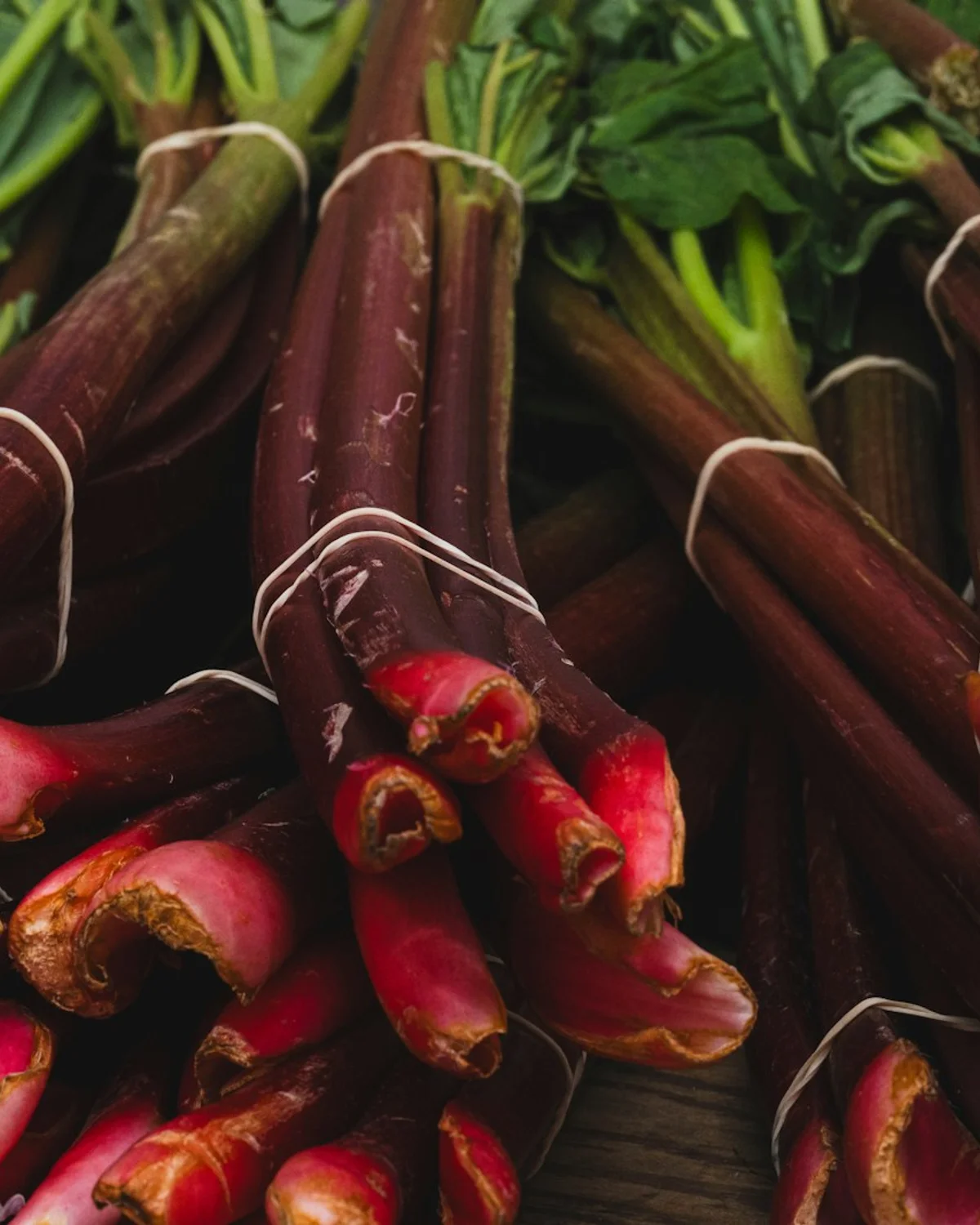
Rhubarb is a vegetable whose thick red leaf stalks bear large heart- or palm-shaped deep-green leaves at their tips. The leaf stalks are about 20-31 in (50-80 cm), strongly tinged red and releasing sap when touched. The flower stalk grows upright to about 3-6.5 ft (1-2 m), gathering white to pale-pink flowers in a cone shape at the top.
Dangerous — kidney failure
The leaves (most toxic part) and roots of Rhubarb contain concentrated oxalic acid; ingestion can cause drooling and tremors, and may progress to kidney failure.
If ingested
Contact your nearest vet immediately
- Action
- Go to an animal hospital immediately. Don't wait, even if symptoms seem mild.
- Symptoms
- Hypersalivation, tremors, kidney failure
- Onset (typical course)
- 2–6 hours after ingestion
Guide for parents
People eat rhubarb's cooked stalks, but the leaves have concentrated oxalates that are dangerous to cats. The key accident scenario is leftover leaves from cooking being left out in the kitchen or garden.
Which part is dangerous
The most toxic part is the leaf. The leaves hold far more oxalate than the edible stalks, so trouble comes when a cat chews the leaves. The roots contain oxalates too. Don't leave trimmed-off leaves lying around — clear them away immediately.
How symptoms progress
Oxalates bind with calcium in the body to form crystals, and those crystals injure the kidneys. It typically begins with heavy drooling and tremors after eating, and as it advances, kidney function declines, which can lead to changes in urine output and lethargy.
What to do right now
If there is any chance your cat chewed or swallowed a leaf, get to a vet immediately, even if the signs look mild. Because oxalate poisoning causes cumulative kidney damage, early fluid therapy matters. Do not induce vomiting on your own at home.
Details
- Scientific name
- Rheum rhabarbarium
- Common name
- Rhubarb
- Family
- Polygonaceae
- Toxic parts
- Leaves (most toxic part), Roots
- Compounds
- Oxalic acid, Anthraquinone glycosides
- Source
- ASPCA cats plant list
Related plants
Same plant family· Polygonaceae
Related guides
Top 10 Flowers Dangerous to Cats — The Ones You See at Florists
Ten flowers you'll commonly find at florists and grocery stores that are toxic to cats. Check before you receive them, and before you bring them home.
Got a Bouquet? What to Do If You Have a Cat
A bouquet is a lovely surprise — but if you live with a cat, there are a few things to take care of right away. From checking what's in the arrangement to choosing the right vase, here's what actually helps, in order.
Why Cats Chew Plants, and How to Stop It
A cat chewing and tearing at plants isn't just mischief — there's an instinct behind it. Once you understand why, the ways to stop it follow naturally.