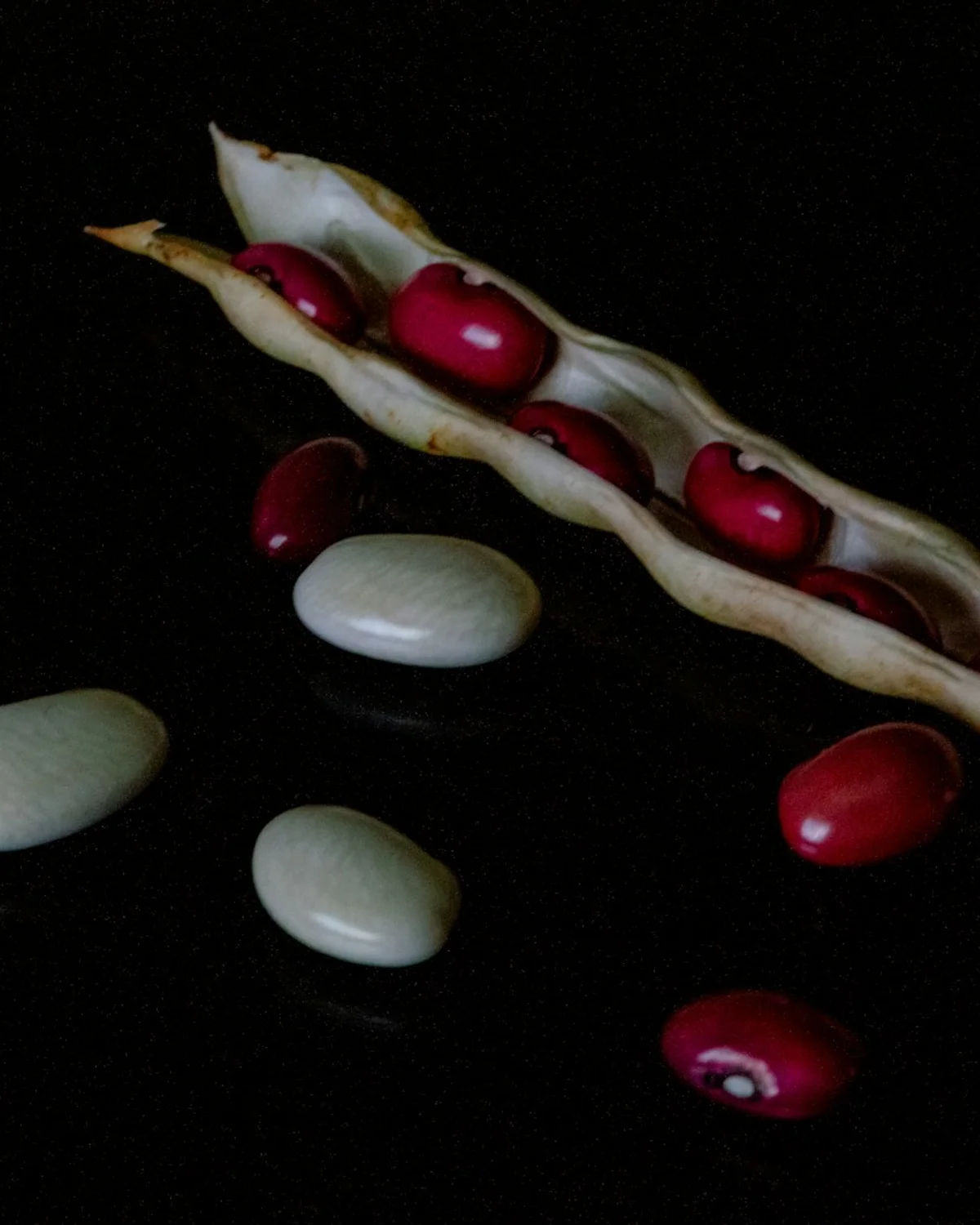
Rosary Pea
Abrus precatorius · Fabaceae
How it looks
Rosary Pea is a legume that grows as a vine, with small feather-shaped leaves set opposite each other. Its most notable feature is the seeds inside the pod-round, bean-shaped, with the upper one-third black and the lower two-thirds a vivid red. Vine length 10-20 ft (3-6 m).
Dangerous — even a few seeds can be fatal; see a vet immediately
The seeds of rosary pea contain abrin, an extremely potent toxin. Chewing a seed whose coat is broken can bring severe vomiting and bloody diarrhea, tremors, a racing heart, and fever, followed by shock and death.
If ingested
Contact your nearest vet immediately
- Action
- Go to an animal hospital immediately. A damaged seed coat is fatal. Don't wait.
- Symptoms
- Vomiting, Bloody diarrhea, Tremors, Increased heart rate, Fever, Shock, Death
- Onset (typical course)
- Several hours to a day after ingestion (worsens rapidly after a latent period)
Guide for parents
With rosary pea, a single seed can kill a cat. The abrin inside the seed is a powerful toxin that shuts down protein production inside cells — the same family of toxins as ricin. The reassurance that "a nibble or two is fine" absolutely does not apply to this plant.
Which part is dangerous
The most dangerous part is the seed — bright red with a black spot. The seed has a hard coat, so if swallowed whole it may pass through intact; but if chewed and the coat breaks, abrin is released and it becomes deadly. These seeds are sometimes used in rosaries and bracelets, so they can enter the home as jewelry — watch for that too.
How symptoms progress
Abrin has a latent period: a cat may look fine for a while, then deteriorate sharply. It begins with severe vomiting and bloody diarrhea, followed by tremors, fever, and a racing heart, and as it progresses the cat can go into shock. It is a classic example of a toxin where an absence of early symptoms is no reason to relax.
What to do right now
If there is any chance your cat chewed or swallowed a seed, get to a vet immediately, even with no symptoms. If a broken seed was eaten, every minute counts. Do not induce vomiting at home; if you can, tell the clinic which seed or plant was eaten and roughly how much.
Details
- Scientific name
- Abrus precatorius
- Common name
- Rosary Pea
- Family
- Fabaceae
- Toxic parts
- Seeds, All parts
- Compounds
- Abrin, Abralin, Lectins
- Source
- ASPCA cats plant list
Related plants
Same plant family· Fabaceae
Related guides
Top 10 Flowers Dangerous to Cats — The Ones You See at Florists
Ten flowers you'll commonly find at florists and grocery stores that are toxic to cats. Check before you receive them, and before you bring them home.
Got a Bouquet? What to Do If You Have a Cat
A bouquet is a lovely surprise — but if you live with a cat, there are a few things to take care of right away. From checking what's in the arrangement to choosing the right vase, here's what actually helps, in order.
Why Cats Chew Plants, and How to Stop It
A cat chewing and tearing at plants isn't just mischief — there's an instinct behind it. Once you understand why, the ways to stop it follow naturally.