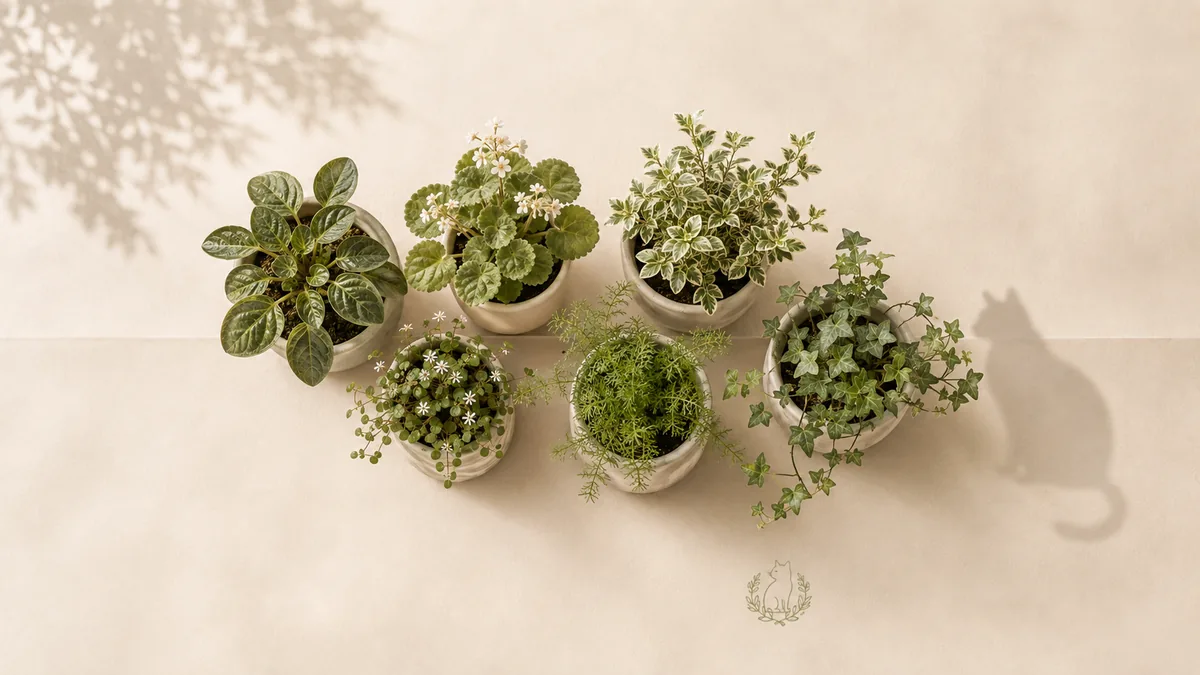
Balcony & Windowsill Gardening with Cats: Building Safe Plant Zones
Enjoy balcony and windowsill gardening while living with cats. A practical guide to separating toxic plants from your cat's paths and planning space with hanging planters, shelves, and safe plants.
For plant-loving cat owners, the balcony and the windowsill are the most coveted real estate in the home. They get great light and give you room to line up your pots. The catch is that those same sunny spots are prime territory for your cat, too. The routes a cat takes to watch the world outside and soak up the sun overlap almost exactly with the places you want to put your plants. That is why gardening alongside a cat is only half about "which plants you grow" — the other half is "where and how you arrange them." Choosing safe plants is the foundation, but a well-planned layout lets you and your cat share the same space happily. Let's start by separating toxic plants from your cat's paths.
Separating Toxic Plants from Your Cat's Paths
The first thing to do is get dangerous plants off your cat's main routes. Cats move along fixed paths — windowsills, cat towers, shelves. Put a toxic or caution-grade plant anywhere along that route and, no matter how careful you are, your cat will eventually reach it. The principle is simple: keep dangerous plants in spaces your cat never goes, and place safe plants where your cat spends time. For highly toxic plants, the standard should not be "hard to reach" but "completely off the path." Cats climb higher and squeeze through narrower gaps than you'd expect, so a high shelf in the same room is not enough to feel safe.
Turning the Balcony into a Plants-Only Space
If you have an enclosed balcony, dedicating it entirely to plants is the cleanest solution. Close the balcony door or partition to keep your cat out, and you can grow even dangerous plants with peace of mind while handling soil and fertilizer freely. Just pay attention to the balcony screens and safety. Cats pushing through window screens and falling is a surprisingly common accident, so if your cat has access to the balcony, install a separate fall-prevention net. Even on a plants-only balcony, it's important to keep your cat out when you open the window for ventilation.
Using Height with Hanging Planters and Shelves
If space is tight and your plants and cat have to share a room, hanging planters and wall shelves that make use of height are useful. Hanging pots suspended from the ceiling stay separate from floor-level paths, so they're hard for a cat to reach. That said, trailing vines send stems down and can eventually be reached, so for hanging planters it's safer to choose plants whose leaves grow upward and inward. For wall shelves, first check whether your cat can jump up to them. Arranging them so there's no furniture to use as a stepping stone makes access difficult. Using heavy pots so they won't fall even if your cat bumps them is a basic precaution. A fallen pot spills soil and creates a whole new problem, so pay special attention to stability.
Reserving the Prime Window Spot for Safe Plants
For the windowsill your cat loves most, it's easiest on your mind to put only safe plants there from the start. Among the plants rated safe by flower cat, several are a great fit for windowsill gardening.
- Gerbera daisy — brightens up a windowsill with vivid color.
- Phalaenopsis orchid — long-lasting blooms and few leaves, so there's little for a cat to chew.
- Calathea — a good alternative when you want to enjoy patterned foliage safely.
- Boston fern — its full, lush leaves suit a green interior.
- Succulents and cacti like the Christmas cactus and echeveria — easy to care for and well suited to a sunny window.
Before you bring succulents or cacti home, check the points to watch for in Succulents, Cacti, and Cats.
Redirecting the Urge to Chew with Cat Grass
No matter how well you arrange things, your cat's urge to chew and dig won't simply disappear. If you grow a separate pot of cat grass in one corner of the window, your cat will satisfy that urge on a safe plant instead of your other pots. Think of it as setting aside one pot in your gardening space that belongs to your cat. For how to grow it, see How to Grow Cat Grass. To sum up, gardening on a balcony or windowsill with a cat comes down to three things: keep dangerous plants off your cat's paths, divide the territory using height and space, and put safe plants and cat grass in the spots your cat visits most. Stick to these principles and both your plants and your cat can enjoy that sunny space together. If you want a broader selection of safe plants, the guide to houseplants you can keep with cats will help.