Crab Cactus
Schlumbergera truncata · Cactaceae
How it looks
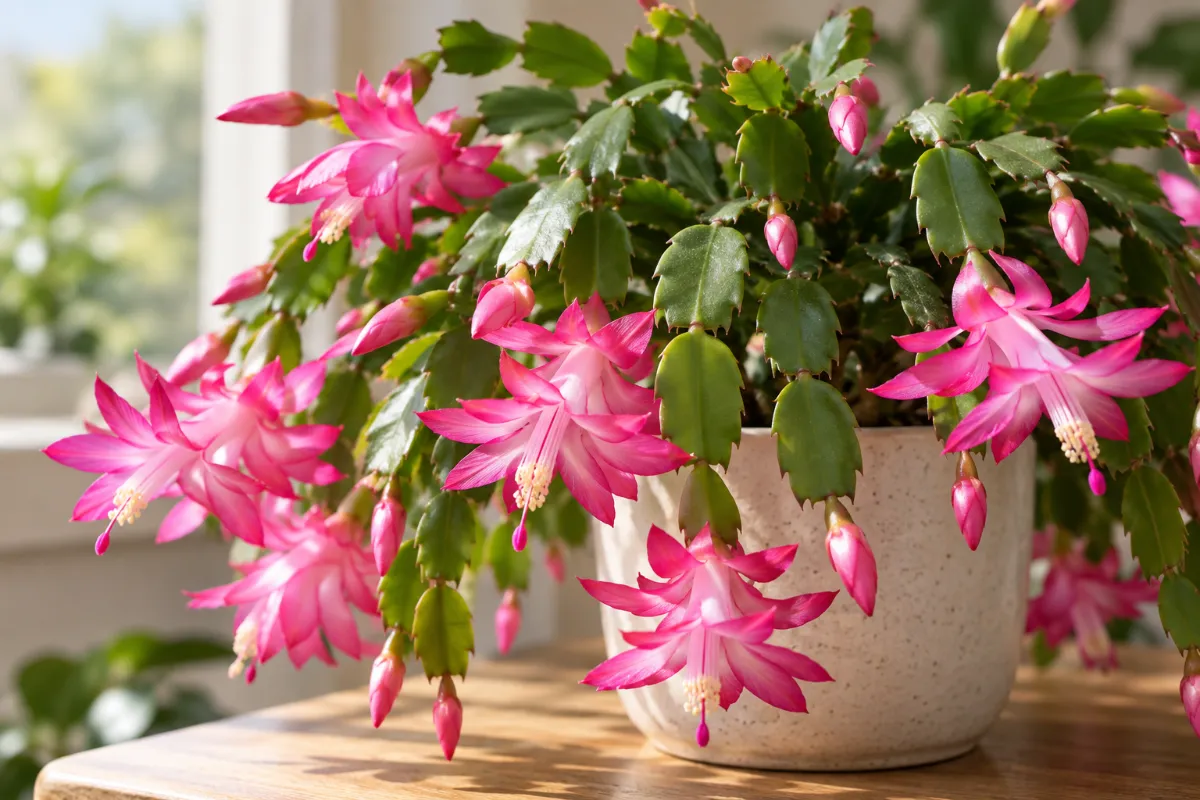
Crab Cactus is a cactus made of flattened, jointed segments whose edges carry sharp, pointed teeth like a crab's claw. From the segment tips come tubular flowers with swept-back petals in pink, red, or white, and the stems arch and trail as they lengthen.
No cat toxicity data — caution advised
Christmas cactus (Schlumbergera truncata) does not appear in the ASPCA's plant list for cats, so there is no confirmed assessment for cats either way. NC State Extension does carry a tag marking it as a plant that does not harm cats, but that is a filing label rather than a poison field the source filled in, and it falls short of the grounds this app requires before calling anything safe. With no confirmed evidence, we cannot call it safe, so exercise caution if your cat has access to it.
Guide for parents
Christmas cactus has no toxicity data for cats, so its safety cannot be stated either way. It flowers from late autumn, which is why it so often arrives as a winter gift in a pot.
The ASPCA list holds two Schlumbergera entries, but they are the same species: the name in its Christmas cactus entry, Schlumbergera bridgesii, is treated by international checklists as a synonym of Schlumbergera russelliana, so this app keeps them as one page. What shops here actually sell under those names is usually Schlumbergera truncata and its hybrids, which that entry does not cover, and a verdict made about another species is not carried over here.
NC State Extension does have a page for this species, and it carries a tag marking it as a plant that does not harm cats. But that tag is a filing label rather than a poison field the source filled in, and the only grounds this app accepts for a safety statement are species-level assessments made for pets. So we keep the tag as a record of what we checked, and nothing more.
At home, decide where the pot goes first. The spines are short but real, and a nose or a paw can still be pricked; the flat, leaf-like segments break off at the joints and are easy for a cat to carry around in its mouth. That is a physical risk separate from toxicity — pick up fallen segments as they drop, and keep the pot off the surfaces your cat jumps onto.
If you find that segments have been chewed, note roughly how much and when. If your cat keeps pawing at its mouth, or vomiting repeats and it seems listless, contact your vet.
Details
- Scientific name
- Schlumbergera truncata
- Common name
- Crab Cactus
- Family
- Cactaceae
- Source
- No confirmed source for cats — not listed by ASPCA
Also known as
Related plants
Same plant family· Cactaceae
Related guides
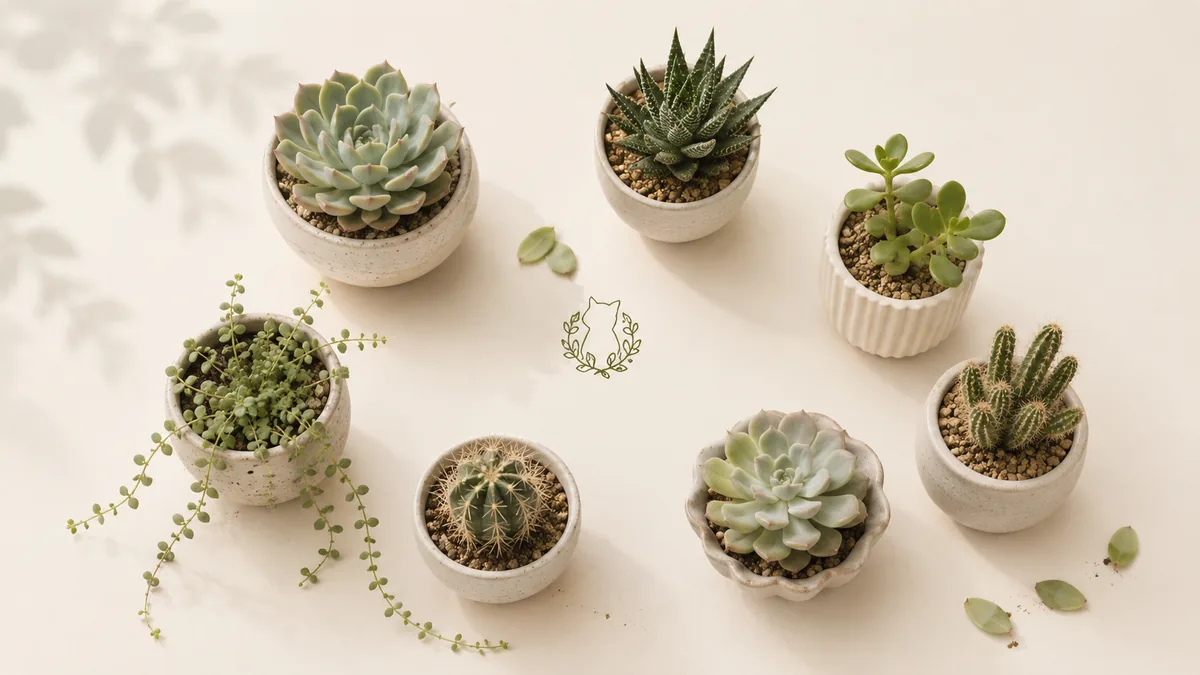
Succulents and Cactus Plants: Are They Safe for Cats?
Most succulents and cacti are relatively safe around cats, but aloe and kalanchoe are toxic exceptions. Here is what to check for each type before you buy.

Top 10 Flowers Dangerous to Cats — The Ones You See at Florists
Ten flowers you'll commonly find at florists and grocery stores that are toxic to cats. Check before you receive them, and before you bring them home.
Got a Bouquet? What to Do If You Have a Cat
A bouquet is a lovely surprise — but if you live with a cat, there are a few things to take care of right away. From checking what's in the arrangement to choosing the right vase, here's what actually helps, in order.