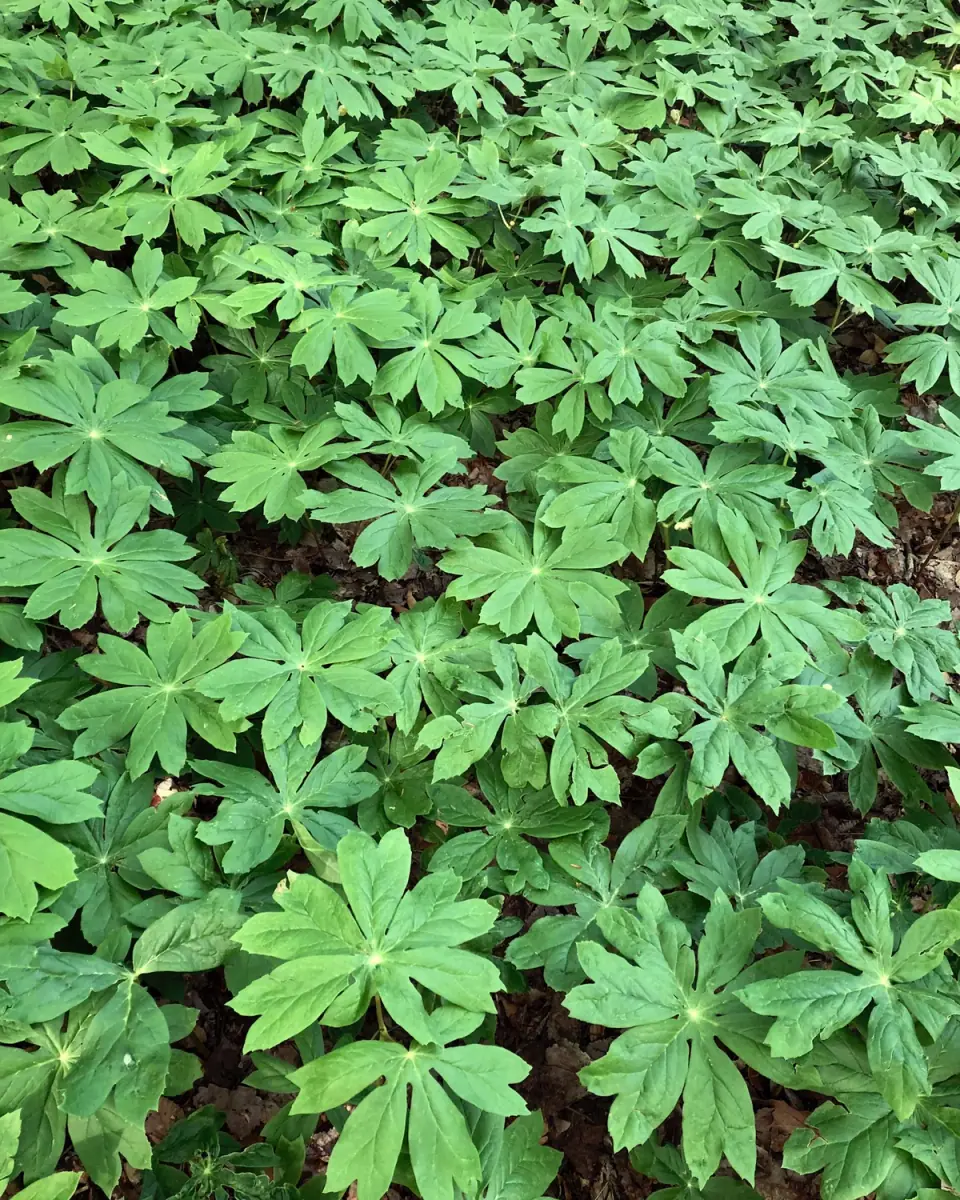
American Mandrake
Podophyllum peltatum · Berberidaceae
How it looks
American Mandrake (Podophyllum) is a perennial with one or two large umbrella-shaped leaves at the top of the stem. A single white cup-shaped flower hides beneath the leaves. It grows 12-20 in (30-50 cm) tall on the floor of damp woodlands.
Dangerous — GI and systemic toxicity
All parts of American Mandrake, especially the roots and unripe fruit, contain high levels of podophyllotoxin. Ingestion causes vomiting, diarrhea, lethargy, and labored breathing, and in rare cases coma, so immediate veterinary care is needed.
If ingested
Contact your nearest vet immediately
- Action
- Consult a vet and monitor. Go in immediately if symptoms worsen.
- Symptoms
- Vomiting, Diarrhea, Depression, Difficulty breathing, Coma (rare), Redness, Skin ulcers
- Onset (typical course)
- 1–4 hours after ingestion
Guide for parents
American mandrake (mayapple) is a perennial that grows in the shade of woods and gardens, and the whole plant — especially the root and unripe fruit — is loaded with podophyllotoxin. The line that "a little chewing is fine" does not hold for this plant.
Which part is dangerous
The root (rhizome) and the unripe green fruit carry the most toxin. The leaves and stems also contain podophyllotoxin and are dangerous to chew. Only the fully ripe fruit is considered relatively low in toxicity, but there is no reason to deliberately let a cat eat any of it. Contact with the sap can leave skin red or ulcerated, so after handling the plant wipe your cat down so it doesn't lick its paws or coat.
How symptoms progress
Podophyllotoxin is a potent toxin that interferes with cell division, and it starts with vomiting and diarrhea after ingestion. Lethargy and labored breathing follow, and in rare cases it has progressed to coma. This is not a toxin to dismiss as simple stomach irritation.
What to do right now
If there is any chance your cat chewed or swallowed it, call your vet for guidance regardless of how the signs look. If vomiting or diarrhea has already started, go in without delay. Do not induce vomiting at home; figure out which part was eaten and how much, and pass that on.
Details
- Scientific name
- Podophyllum peltatum
- Common name
- American Mandrake
- Family
- Berberidaceae
- Toxic parts
- All parts (especially the roots, Unripe fruit)
- Compounds
- Podophyllotoxin
- Source
- ASPCA cats plant list
Related plants
Same plant family· Berberidaceae

Related guides

Top 10 Flowers Dangerous to Cats — The Ones You See at Florists
Ten flowers you'll commonly find at florists and grocery stores that are toxic to cats. Check before you receive them, and before you bring them home.

Got a Bouquet? What to Do If You Have a Cat
A bouquet is a lovely surprise — but if you live with a cat, there are a few things to take care of right away. From checking what's in the arrangement to choosing the right vase, here's what actually helps, in order.
Why Cats Chew Plants, and How to Stop It
A cat chewing and tearing at plants isn't just mischief — there's an instinct behind it. Once you understand why, the ways to stop it follow naturally.