Heavenly Bamboo
Nandina domestica · Berberidaceae
How it looks
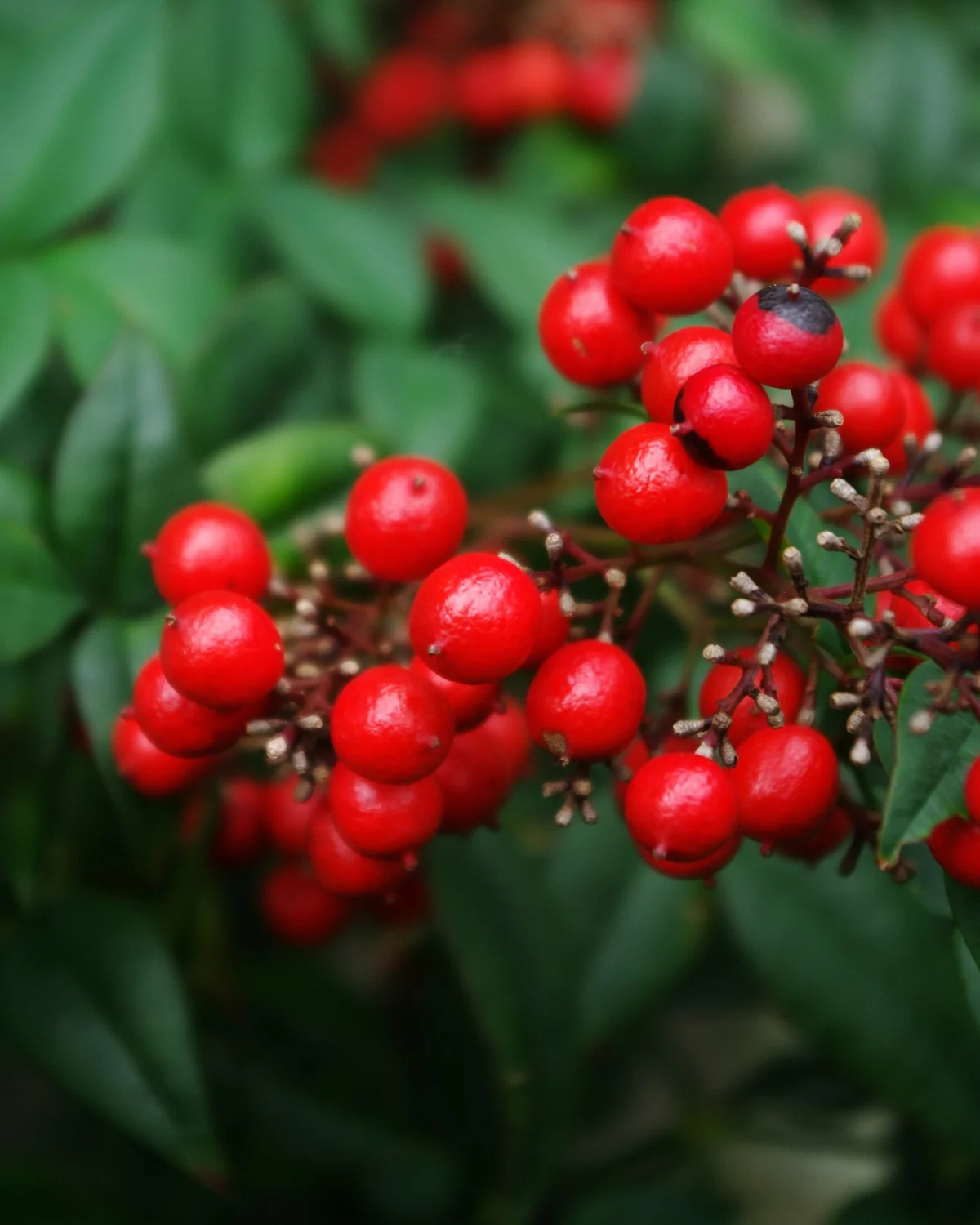
Heavenly Bamboo is an evergreen shrub with feathery, finely divided leaves that gather at the stem tips. The new growth and the autumn and winter leaves turn red. Small white flowers bloom in clusters, and round red fruit hangs in large clusters. It reaches 3-7 ft (1-2 m) tall. It is not a true bamboo.
Deadly — respiratory failure
Chewing heavenly bamboo brings weakness and an unsteady gait, and it can progress to seizures, coma and respiratory failure. NC State Extension places this plant at its highest poison severity and records that death can occur from ingestion. Contact a vet immediately if you know or suspect your cat ate any part of it.
If ingested
Contact your nearest vet immediately
- Action
- Go to an animal hospital immediately. Don't wait, even if symptoms seem mild.
- Symptoms
- Weakness, Incoordination, Seizures, Coma, Respiratory failure, Death (rare)
- Onset (typical course)
- 1–4 hours after ingestion
Guide for parents
Heavenly bamboo is a common garden and container plant for its reddening leaves and the berries that hold on through winter. The ASPCA lists it as toxic to cats, recording weakness, incoordination, seizures, coma and respiratory failure, and adds that death is rare in pets. NC State Extension records the same signs but rates the poison severity as High — its top level — and states that death can occur from ingestion with no frequency qualifier. It also lists the fruits, leaves and stems as poisonous parts, states that all parts are toxic to cats, and names the compound as cyanogenic glycosides. The two sources differ on how often death occurs, and we follow the one that states it more strongly.
The berries are eye-catching and stay on the branches through winter, which puts them well within a cat’s reach. Clear fallen leaves and berries the same day, and move the pot somewhere your cat cannot get to. The same applies to cut branches in a vase.
If you see neurological signs — staggering, or clouded consciousness — call your vet right away instead of waiting. Do not put it off even if the signs look mild. Noting which part was eaten and when helps the clinic judge.
Details
- Scientific name
- Nandina domestica
- Common name
- Heavenly Bamboo
- Family
- Berberidaceae
- Toxic parts
- All parts
- Compounds
- Cyanogenic glycosides
Related plants
Same plant family· Berberidaceae
Related guides
Top 10 Flowers Dangerous to Cats — The Ones You See at Florists
Ten flowers you'll commonly find at florists and grocery stores that are toxic to cats. Check before you receive them, and before you bring them home.
Got a Bouquet? What to Do If You Have a Cat
A bouquet is a lovely surprise — but if you live with a cat, there are a few things to take care of right away. From checking what's in the arrangement to choosing the right vase, here's what actually helps, in order.
Why Cats Chew Plants, and How to Stop It
A cat chewing and tearing at plants isn't just mischief — there's an instinct behind it. Once you understand why, the ways to stop it follow naturally.