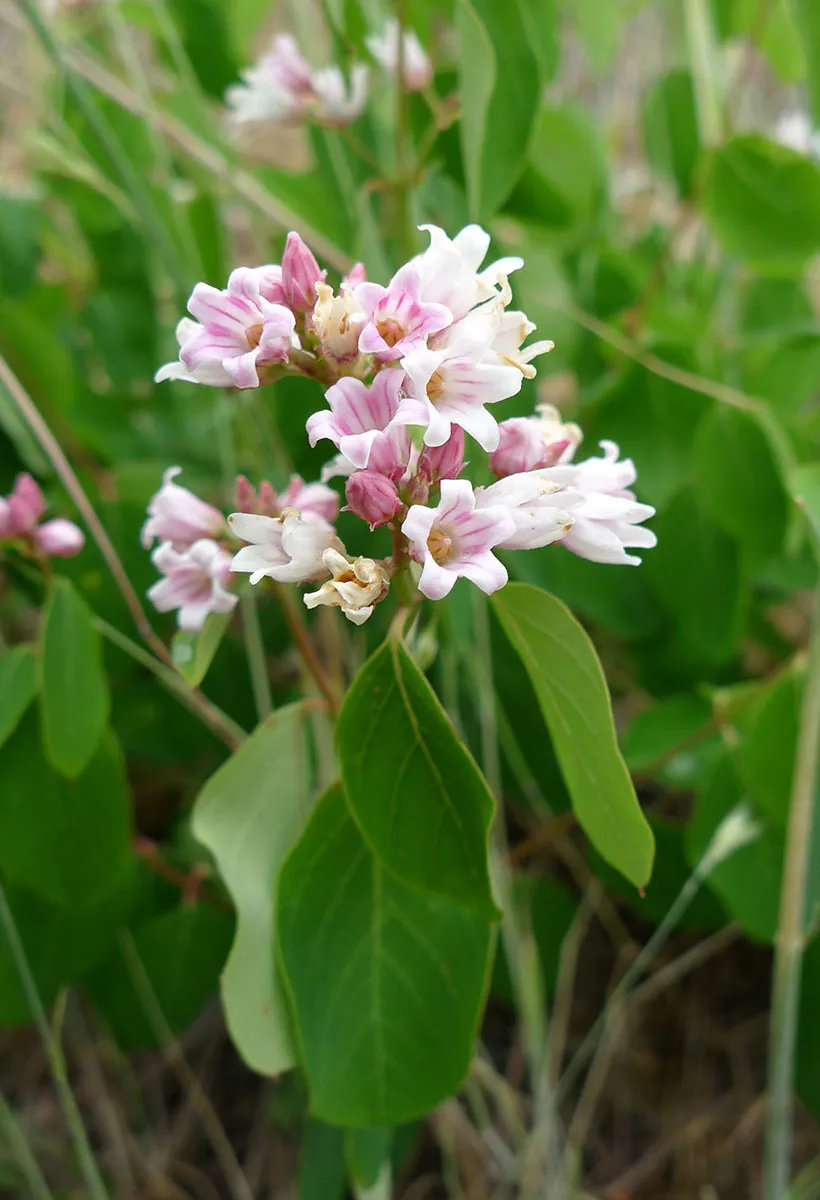
Bitter Root
Apocynum androsaemifolium · Apocynaceae
How it looks
Bitter root (Apocynum) is an herb of the dogbane family (Apocynaceae), distinguished by oval leaves arranged opposite one another along the stem. Small pink-to-white bell-shaped flowers cluster at the branch tips. The cut stem exudes a white latex. Height 12–31 in (30–80 cm), growing in the wild.
Deadly — cardiac arrest
All parts of Bitter Root (Bitter Root) contain cardiac glycosides; even a small amount can cause arrhythmias, vomiting, and depression, and in serious cases this can progress to cardiac arrest.
If ingested
Contact your nearest vet immediately
- Action
- Go to a 24-hour animal hospital immediately. Don't wait, even if there are no symptoms.
- Symptoms
- Vomiting, diarrhea, cardiac arrest
- Onset (typical course)
- 6–24 hours after ingestion (symptoms may be delayed)
Guide for parents
Bitter root grows wild or as a garden ornamental, but if you live with a cat, never bring it indoors. The whole plant contains cardiac glycosides, so even a small amount can disrupt the heart's rhythm and, as it progresses, lead to cardiac arrest.
Telling it apart
Bitter root belongs to the genus Apocynum and is essentially as toxic as its close relative dogbane hemp. Both are in the dogbane family (Apocynaceae) and, like oleander, rely on cardiac glycosides as their main toxin. Don't try to judge safety by name or appearance — treat any Apocynum or dogbane-family plant as toxic across the board.
How cats get exposed
The toxin is present in the leaves, flowers, stems, and roots, and it also leaches into the water holding cut stems. A cat can be exposed simply by licking the milky sap that oozes from a cut stem, or by grooming that sap off its fur. Pulled or dried stems stay toxic too.
How symptoms progress
Signs usually begin 6–24 hours after ingestion with vomiting, diarrhea, and lethargy. As the cardiac glycosides act on the heart, the pulse may slow or become irregular, and this can advance from arrhythmia to cardiac arrest. Because onset is often delayed, a cat may look fine for the first few hours — mistaking that window for safety is dangerous.
What to do right now
If there is any chance your cat chewed or swallowed it, get to a 24-hour emergency vet immediately, even with no symptoms yet. Once the heart's rhythm breaks down, cardiac toxicity is very hard to reverse, so the key is to start treatment early rather than wait for signs. Do not try to induce vomiting at home.
Details
- Scientific name
- Apocynum androsaemifolium
- Common name
- Bitter Root
- Family
- Apocynaceae
- Toxic parts
- All parts
- Compounds
- Cardiac glycosides
- Source
- ASPCA cats plant list
Related plants
Same plant family· Apocynaceae
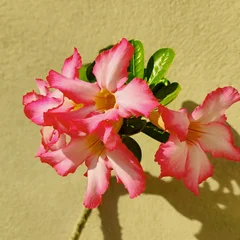
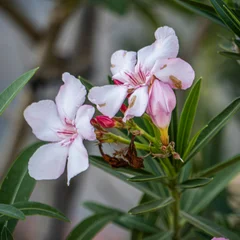
Related guides

Top 10 Flowers Dangerous to Cats — The Ones You See at Florists
Ten flowers you'll commonly find at florists and grocery stores that are toxic to cats. Check before you receive them, and before you bring them home.

Got a Bouquet? What to Do If You Have a Cat
A bouquet is a lovely surprise — but if you live with a cat, there are a few things to take care of right away. From checking what's in the arrangement to choosing the right vase, here's what actually helps, in order.
Why Cats Chew Plants, and How to Stop It
A cat chewing and tearing at plants isn't just mischief — there's an instinct behind it. Once you understand why, the ways to stop it follow naturally.