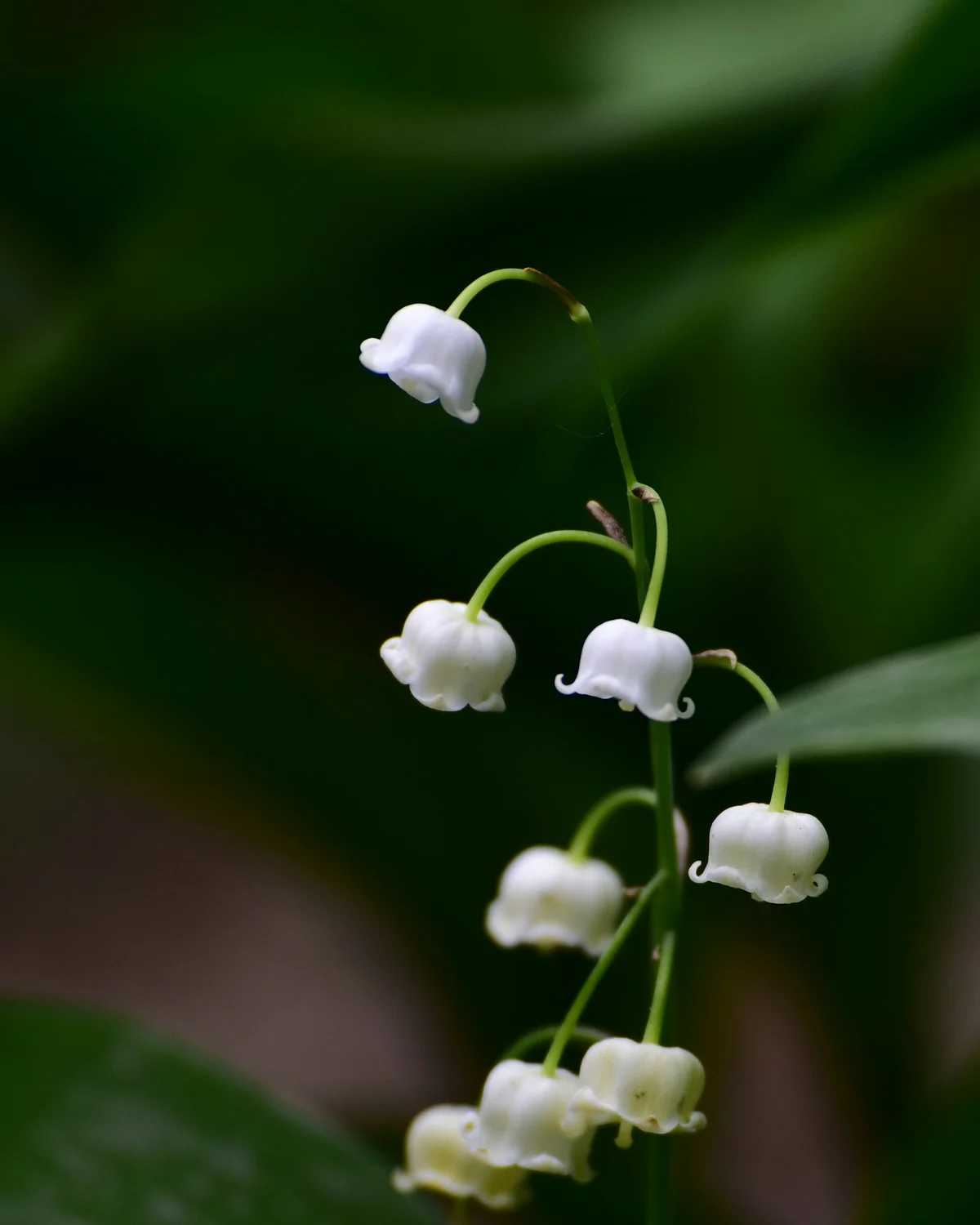
Lily of the Valley
Convallaria majalis · Asparagaceae
How it looks
Lily of the Valley (Convallaria majalis) is a plant in which a slender flower stalk rises between two broad oval leaves, with small white bell-shaped flowers hanging in a row facing one direction. The fragrance is very strong and clean. Height 6-12 in (15-30 cm).
Dangerous — arrhythmia and seizures
All parts of Lily of the Valley contain cardiac glycosides (convallatoxin); ingestion can cause vomiting and diarrhea that may worsen into arrhythmias, a slowed heart rate, and heart failure. Even small amounts can affect the heart, so an immediate vet visit is needed.
If ingested
Contact your nearest vet immediately
- Action
- Rinse the mouth with water and monitor. Consult a vet if symptoms last more than 12 hours.
- Symptoms
- Vomiting, irregular heart beat, low blood pressure, disorientation, coma, seizures
- Onset (typical course)
- Right away to within 2 hours of ingestion
Guide for parents
Lily of the valley is often used in spring bouquets and flower beds for its white bell-shaped flowers and gentle scent, but don't bring it into a home with a cat. Its name says "lily," but its poison is different from a true lily's. The whole plant contains cardiac glycosides such as convallatoxin, so even a small amount can directly affect the heartbeat.
How it differs from a true lily
Unlike the lily, which attacks the kidneys and causes acute kidney failure, lily of the valley's problem is cardiac glycosides that attack the heart. Both are dangerous, but the toxin's target and the response differ — so don't lump them together just because both are called "lily." Knowing exactly which plant you have matters.
How cats get exposed
The leaves, flowers, and roots are all dangerous, and so is the vase water. It often slips into bouquets or grows in flower beds, so keep it out of the house and, if it's in a bed, fully separate it from your cat's paths. Clear fallen flowers and leaves the same day.
How symptoms progress
Signs usually begin very quickly — within about two hours — with vomiting, diarrhea, and lethargy. Cardiac glycosides disrupt the heart's electrical signals, so as it advances the pulse can turn slow or irregular, and in severe cases it can progress to heart failure. Cardiac toxicity can appear even from a small amount, so don't let your guard down.
What to do right now
If you suspect ingestion, don't wait even if symptoms look mild — go to the vet right away. Do not induce vomiting at home, and telling the vet what and how much was eaten helps guide treatment.
Details
- Scientific name
- Convallaria majalis
- Common name
- Lily of the Valley
- Family
- Asparagaceae
- Toxic parts
- All parts
- Compounds
- Cardenolides (convallarin and other cardiac glycosides)
- Source
- ASPCA cats plant list
Related plants
Same plant family· Asparagaceae

Related guides

What to Do If Your Cat Ate a Lily
Lilies are deadly to cats. Eating a single leaf can lead to kidney failure. If you suspect your cat has ingested any part of a lily, here's what to do right now.

Top 10 Flowers Dangerous to Cats — The Ones You See at Florists
Ten flowers you'll commonly find at florists and grocery stores that are toxic to cats. Check before you receive them, and before you bring them home.

Got a Bouquet? What to Do If You Have a Cat
A bouquet is a lovely surprise — but if you live with a cat, there are a few things to take care of right away. From checking what's in the arrangement to choosing the right vase, here's what actually helps, in order.