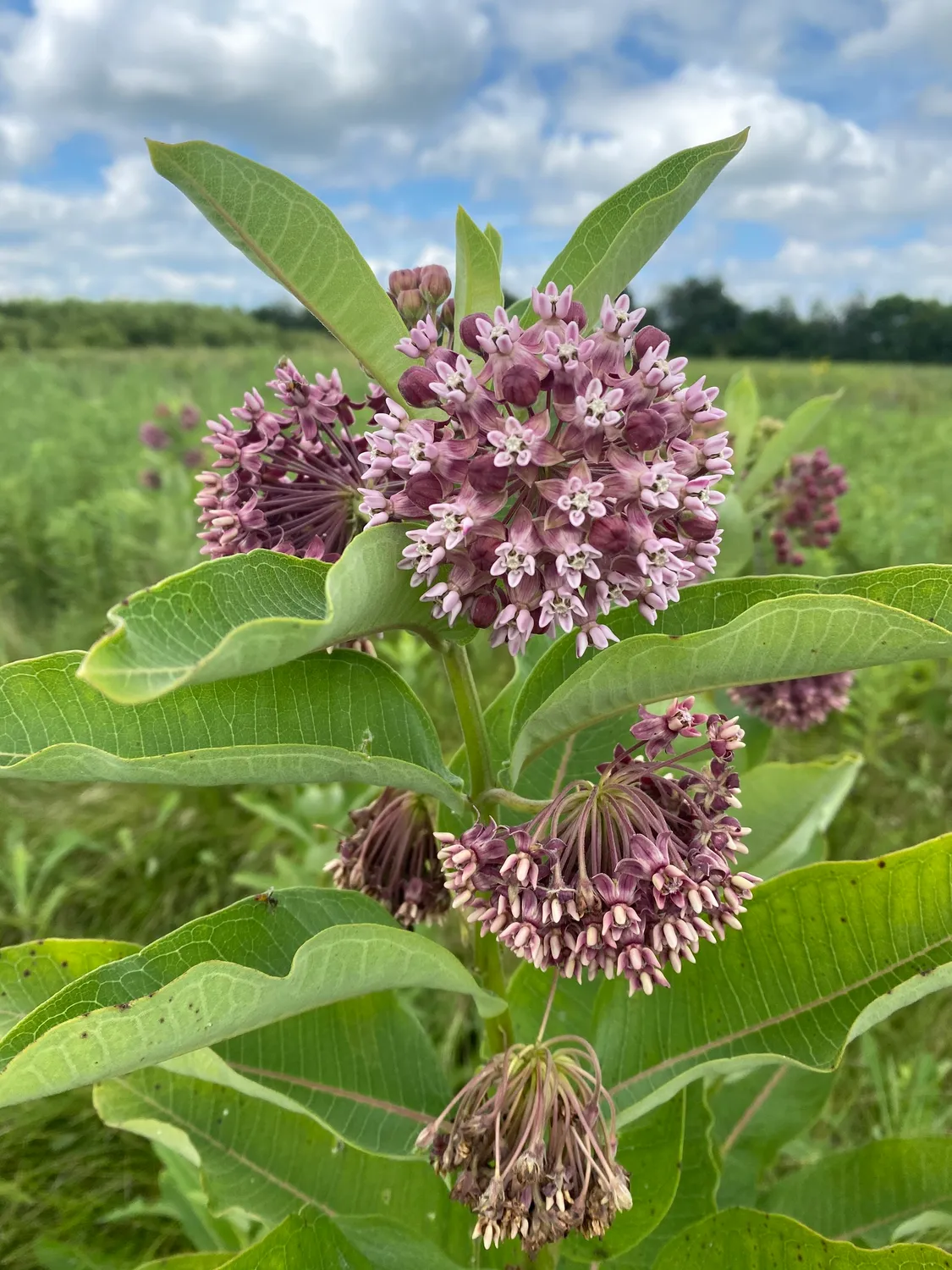
Milkweed
Asclepias species · Apocynaceae
How it looks
Milkweed is an herb that exudes a white latex when the stem is cut, with large oval leaves in opposite pairs. Small pink, purple, or orange flowers cluster into ball-like heads. In fall, gourd-like swollen pods split open to release fluffy, tufted seeds. It grows 3-5 ft (1-1.5 m) tall.
Dangerous — organ failure and respiratory paralysis
All parts of Milkweed contain cardiac glycosides; ingestion starts with vomiting, diarrhea, and profound depression and can progress through seizures, kidney and liver failure, and coma to respiratory failure and death.
If ingested
Contact your nearest vet immediately
- Action
- Rinse the mouth with water and monitor. Consult a vet if symptoms last more than 12 hours.
- Symptoms
- Vomiting, Depression, Weakness, Loss of appetite, Diarrhea, Seizures, Difficulty breathing, Increased heart rate, Dilated pupils, Kidney failure, Liver failure, Coma, Respiratory failure, Death
- Onset (typical course)
- Right away to within 2 hours of ingestion
Guide for parents
Milkweed is not a plant to take lightly. Ingestion starts with vomiting, diarrhea, profound depression, and loss of appetite, then seizures, difficulty breathing, dilated pupils, and a rapid, weak pulse can follow. As it advances it can reach kidney and liver failure, coma, respiratory failure, and death.
One note on names, which matters most for Korean readers. The plant Koreans call bakjugari (박주가리) is Metaplexis japonica, a native vine in the same family as Asclepias but in a different genus. It is not on the ASPCA list, so no cat-specific verdict exists for it. That absence is not a clearance; it only means no confirmed data. Don't carry this page's danger rating over to that vine, and don't treat it as a reason to bring the vine home either.
Where you meet them usually tells them apart. Asclepias is native to North America and arrived here as an ornamental, with orange to red flowers gathered in rounded heads, sold in Korea under the name geumgwanhwa (금관화). Metaplexis japonica grows on its own along roadsides and in open fields, best known for pods that split to release silky, tufted seeds. Both bleed white latex when cut, so the milky sap alone won't tell you which one you have.
In most homes this plant arrives as a potted plant or in a bouquet. Clear away cut stems, fallen leaves, and any sap the same day, and after time outdoors check whether your cat has been chewing unfamiliar plants.
If there's any sign your cat chewed or swallowed it, go to the vet immediately even if symptoms look mild. Don't induce vomiting at home, and tell the vet which part was eaten and how much.
Details
- Scientific name
- Asclepias species
- Common name
- Milkweed
- Family
- Apocynaceae
- Toxic parts
- All parts
- Compounds
- Cardiac glycosides, Galitoxin, Resinoids
- Source
- ASPCA cats plant list
Also known as
Related plants
Same plant family· Apocynaceae
Related guides
Top 10 Flowers Dangerous to Cats — The Ones You See at Florists
Ten flowers you'll commonly find at florists and grocery stores that are toxic to cats. Check before you receive them, and before you bring them home.
Got a Bouquet? What to Do If You Have a Cat
A bouquet is a lovely surprise — but if you live with a cat, there are a few things to take care of right away. From checking what's in the arrangement to choosing the right vase, here's what actually helps, in order.
Why Cats Chew Plants, and How to Stop It
A cat chewing and tearing at plants isn't just mischief — there's an instinct behind it. Once you understand why, the ways to stop it follow naturally.