Nicotiana
Nicotiana glauca · Solanaceae
How it looks
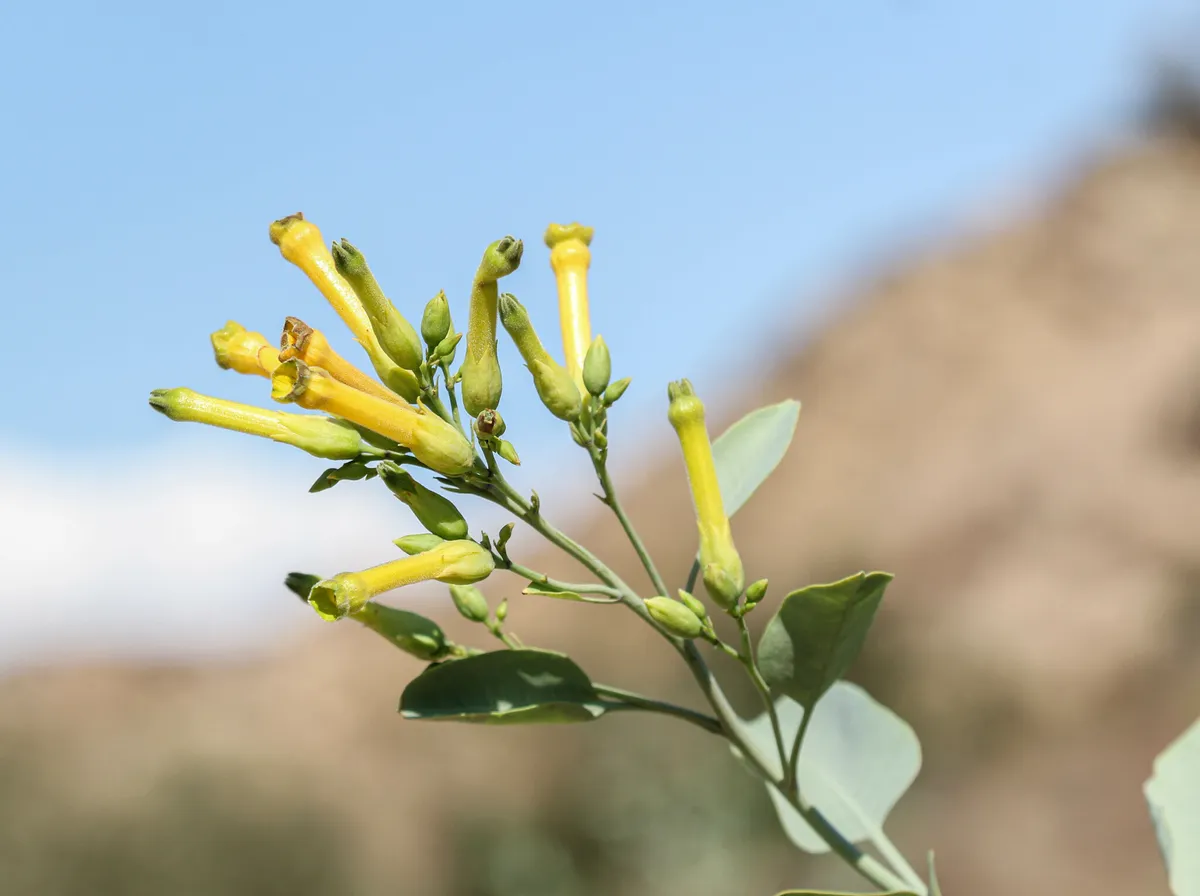
Nicotiana is a plant in the nightshade family (Solanaceae) with yellow trumpet-shaped flowers gathered at the branch tips. The leaves are thick, gray-green, and oval, and the stem grows straight to 3-10 ft (1-3 m). In the wild it grows like a small tree, and its leaves and flowers have a strong tobacco scent.
Dangerous — nicotine neurotoxicity
All parts of Nicotiana (Tree Tobacco) contain anabasine and nicotine; even a small amount can cause heavy drooling, agitation, and depression. This can progress to seizures and cardiac arrest, so immediate veterinary care is needed.
If ingested
Contact your nearest vet immediately
- Action
- Consult a vet and monitor. Go in immediately if symptoms worsen.
- Symptoms
- Hyperexcitability then depression, vomiting, incoordination, paralysis, death
- Onset (typical course)
- 1–4 hours after ingestion
Guide for parents
Nicotiana (tree tobacco) is sometimes planted as an ornamental, but the whole plant is a tobacco-genus plant containing nicotine and anabasine. Even a small chew stimulates the nervous system, so this is not a plant to dismiss as simple stomach irritation.
How cats get exposed
Nicotine-type alkaloids are present throughout the leaves, stems, and flowers. It is often planted in gardens or containers, and exposure happens when a cat chews leaves or mouths a fallen flower. On mature plants the leaves are large and soft, which can draw a cat's interest.
How symptoms progress
Nicotine acts fast: usually within 1–4 hours of ingestion there is heavy drooling, along with an initial phase of excitement and restlessness that soon shifts into a dull, depressed state. As it advances, muscle tremors and weakness, vomiting, and in severe cases seizures and heart or breathing problems can follow.
What to do right now
If there is any chance your cat chewed or swallowed it, call your vet for guidance regardless of how the signs look. If you see agitation, tremors, or drooling, go in without delay. Do not induce vomiting at home; tell the clinic which part was eaten and how much.
Details
- Scientific name
- Nicotiana glauca
- Common name
- Nicotiana
- Family
- Solanaceae
- Toxic parts
- All parts
- Compounds
- Anabasine, Nicotine
- Source
- ASPCA cats plant list
Related plants
Same plant family· Solanaceae
Related guides

Top 10 Flowers Dangerous to Cats — The Ones You See at Florists
Ten flowers you'll commonly find at florists and grocery stores that are toxic to cats. Check before you receive them, and before you bring them home.

Got a Bouquet? What to Do If You Have a Cat
A bouquet is a lovely surprise — but if you live with a cat, there are a few things to take care of right away. From checking what's in the arrangement to choosing the right vase, here's what actually helps, in order.
Why Cats Chew Plants, and How to Stop It
A cat chewing and tearing at plants isn't just mischief — there's an instinct behind it. Once you understand why, the ways to stop it follow naturally.