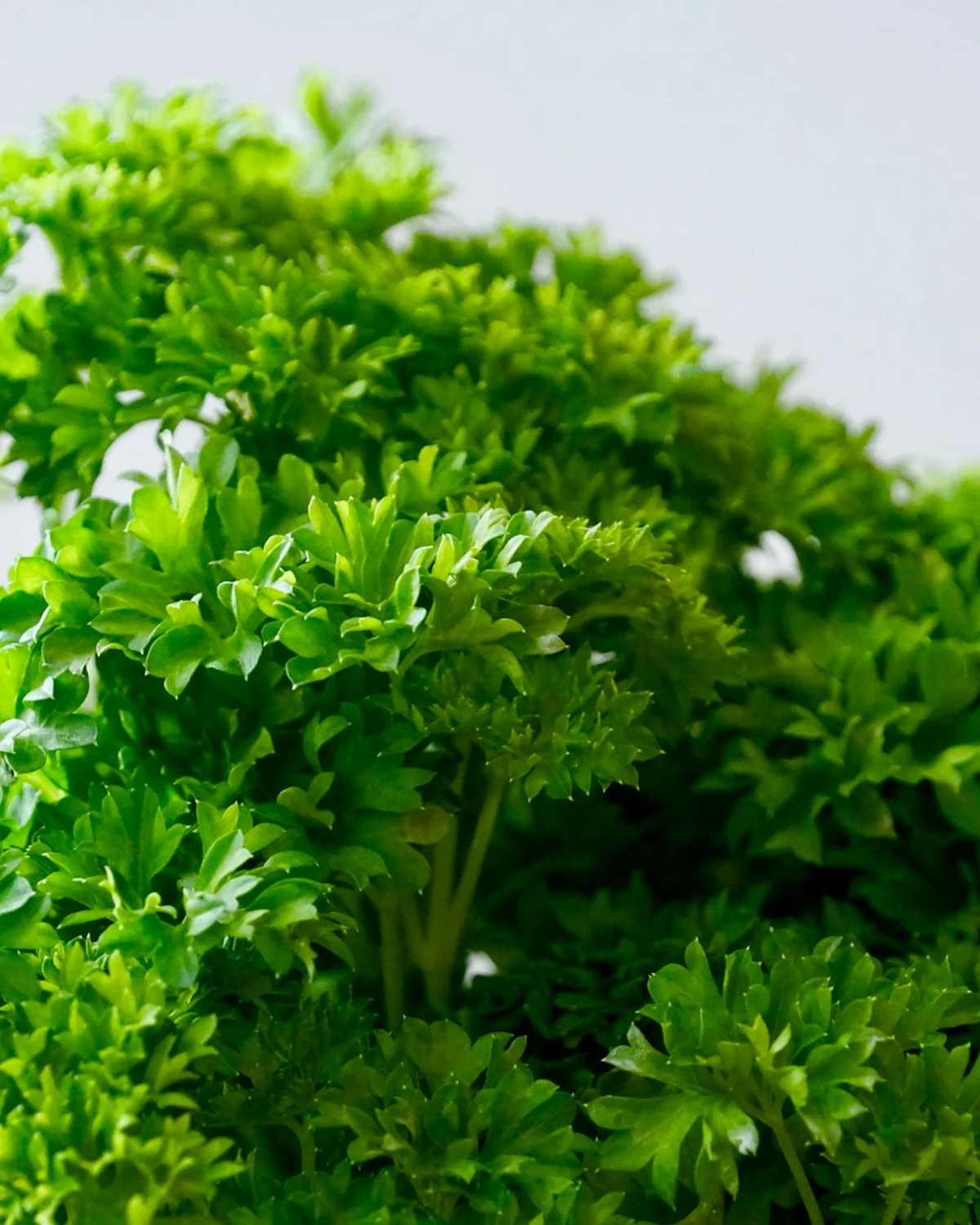
Parsley
Petroselinum crispum · Apiaceae
How it looks
Parsley is a member of the carrot family whose deep green, feather-divided curly leaves grow in a cluster from the stem. The leaves are soft and release a fresh, grassy scent when touched. It stands 8–16 in (20–40 cm) tall and is commonly grown in pots and gardens.
Caution — photosensitization after ingestion
The furanocoumarins in Parsley cause photosensitization — sunburn and dermatitis on skin exposed to sun after ingestion. That is the sign the ASPCA records for this species. As a caution-level plant it still calls for monitoring.
If ingested
Contact your nearest vet immediately
- Action
- Consult a vet and monitor. Go in immediately if symptoms worsen.
- Symptoms
- Photosensitization (sunburn, dermatitis; large amounts needed)
- Onset (typical course)
- 1–4 hours after ingestion
Guide for parents
The furanocoumarins in Parsley show up on skin exposed to sun after ingestion. The signs the ASPCA records are sunburn and dermatitis.
Make a habit of clearing away fallen leaves and broken stems the same day, and keep the pot somewhere your cat can't reach.
If there's any chance your cat ate it, keep them out of direct sun for a few days and watch thin-furred areas — nose, ears, belly — for redness or flaking. If you see skin changes, consult your vet.
Details
- Scientific name
- Petroselinum crispum
- Common name
- Parsley
- Family
- Apiaceae
- Toxic parts
- All parts
- Compounds
- Furanocoumarins
Related plants
Same plant family· Apiaceae
Related guides
Top 10 Flowers Dangerous to Cats — The Ones You See at Florists
Ten flowers you'll commonly find at florists and grocery stores that are toxic to cats. Check before you receive them, and before you bring them home.
Got a Bouquet? What to Do If You Have a Cat
A bouquet is a lovely surprise — but if you live with a cat, there are a few things to take care of right away. From checking what's in the arrangement to choosing the right vase, here's what actually helps, in order.
Why Cats Chew Plants, and How to Stop It
A cat chewing and tearing at plants isn't just mischief — there's an instinct behind it. Once you understand why, the ways to stop it follow naturally.