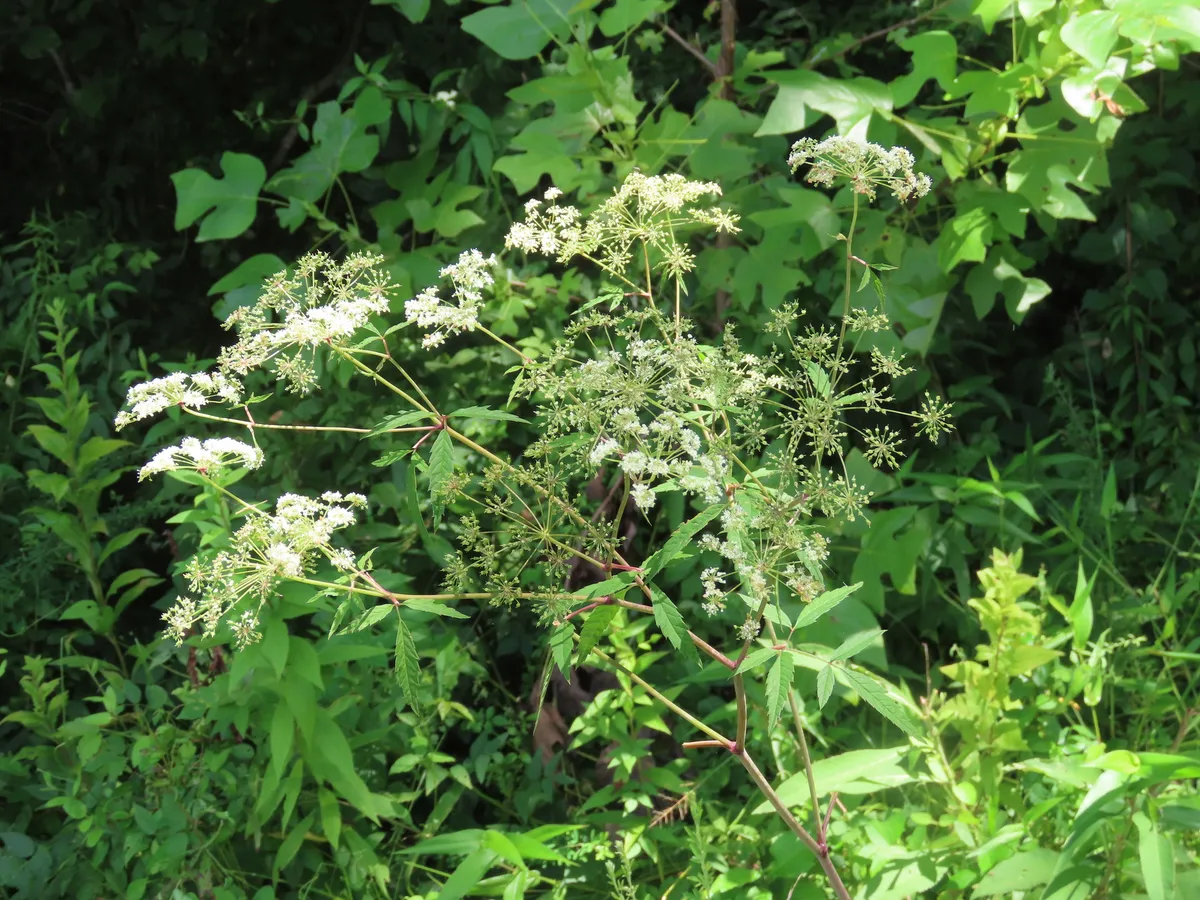
Cowbane
Cicuta species · Apiaceae
How it looks
Cowbane is a carrot-family herb that grows in wetlands, with purple streaks on the stem. The leaves are deeply pinnately divided with serrated tips. The flowers are small and white, spreading in an umbrella shape. It grows 3-7 ft (1-2 m) tall and closely resembles wild water parsley or carrot, posing a high risk of misidentification.
Deadly — neurotoxin
All parts of cowbane, especially the roots, contain cicutoxin; ingestion can bring diarrhea, tremors, and seizures, then respiratory depression and death. It is among the fastest-acting plant toxins known.
If ingested
Contact your nearest vet immediately
- Action
- Go to a 24-hour animal hospital immediately. Don't wait, even if there are no symptoms.
- Symptoms
- Diarrhea, Seizures, Tremors, Dilated pupils, Fever, Respiratory depression, Death
- Onset (typical course)
- 6–24 hours after ingestion (symptoms may be delayed)
Guide for parents
Cowbane is a carrot-family plant of wetlands, streambanks, and rice-paddy edges, and the whole plant — especially the roots — contains the neurotoxin cicutoxin. It's among the fastest-acting of all known plant poisons, so even a small amount can escalate rapidly to tremors, seizures, and respiratory depression.
Telling it apart from similar carrot-family plants
Cowbane (Cicuta) is in the same genus as spotted water hemlock; both share cicutoxin and pose essentially the same danger. Poison hemlock, by contrast, is in the same family but carries a different, coniine-type toxin. Above all, cowbane closely resembles edible water dropwort, a look-alike that has caused fatal foraging mistakes — so never pick or feed an unfamiliar water plant that resembles it.
How cats get exposed
You'd never bring it indoors, but exposure happens on walks and outings. It grows in stands near water, and the roots are especially dangerous. A cat can be exposed by chewing an unfamiliar waterside plant or licking an uprooted root.
How symptoms progress
Cicutoxin acts very fast: signs usually begin a short time after ingestion with diarrhea and tremors, then quickly progress to seizures, sometimes with dilated pupils and fever. What follows is respiratory depression — the drive to breathe itself weakens — and at that stage it can be fatal. By the time symptoms appear, the situation is often already critical.
What to do right now
If your cat may have chewed an unfamiliar carrot-family plant by water, get to a vet immediately even without symptoms — it moves so fast that every minute counts. Reaching the clinic before seizures begin is key; if you can, bring a photo or a piece of the plant to show the vet.
Details
- Scientific name
- Cicuta species
- Common name
- Cowbane
- Family
- Apiaceae
- Toxic parts
- All parts (especially the roots)
- Compounds
- Cicutoxin
- Source
- ASPCA cats plant list
Related plants
Same plant family· Apiaceae


Related guides

Top 10 Flowers Dangerous to Cats — The Ones You See at Florists
Ten flowers you'll commonly find at florists and grocery stores that are toxic to cats. Check before you receive them, and before you bring them home.

Got a Bouquet? What to Do If You Have a Cat
A bouquet is a lovely surprise — but if you live with a cat, there are a few things to take care of right away. From checking what's in the arrangement to choosing the right vase, here's what actually helps, in order.
Why Cats Chew Plants, and How to Stop It
A cat chewing and tearing at plants isn't just mischief — there's an instinct behind it. Once you understand why, the ways to stop it follow naturally.