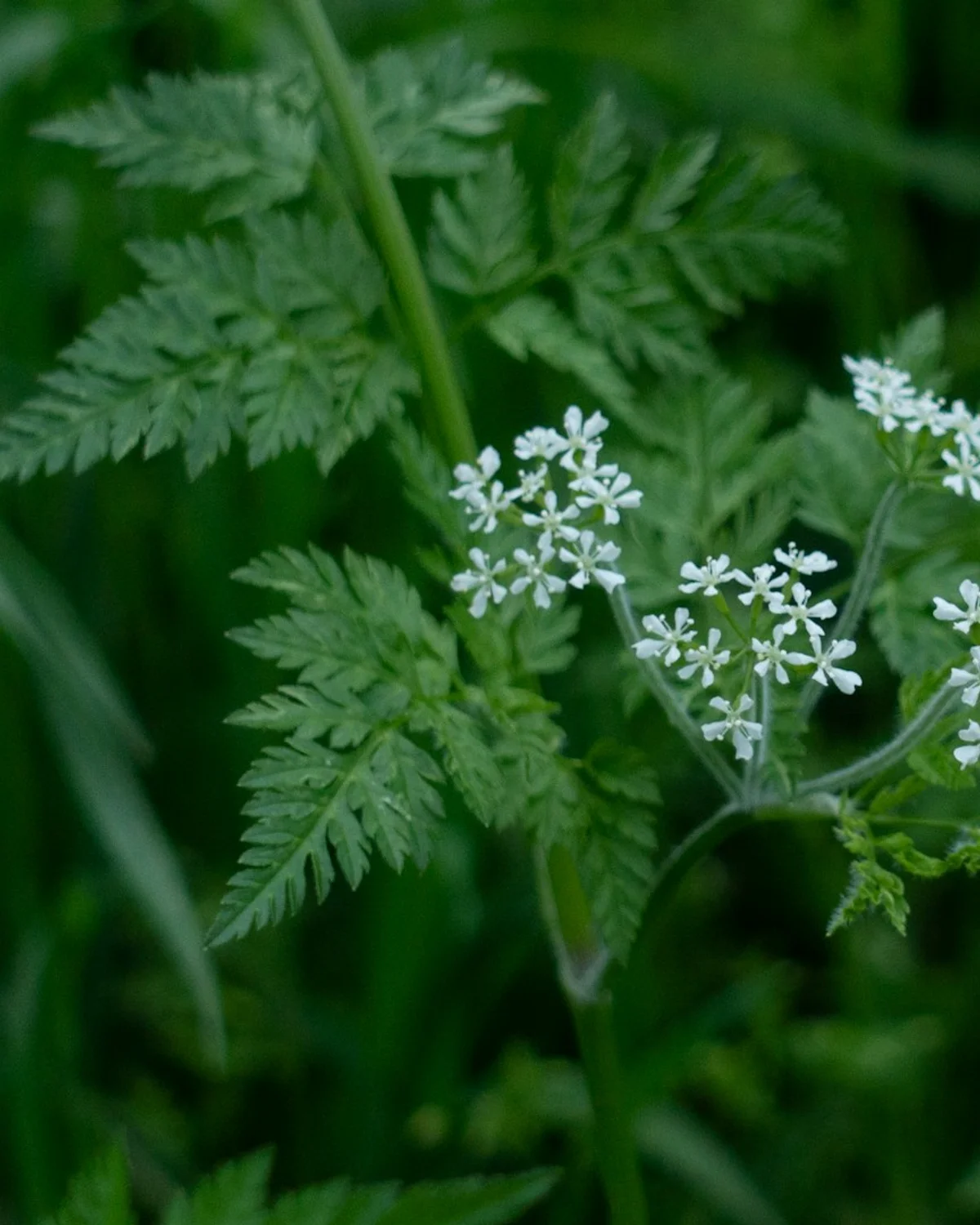
Poison Hemlock
Conium maculatum · Apiaceae
How it looks
Poison Hemlock is a herb in the carrot family (Apiaceae) with purple spots on its stem and very fine, feather-shaped leaves that are deeply divided. Small white flowers spread out in an umbrella shape, and it grows 3-8 ft (1-2.5 m) tall. It closely resembles wild parsley and carrot, posing a high risk of being mistaken for them.
Dangerous — fatal neurotoxin; see a vet immediately
Poison Hemlock contains neurotoxic alkaloids such as coniine, and even a small amount can be fatal. Drooling, tremors, and diarrhea give way to agitation and paralysis, progressing rapidly and possibly ending in death.
If ingested
Contact your nearest vet immediately
- Action
- Go to an animal hospital immediately. Don't wait — delaying treatment risks death.
- Symptoms
- Excitement, Tremors, Drooling, Diarrhea, Paralysis, Death
- Onset (typical course)
- 30 minutes to 2 hours after ingestion
Guide for parents
Poison hemlock is a carrot-family weed of fields, roadsides, and streambanks, and neurotoxic alkaloids such as coniine run through the whole plant, so even a small amount can be fatal. Purple blotches on the stem are its signature identifying mark, and its soft, ferny leaves are easily mistaken for carrot or parsley greens.
Telling it apart from similar carrot-family plants
Poison hemlock's toxin (Conium) is a coniine-type alkaloid, whereas cowbane and spotted water hemlock carry a different neurotoxin, cicutoxin. The compounds differ, but all three are deadly members of the carrot family — so with any unfamiliar carrot- or parsley-like plant outdoors, stop your cat from mouthing it before worrying about the exact species.
How cats get exposed
You'd never bring it indoors, but exposure happens on walks and outings. It grows in stands along streambanks and vacant lots, and a cat can be exposed by chewing an unfamiliar plant or licking a broken stem. Take care too that it isn't mistakenly foraged as edible greens.
How symptoms progress
Signs usually begin fairly quickly, within 30 minutes to 2 hours, with drooling, tremors, diarrhea, and restless agitation. As it progresses the muscles become paralyzed, and in severe cases it can be fatal.
What to do right now
If your cat may have chewed an unfamiliar carrot-family plant, get to a vet immediately even without symptoms — this is a fast-acting neurotoxin and there's no time to wait. If you can, bring a photo or a piece of the plant to show the vet, which helps guide treatment.
Details
- Scientific name
- Conium maculatum
- Common name
- Poison Hemlock
- Family
- Apiaceae
- Toxic parts
- All parts
- Compounds
- Coniine, γ-coniceine, Piperidine alkaloids
- Source
- ASPCA cats plant list
Related plants
Same plant family· Apiaceae


Related guides

Top 10 Flowers Dangerous to Cats — The Ones You See at Florists
Ten flowers you'll commonly find at florists and grocery stores that are toxic to cats. Check before you receive them, and before you bring them home.

Got a Bouquet? What to Do If You Have a Cat
A bouquet is a lovely surprise — but if you live with a cat, there are a few things to take care of right away. From checking what's in the arrangement to choosing the right vase, here's what actually helps, in order.
Why Cats Chew Plants, and How to Stop It
A cat chewing and tearing at plants isn't just mischief — there's an instinct behind it. Once you understand why, the ways to stop it follow naturally.