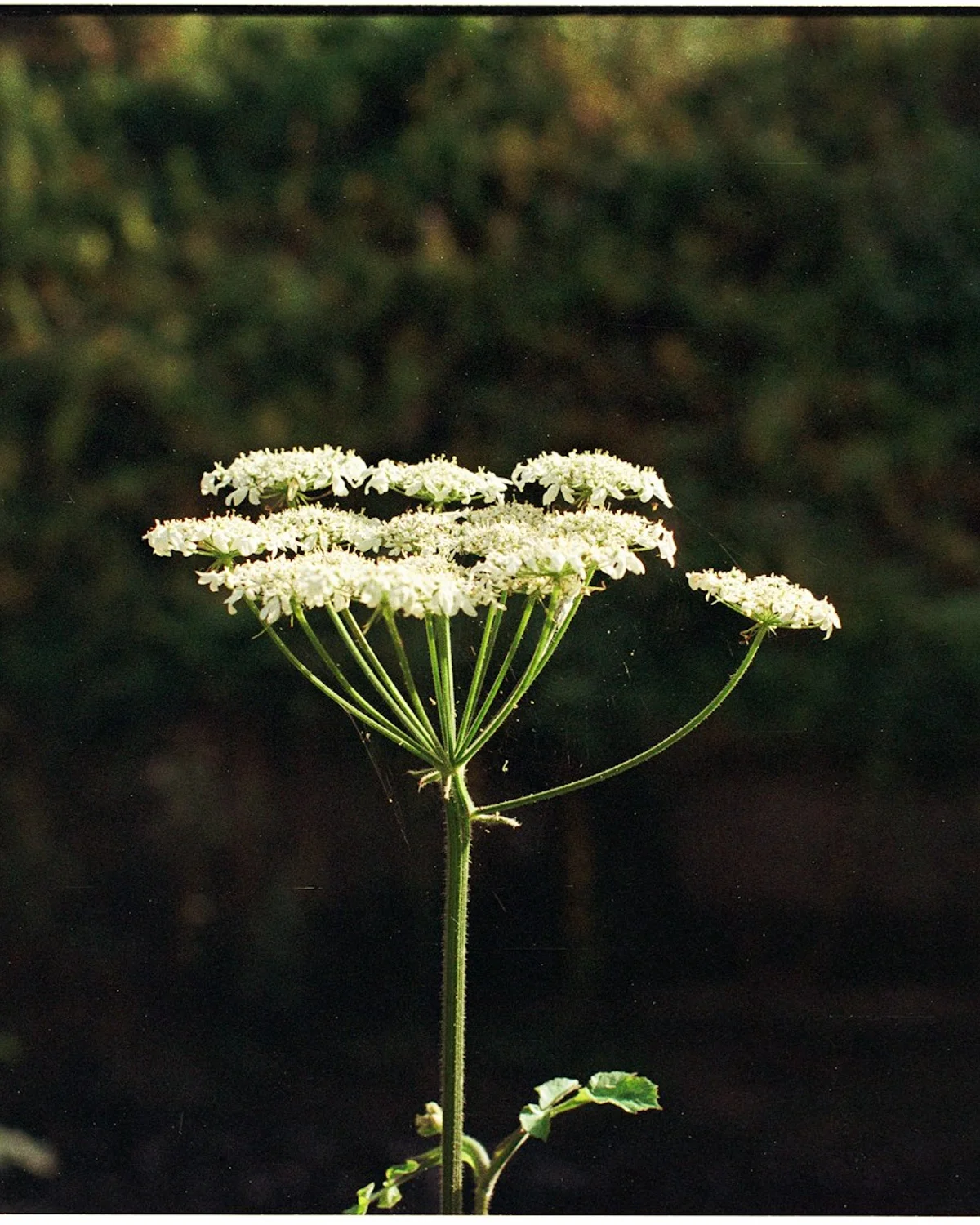
Giant Hogweed
Heracleum maximum · Apiaceae
How it looks
Giant Hogweed is a plant that grows very large, 10–16 ft (3–5 m) tall, with purple blotches and coarse hairs on its stem. The leaves are very large and deeply lobed (3–5 ft / 1–1.5 m wide), and the flowers are small and white, spread out in an umbrella-shaped cluster (over 20 in / 50 cm across).
Dangerous — phototoxic burns
The sap of Giant Hogweed contains furocoumarins, which cause severe blistering and burns when skin contact is followed by sunlight. Contact with the eyes can even carry a risk of blindness.
If ingested
Contact your nearest vet immediately
- Action
- Go to an animal hospital immediately. Don't wait, even if symptoms seem mild.
- Symptoms
- Severe photosensitization, blistering, blindness
- Onset (typical course)
- 2–6 hours after ingestion
Guide for parents
Giant hogweed is a towering member of the carrot family, and unlike the other toxic plants in that family it's dangerous not from being eaten but from its sap touching skin. The furocoumarins in the sap cause severe blistering and burns when the exposed skin is then hit by sunlight (UV), and sap in the eyes can even cause blindness.
The danger is the sap, not ingestion
Other carrot-family plants like poison hemlock and cowbane are dangerous when their neurotoxins are swallowed, but giant hogweed's core hazard is phototoxic burns (sap plus light). That changes how you respond: the first thing to prevent is sap from a broken stem getting onto the body, more than ingestion.
How cats get exposed
It isn't widely native to Korea, but it has been recorded as an introduced species. If a cat brushes against the stems or leaves while passing through brush, sap works into the fur, and the reaction begins later on any area that gets sunlight. People get the same burns from bare-handed contact, so be careful too.
How symptoms progress
Right after contact there's often nothing to feel; then, after light exposure, redness, blisters, and burns develop over a few hours to a day or two. The damaged skin can be left with long-lasting discoloration. Sap in the eyes is especially dangerous.
What to do right now
If you think sap has gotten on your cat, wash it off immediately with running water and soap, cover the area so it isn't exposed to sunlight, and consult a vet. If sap reached the eyes or you see burns over a wide area, go to the clinic without delay.
Details
- Scientific name
- Heracleum maximum
- Common name
- Giant Hogweed
- Family
- Apiaceae
- Toxic parts
- All parts (sap)
- Compounds
- Furocoumarins (phototoxic)
- Source
- ASPCA cats plant list
Related plants
Same plant family· Apiaceae
Related guides

Top 10 Flowers Dangerous to Cats — The Ones You See at Florists
Ten flowers you'll commonly find at florists and grocery stores that are toxic to cats. Check before you receive them, and before you bring them home.

Got a Bouquet? What to Do If You Have a Cat
A bouquet is a lovely surprise — but if you live with a cat, there are a few things to take care of right away. From checking what's in the arrangement to choosing the right vase, here's what actually helps, in order.
Why Cats Chew Plants, and How to Stop It
A cat chewing and tearing at plants isn't just mischief — there's an instinct behind it. Once you understand why, the ways to stop it follow naturally.