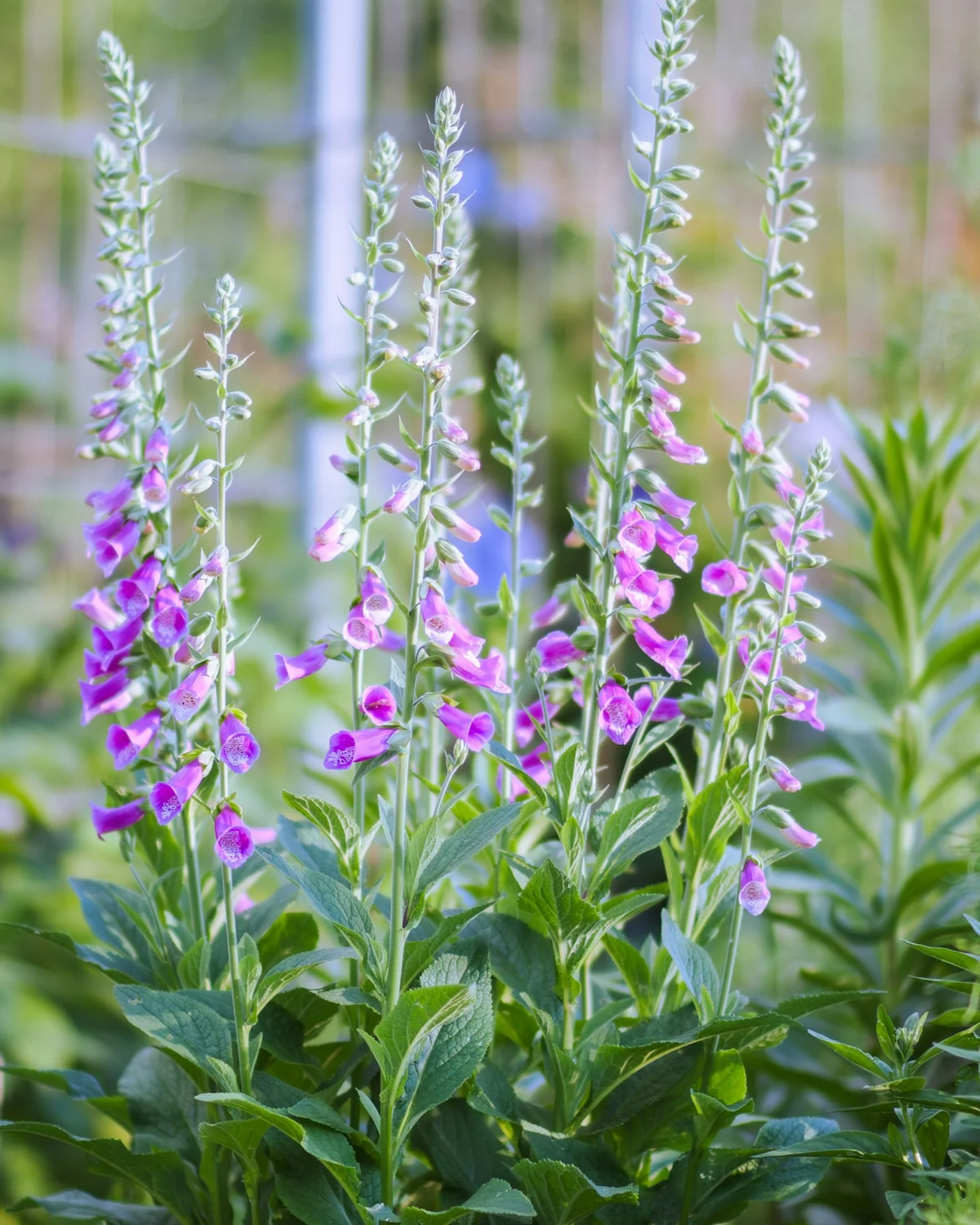
Foxglove
Digitalis purpurea · Plantaginaceae
How it looks
Foxglove is a tall herb whose bell- or thimble-shaped flowers hang in a row along one side of the stem. The pink, purple, or white petals have dark spots on the inside. The leaves are oval with serrated edges. It grows 3-5 ft (1-1.5 m) tall and is common in gardens.
Deadly — cardiac arrest
All parts of Foxglove contain potent cardiac glycosides (digitalin); ingestion can lead to heart arrhythmias and death. It may be a medicinal plant for humans, but for cats it is deadly.
If ingested
Contact your nearest vet immediately
- Action
- Go to a 24-hour animal hospital immediately. Don't wait, even if there are no symptoms.
- Symptoms
- Cardiac arrhythmia, Vomiting, Diarrhea, Weakness, Cardiac failure, Death
- Onset (typical course)
- 6–24 hours after ingestion (symptoms may be delayed)
Guide for parents
Foxglove, with its tiers of bell-shaped flowers, is popular as a garden plant and cut flower, but the whole plant — flowers, leaves, and stems — contains potent cardiac glycosides (digitalin). It's active enough to be the source of a human heart medication, so in cats even a small amount can lead to arrhythmia and death. Keep it out of any shared space.
The same class of cardiac toxin
Foxglove's cardiac glycosides are in the same class of heart toxin found in lily of the valley. Both plants directly disrupt the heart's contraction and rhythm with deadly effect, so if you encounter this group in a garden or arrangement, keep it firmly away from cats.
How cats get exposed
The flowers, leaves, and stems are toxic, and so is the vase water. A cat commonly chews a clump growing in the garden or touches a stem that arrived in a gift or arrangement. Even dried leaves retain toxicity.
How symptoms progress
After ingestion, signs usually begin within a few hours to a day with vomiting, drooling, and lethargy, then progress to heart-rhythm disturbances. Cardiac glycosides can slow or destabilize the heartbeat and, in severe cases, cause cardiac arrest — so trouble can be advancing in the heart while the cat still looks fine.
What to do right now
If there's any sign of chewing or swallowing, don't wait even without symptoms. Don't induce vomiting at home — get to a vet right away. Arrhythmias can worsen suddenly, so it's safest to be monitored at a clinic that can watch the heart with an ECG.
Safer flowers instead
If you need a flower for the garden or a vase, confirmed-safe roses or gerbera daisies are good choices.
Details
- Scientific name
- Digitalis purpurea
- Common name
- Foxglove
- Family
- Plantaginaceae
- Toxic parts
- All parts
- Compounds
- Cardiac glycosides (digitalis, digitalin)
- Source
- ASPCA cats plant list
Related plants
Same plant family· Plantaginaceae


Related guides

Top 10 Flowers Dangerous to Cats — The Ones You See at Florists
Ten flowers you'll commonly find at florists and grocery stores that are toxic to cats. Check before you receive them, and before you bring them home.
Got a Bouquet? What to Do If You Have a Cat
A bouquet is a lovely surprise — but if you live with a cat, there are a few things to take care of right away. From checking what's in the arrangement to choosing the right vase, here's what actually helps, in order.
Why Cats Chew Plants, and How to Stop It
A cat chewing and tearing at plants isn't just mischief — there's an instinct behind it. Once you understand why, the ways to stop it follow naturally.