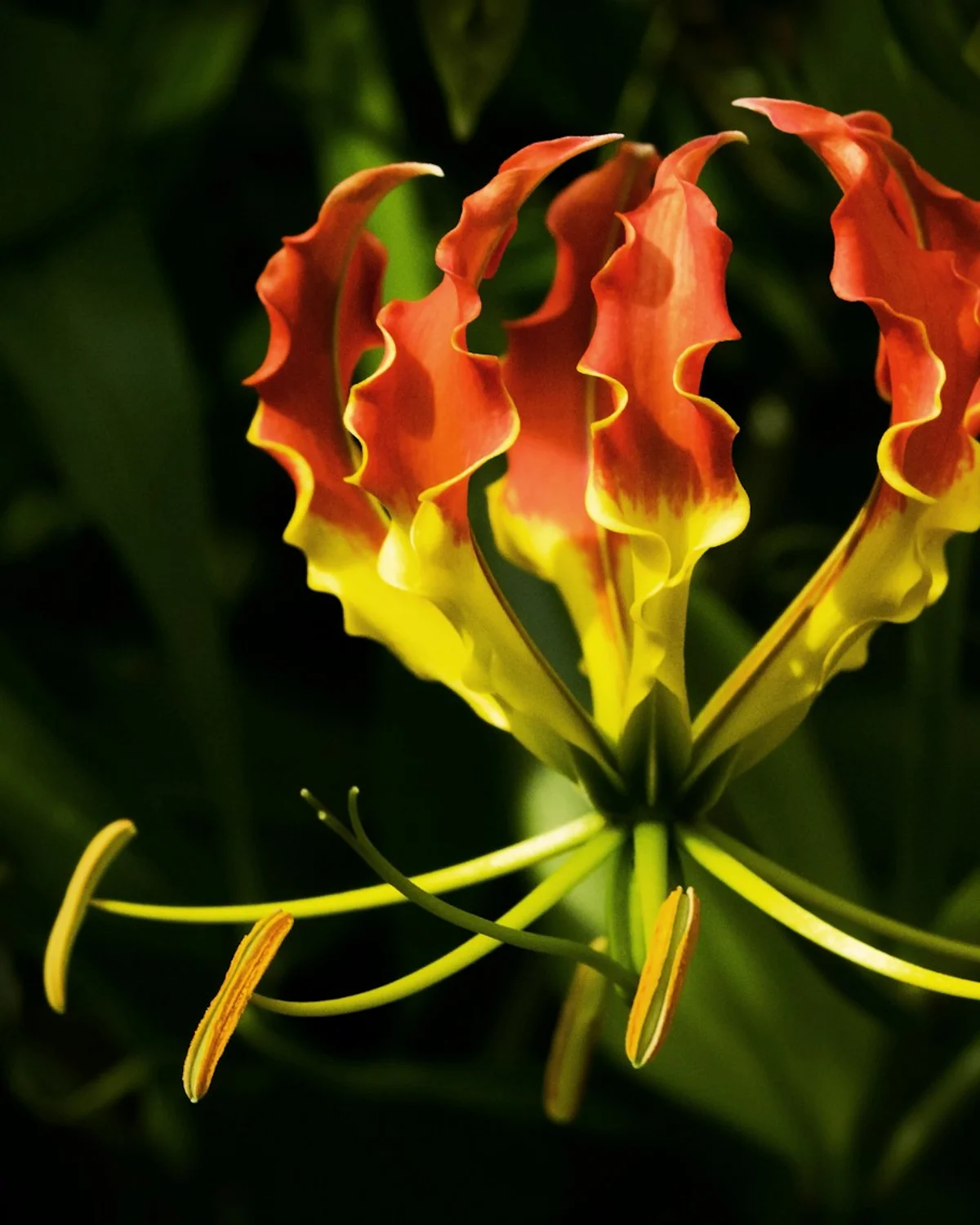
Glory Lily
Gloriosa superba · Colchicaceae
How it looks
Glory Lily is a vining member of the lily family whose petals curve sharply backward, giving the flower a flame-like look. The blooms are a vivid mix of red and yellow, and the leaf tips taper into slender tendrils that coil around supports. It reaches 3–7 ft (1–2 m) and is sold as a tropical ornamental.
Deadly — multiple organ failure
All parts of Glory Lily, especially the bulb, contain colchicine; even a small amount can cause bloody vomiting and diarrhea, progressing to shock and multi-organ damage.
If ingested
Contact your nearest vet immediately
- Action
- Go to a 24-hour animal hospital immediately. Don't wait, even if there are no symptoms.
- Symptoms
- Bloody vomiting, Diarrhea, Shock, Multi-organ damage, Bone marrow suppression, Drooling, Bloody diarrhea, Kidney failure, Liver damage
- Onset (typical course)
- 6–24 hours after ingestion (symptoms may be delayed)
Guide for parents
Glory lily is prized as a garden and container plant for its dramatic, flame-like reflexed petals, but the whole plant — and especially the tuber — contains a powerful toxin called colchicine. Despite the "lily" in its name it isn't a true lily, and even a small amount can lead from bloody vomiting and diarrhea to shock and multi-organ damage, so keep it out of your home.
Named a lily, but the poison is colchicine
What glory lily causes isn't the same poisoning as a true lily but colchicine poisoning, which strikes rapidly dividing tissues — bone marrow, the gut lining, the liver, and kidneys — all at once. It shares essentially the same danger as autumn crocus, which contains the same colchicine, so keep both plants well away from cats.
How cats get exposed
The flowers, leaves, and stems are all hazardous, but the toxin is most concentrated in the tuber. Repotting, when the tuber is exposed above the soil, is especially risky, and a cat can be exposed by digging in the soil or chewing a fallen petal.
How symptoms progress
Signs usually begin 6–24 hours after ingestion with drooling, bloody vomiting, and bloody diarrhea. Colchicine poisoning is marked by a delayed pattern: the early digestive signs may seem to settle, then 24–48 hours later bone-marrow suppression and liver and kidney damage emerge. A mild-looking start is no reassurance.
What to do right now
If there's any sign of chewing or swallowing, get to a 24-hour emergency vet immediately even if symptoms are faint. Don't induce vomiting at home, and tell the vet if the tuber may have been involved. Colchicine has no specific antidote, so early care and intensive support decide the outcome.
Safer plants instead
If you want a showy potted bloom, confirmed-safe gerbera daisies or roses are good choices.
Details
- Scientific name
- Gloriosa superba
- Common name
- Glory Lily
- Family
- Colchicaceae
- Toxic parts
- All parts (especially the bulbs)
- Compounds
- Colchicine, Gloriosine
- Source
- ASPCA cats plant list
Related plants
Same plant family· Colchicaceae


Related guides

What to Do If Your Cat Ate a Lily
Lilies are deadly to cats. Eating a single leaf can lead to kidney failure. If you suspect your cat has ingested any part of a lily, here's what to do right now.

Top 10 Flowers Dangerous to Cats — The Ones You See at Florists
Ten flowers you'll commonly find at florists and grocery stores that are toxic to cats. Check before you receive them, and before you bring them home.

Got a Bouquet? What to Do If You Have a Cat
A bouquet is a lovely surprise — but if you live with a cat, there are a few things to take care of right away. From checking what's in the arrangement to choosing the right vase, here's what actually helps, in order.