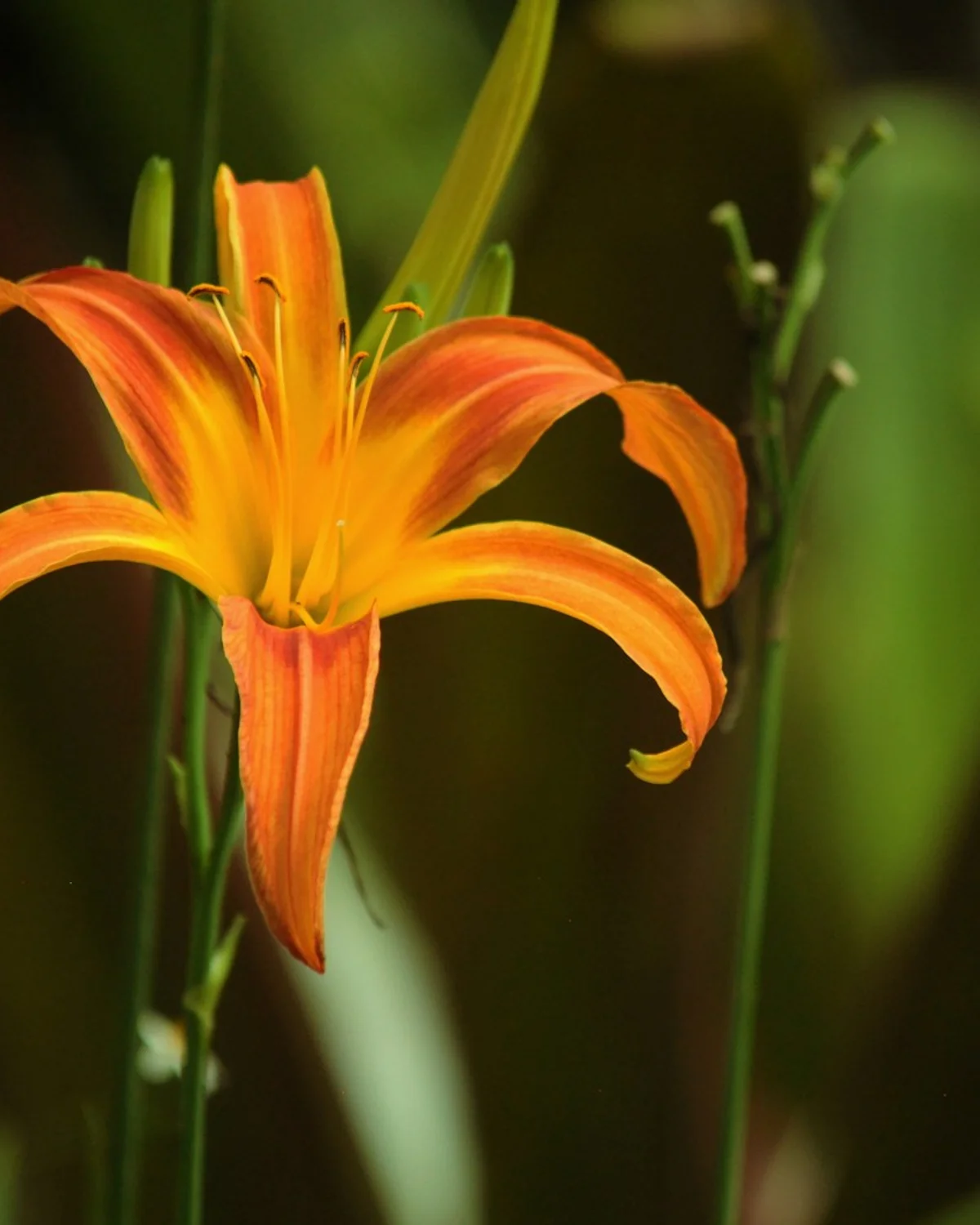
Day Lilies (many varieties)
Hemerocallis spp. · Asphodelaceae
How it looks
Day Lily is a perennial with narrow, long sword-shaped leaves that grow in clumps from the base. At the tip of the flower stalk, six-petaled trumpet-shaped flowers bloom, commonly in yellow, orange, and red. Each flower lasts only a single day and wilts, but new flowers open every day.
Deadly — kidney failure
Day Lilies (many varieties) (Day Lily) belongs to a different genus from true lilies, but it causes the same kidney failure in cats. Petals, leaves, pollen, and even vase water are all deadly.
If ingested
Contact your nearest vet immediately
- Action
- Go to a 24-hour animal hospital immediately. Don't wait, even if there are no symptoms.
- Symptoms
- Vomiting, inappetence, kidney failure, death
- Onset (typical course)
- 6–24 hours after ingestion (symptoms may be delayed)
Guide for parents
The daylily gets its name because each bloom lasts only a single day, and it's a common perennial used in gardens, fields, and bouquets alike. Although it belongs to a different genus than true lilies (Lilium), it causes the same acute kidney failure in cats — so don't let the familiar name lower your guard.
Named a lily, but the danger is real
Daylilies belong, along with true lilies and the Easter lily, to the group that genuinely causes kidney failure in cats. By contrast, the common houseplant peace lily is a lily in name only — an entirely different plant that causes mouth irritation, not kidney failure. First confirm which one you actually have.
How cats get exposed
The petals, leaves, and pollen are all toxic, and so is the vase water. Daylilies often arrive tucked into a gift bouquet, or a cat chews a clump growing in the garden. A cat can be poisoned simply by grooming pollen off its fur, so keeping the plant up high is not enough.
How symptoms progress
Signs usually begin 6–24 hours after ingestion with vomiting, loss of appetite, and lethargy. As with true lilies, there's often a window where the cat seems better while kidney damage quietly advances; by the time urine output drops sharply and kidney failure is visible, it's very hard to reverse.
What to do right now
If there's any chance your cat touched or ate it, don't wait even without symptoms. Don't induce vomiting at home — get to a 24-hour emergency vet immediately. The earlier IV fluid therapy begins, the better the chance of protecting the kidneys; every delay worsens the outlook.
Safer flowers instead
If you want flowers at home, switching to confirmed-safe roses or gerbera daisies is the easier choice.
Details
- Scientific name
- Hemerocallis spp.
- Common name
- Day Lilies (many varieties)
- Family
- Asphodelaceae
- Toxic parts
- All parts (including pollen)
- Compounds
- Unknown
- Source
- ASPCA cats plant list
Related plants
Same plant family· Asphodelaceae

Related guides

Top 10 Flowers Dangerous to Cats — The Ones You See at Florists
Ten flowers you'll commonly find at florists and grocery stores that are toxic to cats. Check before you receive them, and before you bring them home.

Got a Bouquet? What to Do If You Have a Cat
A bouquet is a lovely surprise — but if you live with a cat, there are a few things to take care of right away. From checking what's in the arrangement to choosing the right vase, here's what actually helps, in order.
Why Cats Chew Plants, and How to Stop It
A cat chewing and tearing at plants isn't just mischief — there's an instinct behind it. Once you understand why, the ways to stop it follow naturally.